


Discovertebral (Andersson) lesions of the spine in ankylosing spondylitis revisited
- PMID: 19294478
- PMCID: PMC2711912
- DOI: 10.1007/s10067-009-1151-x
Discovertebral (Andersson) lesions of the spine in ankylosing spondylitis revisited
Abstract
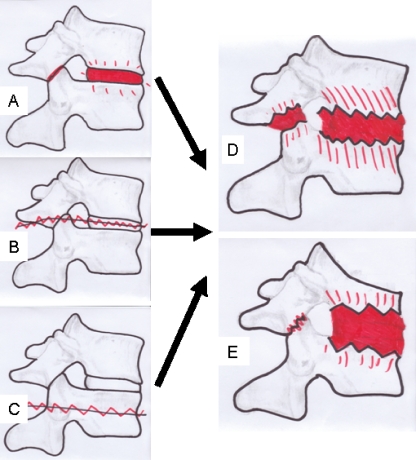
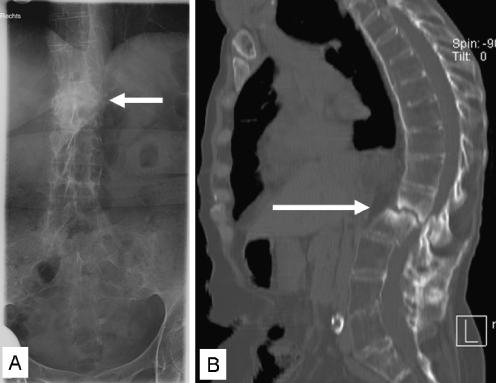
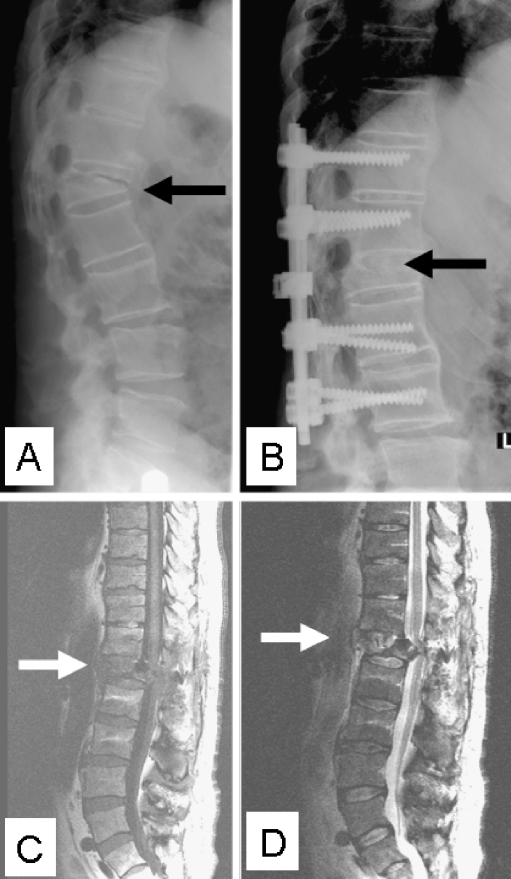
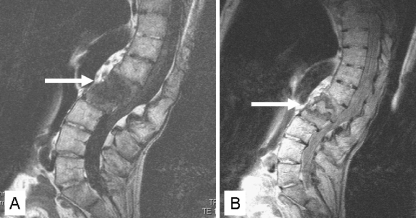
A well-known complication in patients with ankylosing spondylitis (AS) is the development of localised vertebral or discovertebral lesions of the spine, which was first described by Andersson in 1937. Since then, many different terms are used in literature to refer to these localised lesions of the spine, including the eponym 'Andersson lesion' (AL). The use of different terms reflects an ongoing debate on the exact aetiology of the AL. In the current study, we performed an extensive review of the literature in order to align communication on aetiology, diagnosis and management between treating physicians. AL may result from inflammation or (stress-) fractures of the complete ankylosed spine. There is no evidence for an infectious origin. Regardless of the exact aetiology, a final common pathway exists, in which mechanical stresses prevent the lesion from fusion and provoke the development of pseudarthrosis. The diagnosis of AL is established on conventional radiography, but computed tomography and magnetic resonance imaging both provide additional information. There is no indication for a diagnostic biopsy. Surgical instrumentation and fusion is considered the principle management in symptomatic AL that fails to resolve from a conservative treatment. We advise to use the term Andersson lesion for these spinal lesions in patients with AS.
Figures
References
-
- Von Bechterew W (1893) Steifigkeit der wirbelsäule und ihre Verkrümmung als besondere Erkrankungsform. Neurologisches Zentralblatt 12:426–434
-
- McGonagle D, Lyn Tan A, Wakefield R, Emery P (2006) Imaging in ankylosing spondylitis. In: Van Royen BJ, Dijkmans B (eds) Ankylosing spondylitis—diagnosis and management. Taylor & Francis group, New york, pp 71–81
-
- Andersson O (1937) Röntgenbilden vid spondylarthritis ankylopoetica. Nord Med Tidskr 14:2000–2002
Publication types
MeSH terms
LinkOut - more resources
Full Text Sources
Medical
Research Materials
