


Alopecia: possible causes and treatments, particularly in captive nonhuman primates
- PMID: 19295051
- PMCID: PMC2703143
Alopecia: possible causes and treatments, particularly in captive nonhuman primates
Abstract
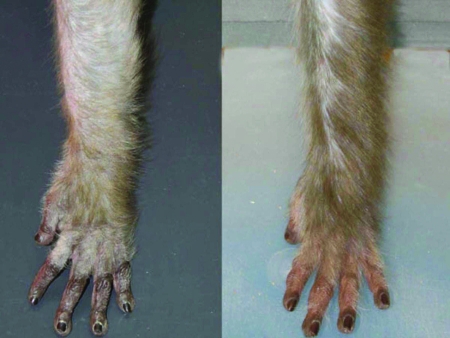
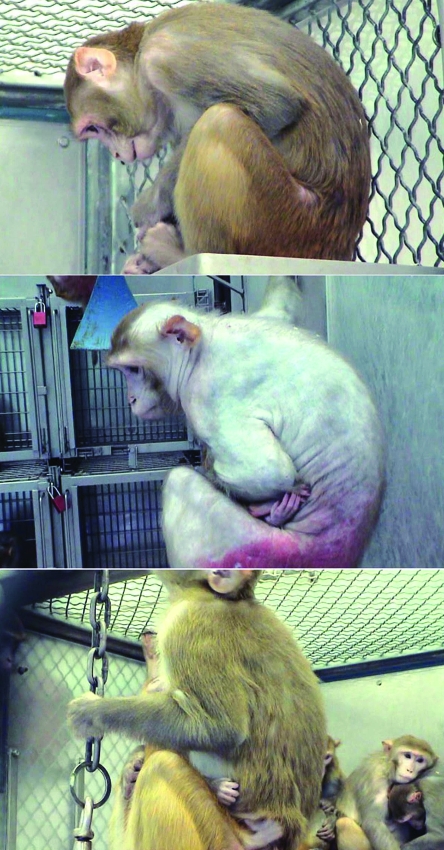
Alopecia (hair loss) occurs in some nonhuman primates housed in captivity and is of concern to colony managers and veterinarians. Here we review the characteristics, potential causes, and treatments for this condition. Although we focus on nonhuman primates, relevant research on other mammalian species is discussed also, due to the relative paucity of studies on alopecia in the primate literature. We first discuss the cycle of hair growth and explain how this cycle can be disrupted to produce alopecia. Numerous factors may be related to hair loss and range from naturally occurring processes (for example, seasonality, aging) to various biologic dysfunctions, including vitamin and mineral imbalances, endocrine disorders, immunologic diseases, and genetic mutations. We also address bacterial and fungal infections, infestation by parasites, and atopic dermatitis as possible causes of alopecia. Finally, we examine the role of psychogenic factors, such as stress. Depending on the presumed cause of the hair loss, various treatment strategies can be pursued. Alopecia in nonhuman primates is a multifaceted disorder with many potential sources. For this reason, appropriate testing for various disease conditions should be completed before alopecia is considered to be related to stress.
Figures
Comment in
-
Alopecia: possible causes and treatments, particularly in captive nonhuman primates.Comp Med. 2009 Jun;59(3):219; author reply 219. Comp Med. 2009. PMID: 19619410 Free PMC article. No abstract available.
-
Alopecia: possible causes and treatments, particularly in captive nonhuman primates.Comp Med. 2009 Aug;59(4):320; author reply 320. Comp Med. 2009. PMID: 19712570 Free PMC article. No abstract available.
References
-
- Ahmad W, Ratterree MS, Panteleyev AA, Aita VM, Sundberg JP, Christiano AM. 2002. Atrichia with popular lesions resulting from mutations in the rhesus macaque (Macaca mulatta) hairless gene. Lab Anim 36:61–67 - PubMed
-
- Ahmad W, Zlotogorski A, Panteleyev AA, Lam H, Ahmad M, ul Haque MF, Abdallah HM, Dragan L, Christiano AM. 1999. Genomic organization of the human hairless gene (HR) and identification of a mutation underlying congenital atrichia in an Arab Palestinian family. Genomics 56:141–148 - PubMed
-
- Akhavan A, Rudikoff D. 2008. Atopic dermatitis: systemic immunosuppressive therapy. Semin Cutan Med Surg 27:151–155 - PubMed
-
- Alhaj E, Alhaj N, Alhaj NE. 2007. Diffuse alopecia in a child due to dietary zinc deficiency. Skinmed 6:199–200 - PubMed
-
- Anderson ST, Klein EC. 1993. Systemic lupus erythematosus in a rhesus macaque. Arthritis Rheum 36:1739–1742 - PubMed
Publication types
MeSH terms
Grants and funding
LinkOut - more resources
Full Text Sources
Other Literature Sources