


Genetic identity and differential gene expression between Trichomonas vaginalis and Trichomonas tenax
- PMID: 19296850
- PMCID: PMC2664820
- DOI: 10.1186/1471-2180-9-58
Genetic identity and differential gene expression between Trichomonas vaginalis and Trichomonas tenax
Abstract
Background: Trichomonas vaginalis is a human urogenital pathogen responsible for trichomonosis, the number-one, non-viral sexually transmitted disease (STD) worldwide, while T. tenax is a commensal of the human oral cavity, found particularly in patients with poor oral hygiene and advanced periodontal disease. The extent of genetic identity between T. vaginalis and its oral commensal counterpart is unknown.
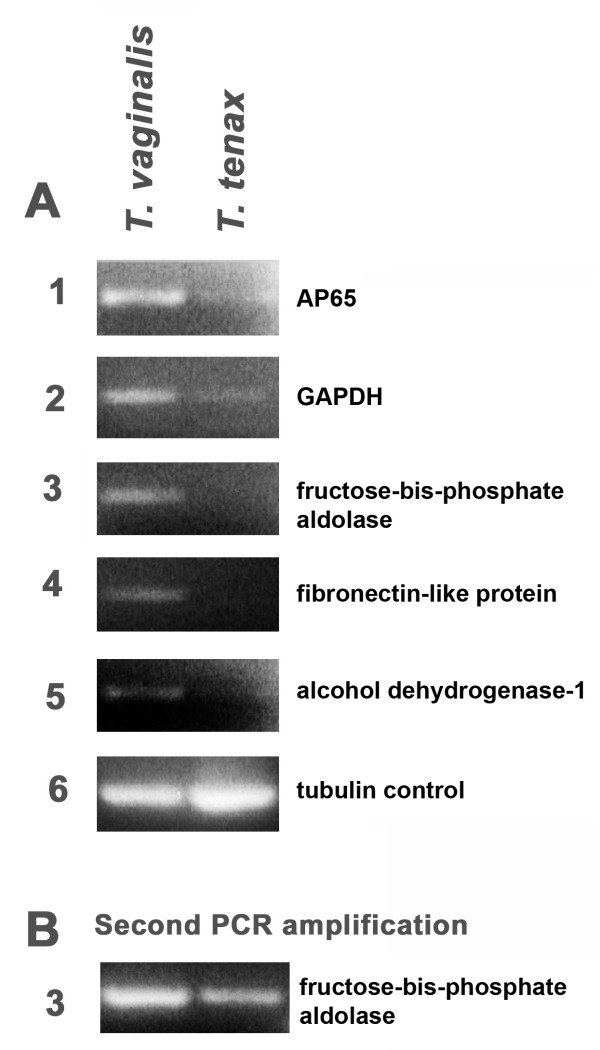
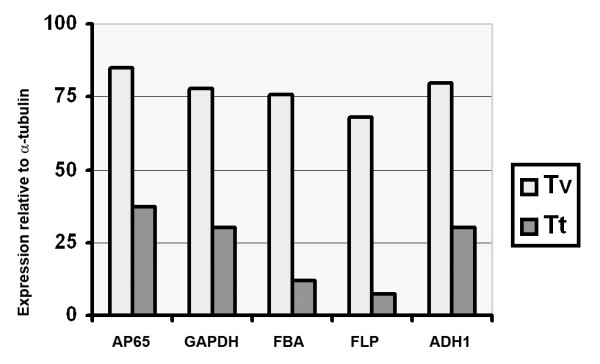
Results: Genes that were differentially expressed in T. vaginalis were identified by screening three independent subtraction cDNA libraries enriched for T. vaginalis genes. The same thirty randomly selected cDNA clones encoding for proteins with specific functions associated with colonization were identified from each of the subtraction cDNA libraries. In addition, a T. vaginalis cDNA expression library was screened with patient sera that was first pre-adsorbed with an extract of T. tenax antigens, and seven specific cDNA clones were identified from this cDNA library. Interestingly, some of the clones identified by the subtraction cDNA screening were also obtained from the cDNA expression library with the pre-adsorbed sera. Moreover and noteworthy, clones identified by both the procedures were found to be up-regulated in expression in T. vaginalis upon contact with vaginal epithelial cells, suggesting a role for these gene products in host colonization. Semi-quantitative RT-PCR analysis of select clones showed that the genes were not unique to T. vaginalis and that these genes were also present in T. tenax, albeit at very low levels of expression.
Conclusion: These results suggest that T. vaginalis and T. tenax have remarkable genetic identity and that T. vaginalis has higher levels of gene expression when compared to that of T. tenax. The data may suggest that T. tenax could be a variant of T. vaginalis.
Figures
References
-
- Cates W Jr. Estimates of the incidence and prevalence of sexually transmitted diseases in the United States. American Social Health Association Panel. Sex Transm Dis. 1999;26(4 Suppl):S2–7. - PubMed
Publication types
MeSH terms
Substances
Grants and funding
LinkOut - more resources
Full Text Sources
Research Materials
