Review
. 2009 Feb;13(1):58-73.
doi: 10.1016/j.cbpa.2009.02.036. Epub 2009 Mar 16.

Anaerobic functionalization of unactivated C-H bonds

Affiliations
Review

Anaerobic functionalization of unactivated C-H bonds

Squire J Booker. Curr Opin Chem Biol. 2009 Feb.

Abstract

The functionalization of alkanes was once thought to lie strictly within the domain of enzymes that activate dioxygen in order to generate an oxidant with suitable potency to cleave inert C-H bonds. The emergence of the radical SAM superfamily of enzymes-those which use S-adenosyl-l-methionine as a precursor to a 5'-deoxyadenosyl 5'-radical-has kindled a renaissance in the study of radical-dependent enzymatic reactions, and is ushering in a wealth of new and intriguing chemistry that remains to be elucidated. This review will focus on a special subclass of radical SAM enzymes that functionalize inert C-H bonds, highlighting the functional groups and the chemistry that leads to their insertion. Within this class are first, enzymes that catalyze sulfur insertion, the prototype of which is biotin synthase; second, enzymes that catalyze P-methylation or C-methylation, such as P-methylase or Fom3; third, enzymes that catalyze oxygen insertion, such as the anaerobic magnesium protoporphyrin-IX oxidative cyclase (BchE); and fourth, enzymes that functionalize n-hexane or other alkanes as the first step in the metabolism of these inert compounds by certain bacteria. In addition to surveying reactions that have been studied at various levels of detail, this review will speculate on the mechanisms of other types of reactions that this chemistry lends itself to.


Figures
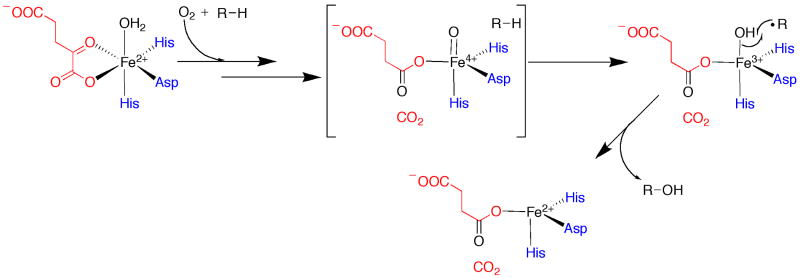
Figure 1
Figure 1
Abbreviated mechanism for hydroxylation by α-ketoglutarate-dependent enzymes (adapted from reference 4). Shown in red is the α-ketoglutarate co-substrate. Shown in blue are the ligands that compose the 2-His-1-carboxylate facial triad.
Figure 2
Figure 2
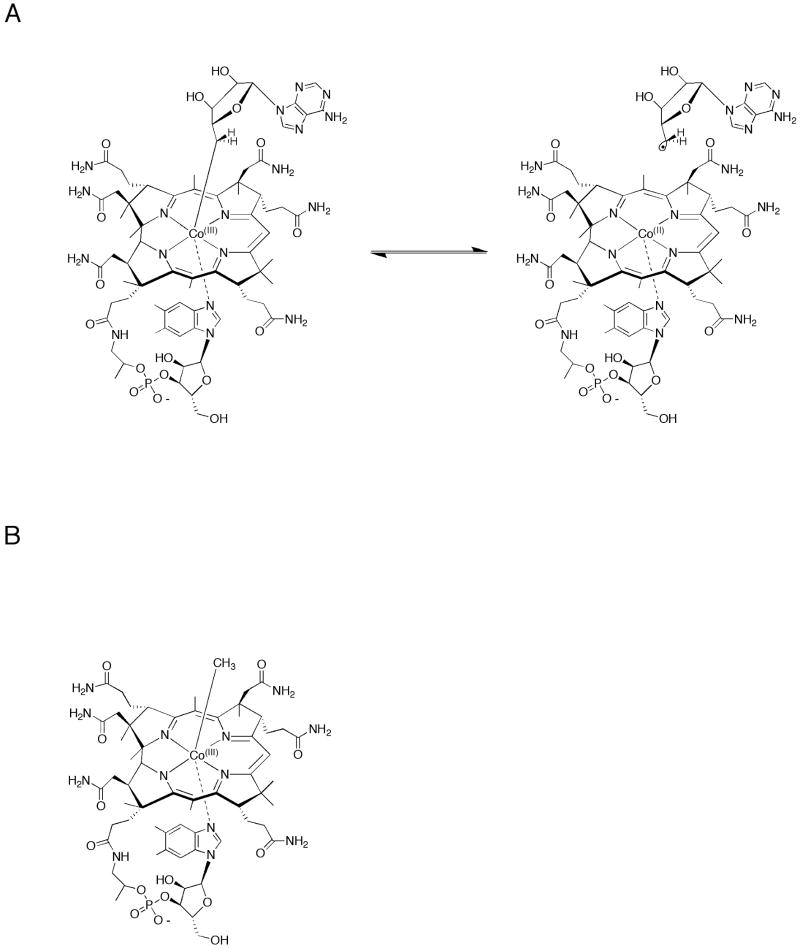
Structures of 5′-adenosyl 5′-cobalamin (AdoCbl) (A); and methylcobalamin (B). As shown, AdoCbl undergoes homolysis to afford a 5′-deoxyadenosyl 5′-radical and cob(II)alamin.
Figure 3
Figure 3
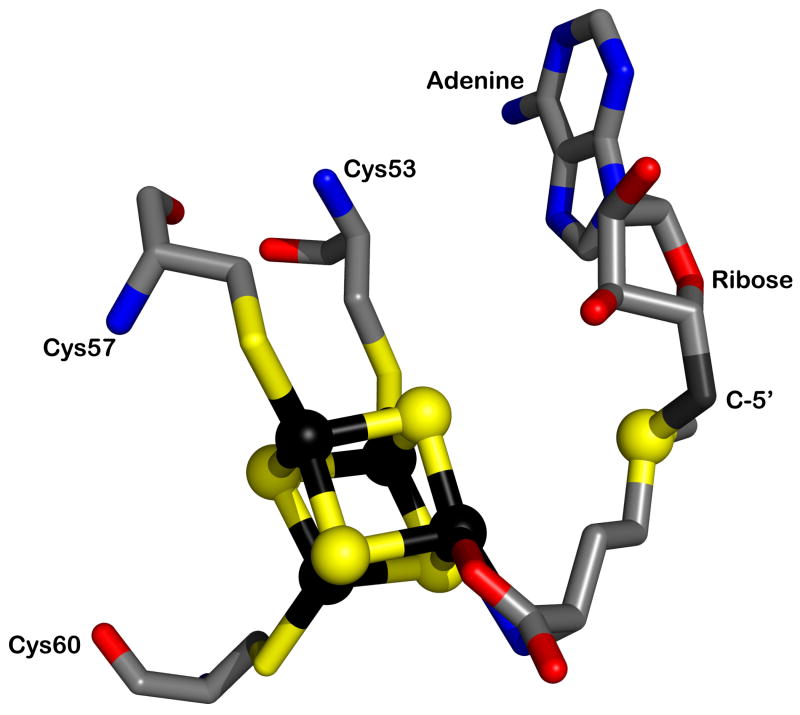
Structure of S-adenosylmethionine bound in contact to the [4Fe–4S] cluster in biotin synthase (PDB 1R30) (adapted from reference 55). The iron atoms of the iron-sulfur cluster are shown in black, while the sulfur atoms are shown in yellow. Oxygen atoms, red; nitrogen atoms, blue; carbon atoms, grey. The structure was prepared using the Pymol Molecular Graphics System (http://www.pymol.org)
Figure 4
Figure 4
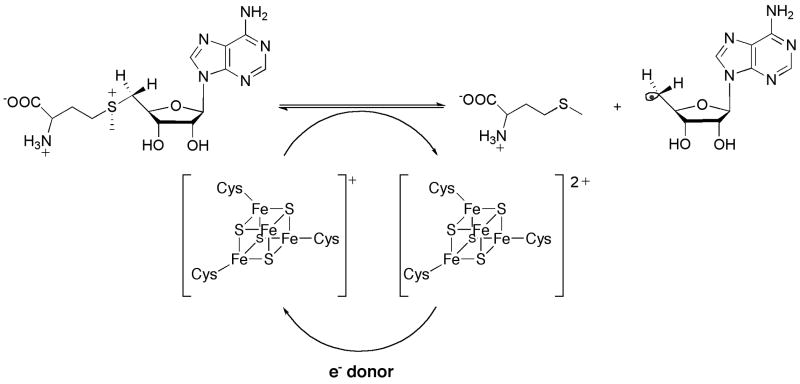
Formation of a 5′-deoxyadenosyl radical via a reductive cleavage of S-adenosylmethionine. The coproduct shown is L-methionine. The iron–sulfur cluster displayed is that which is ligated by cysteines in the CxxxCxxC motif.
Figure 5
Figure 5
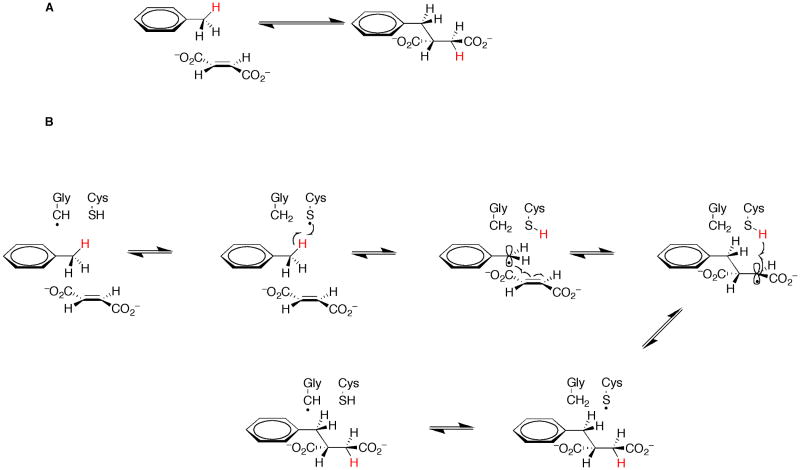
Reaction catalyzed by benzylsuccinate synthase (A). Proposed mechanism for benzylsuccinate synthase (B) (adapted from reference 27).
Figure 6
Figure 6
Reactions catalyzed by radical SAM enzymes that are known to catalyze sulfur insertion. Biotin synthase reaction (A); lipoyl synthase reaction (B); MiaB reaction (C); RimO reaction (D). SAM, S-adenosylmethionine; Met, L-methionine; 5′-dA, 5′-deoxyadenosine (figure adapted from reference 56).
Figure 7
Figure 7
Proposed mechanism for biotin synthase (adapted from reference 53).
Figure 8
Figure 8
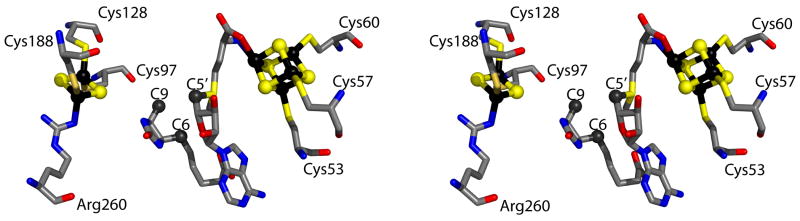
X-ray structure of the biotin synthase active site (PDB 1R30) (Ref 55). The [4Fe–4S] and [2Fe–2S] clusters as well as dethiobiotin and S-adenosylmethionine are shown in stick format. The iron atoms of the iron-sulfur clusters are shown in black, while the sulfur atoms are shown in yellow. Oxygen atoms, red; nitrogen atoms, blue; carbon atoms, grey. The structure was prepared using the Pymol Molecular Graphics System (http://www.pymol.org)
Figure 9
Figure 9
Abbreviated mechanism of isopenicillin N-Synthase (adapted from reference 4). The key step, shown in brackets, is the radical recombination with concomitant inner-sphere electron transfer that allows ring formation.
Figure 10
Figure 10
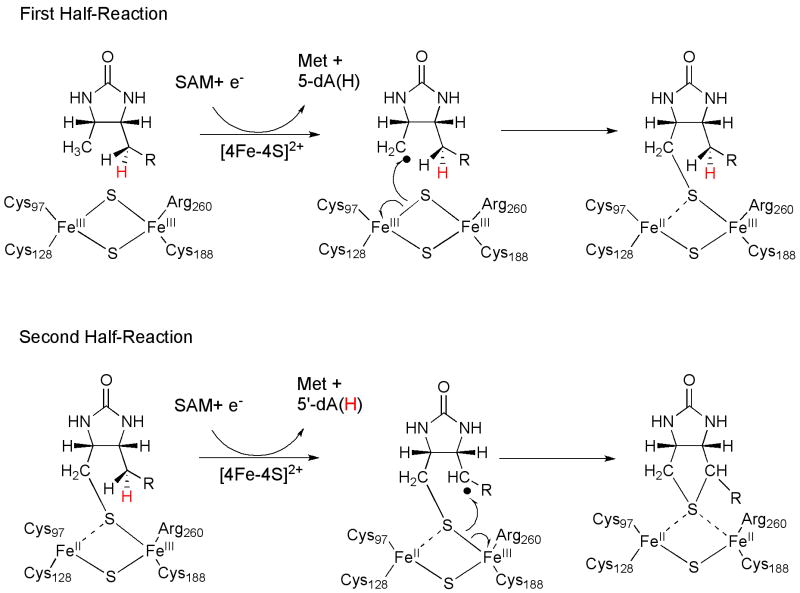
Hypothetical mechanism for radical SAM-dependent histone trimethyllysine demethylation.
Figure 11
Figure 11
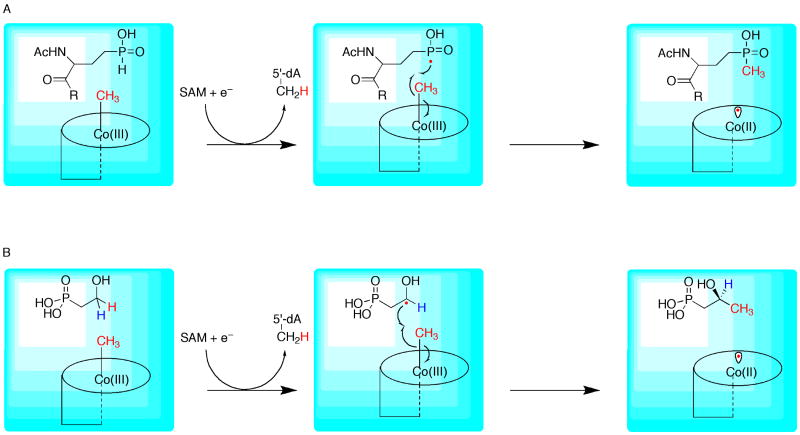
Proposed mechanisms for P-methylase (A) and Fom3 (B). Methylcobalamin is shown in cartoon format (adapted from reference 65).
Figure 12
Figure 12
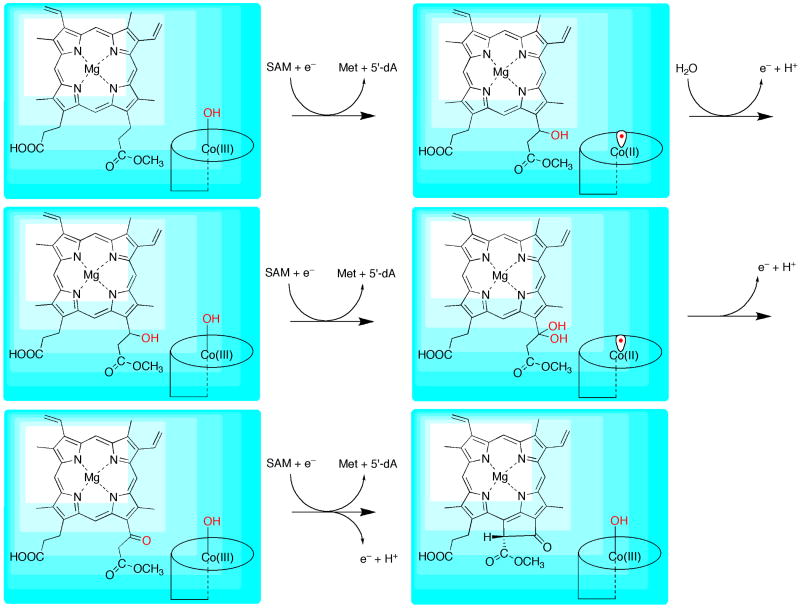
Hypothetical mechanism for the anaerobic Mg-protoporphyrin-IX monomethyl ester cyclase (BchE). Hydroxocobalamin is shown in cartoon format.

Comment in

  • Frontiers in enzymatic C-H-bond activation.
    Bollinger JM Jr, Broderick JB. Bollinger JM Jr, et al. Curr Opin Chem Biol. 2009 Feb;13(1):51-7. doi: 10.1016/j.cbpa.2009.03.018. Epub 2009 Apr 9. Curr Opin Chem Biol. 2009. PMID: 19362514 No abstract available.

References

    1. Frey PA. Importance of organic radicals in enzymic cleavage of unactivated carbon-hydrogen bonds. Chem Rev. 1990;90:1343–1357.
    2. ••This is a pivotal review article highlighting aerobic and anaerobic mechanisms for cleavage of unactivated C–H bonds. The article advances the thesis that metal ions are required to generate oxidants of sufficient potency to cleave such bonds.

    1. Costas M, Mehn MP, Jensen MP, Que L., Jr Dioxygen activation at mononuclear nonheme iron active sites: Enzymes, models, and intermediates. Chem Rev. 2004;104:939–986. - PubMed
    1. Baldwin JE, Bradley M. Isopenicillin N synthase: Mechanistic studies. Chem Rev. 1990;90:1079–1088.
    1. Krebs C, Fujimori DG, Walsh CT, Bollinger JM., Jr Non-heme Fe(IV)–oxo intermediates. Acc Chem Res. 2007;40:484–492. - PMC - PubMed
    1. Bollinger JM, Jr, Diao Y, Matthews MA, Xing G, Krebs C. myo-Inositol oxygenase: A radical new pathway for O2 and C–H activation at a nonheme diiron cluster. Dalton Trans. 2009:905–914. - PMC - PubMed

Publication types

LinkOut - more resources