


Anti-diarrheal effects of diosmectite in the treatment of acute diarrhea in children: a review
- PMID: 19301931
- PMCID: PMC7100234
- DOI: 10.2165/00148581-200911020-00001
Anti-diarrheal effects of diosmectite in the treatment of acute diarrhea in children: a review
Abstract
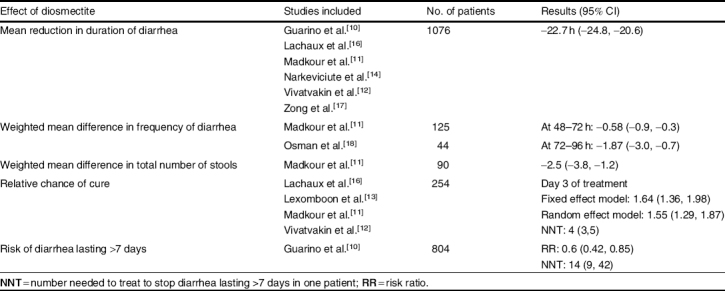
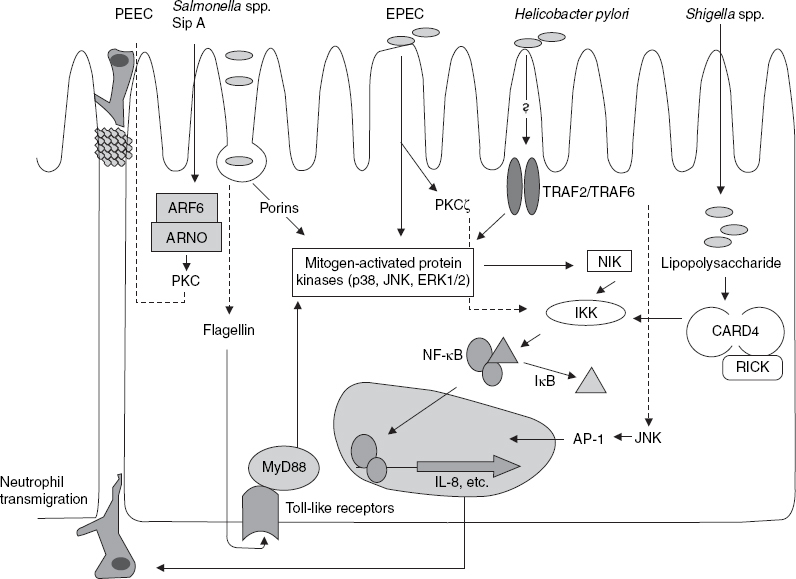
Acute diarrhea caused by an infectious organism is highly prevalent, particularly in developing countries, and is usually self-limiting. The condition is a major contributor to the global disease burden and is associated with a significant economic cost. The disease is common in children aged <5 years. It occurs as the result of exposure to a diarrheogenic agent that alters intestinal absorption and/or secretion, resulting in an increase in the volume of water that enters the colon beyond that which can be absorbed. Diarrhea almost always occurs by one or more of four mechanisms: disruption of osmotic forces in the intestine; disruption of normal secretory processes; disruption of epithelial cells or the epithelial tight junctions; or motility disorders. Oral rehydration therapy (ORT) is central to the management of acute diarrhea, and is sufficient to prevent complications due to dehydration in most patients while the disease runs its course. However, ORT has no effect on the duration of the disease or frequency of bowel motions, and any agent that could meet these needs would therefore be a useful addition to ORT. Diosmectite is a natural aluminomagnesium silicate clay with a lamellar, non-fibrous crystalline structure that gives it strong adsorbent properties. Its mechanisms of action are not yet fully understood, but are probably multiple. Diosmectite reduces inflammation, modifies mucus rheologic properties, inhibits mucolysis, and adsorbs bacteria, bacterial enterotoxins, viruses and other potentially diarrheogenic substances. A number of studies have shown that diosmectite reduces the duration of diarrhea and decreases the frequency of bowel motions after 2 days of treatment in children with mild-to-moderate acute diarrhea. Two recent trials have indicated a reduction in stool output with diosmectite. Because of its very favorable safety profile, with no serious adverse effects, diosmectite is frequently used, mainly in European countries but also in Asia and Africa. Diosmectite should be used as an adjunct, not an alternative, to ORT and, when needed, to antibacterial therapy.
Figures
References
Publication types
MeSH terms
Substances
LinkOut - more resources
Full Text Sources
Medical
