


Meningococcal factor H-binding protein variants expressed by epidemic capsular group A, W-135, and X strains from Africa
- PMID: 19302008
- PMCID: PMC2914608
- DOI: 10.1086/597806
Meningococcal factor H-binding protein variants expressed by epidemic capsular group A, W-135, and X strains from Africa
Abstract
Background: Meningococcal epidemics in Africa are generally caused by capsular group A strains, but W-135 or X strains also cause epidemics in this region. Factor H-binding protein (fHbp) is a novel antigen being investigated for use in group B vaccines. Little is known about fHbp in strains from other capsular groups.
Methods: We investigated fHbp in 35 group A, W-135, and X strains from Africa.
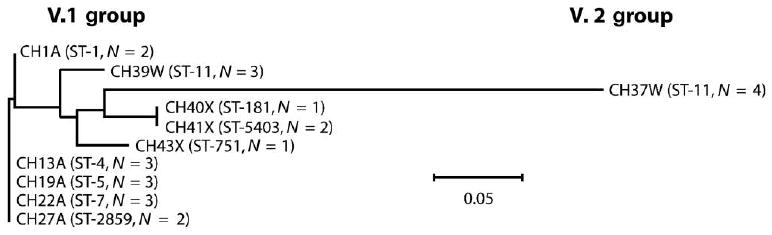
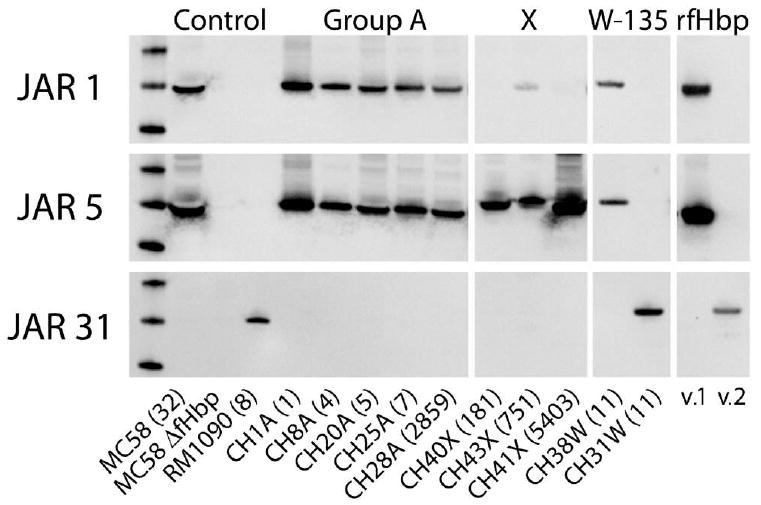
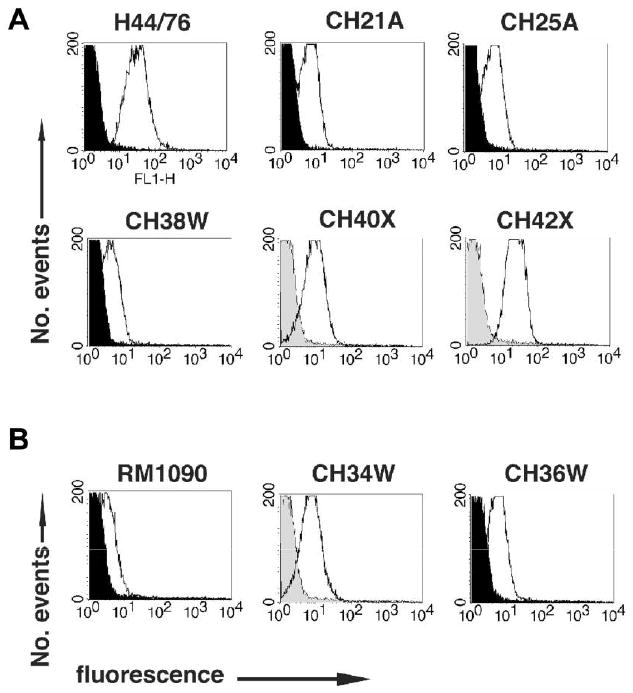
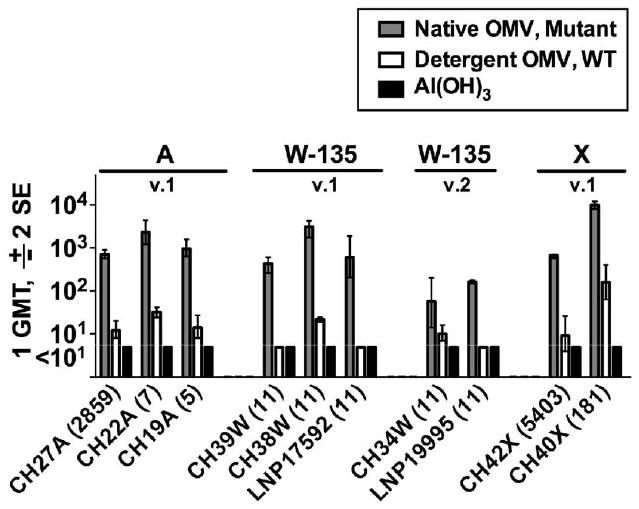
Results: The 22 group A isolates, which included each of the sequence types (STs) responsible for epidemics since 1963, and 4 group X and 3 group W-135 isolates from recent epidemics had genes encoding fHbp in antigenic variant group 1. The remaining 6 W-135 isolates had fHbp variant 2. Within each fHbp variant group, there was 92%-100% amino acid identity, and the proteins expressed conserved epitopes recognized by bactericidal monoclonal antibodies. Serum samples obtained from mice vaccinated with native outer membrane vesicle vaccines from mutants engineered to express fHbp variants had broad bactericidal activity against group A, W-135, or X strains.
Conclusions: Despite extensive natural exposure of the African population, fHbp is conserved among African strains. A native outer membrane vesicle vaccine that expresses fHbp variants can potentially elicit protective antibodies against strains from all capsular groups that cause epidemics in the region.
Conflict of interest statement
Potential conflicts of interest: D.M.G. is principal investigator of laboratory research conducted on behalf of Children's Hospital Oakland Research Institute, which is funded by grants from Novartis Vaccines and Diagnostics and Sanofi Pasteur; holds a paid consultancy from Novartis; and is an inventor on patents or patent applications associated with meningococcal B vaccines. O.K. is currently an employee of Novartis Vaccines, and D.A.C. has received research funding from Wyeth Vaccines and Sanofi Pasteur. P.T.B. and J.A.W. report no relevant conflicts of interest.
Figures
References
-
- Greenwood B. Manson Lecture. Meningococcal meningitis in Africa. Trans R Soc Trop Med Hyg. 1999;93:341–53. - PubMed
-
- World Health Organization. WHO report on global surveillance of epidemic-prone diseases. 2001. [16 March 2009]. Available at: http://www.who.int/csr/resources/publications/surveillance/WHO_CDS_CSR_I...
-
- Miller MA, Wenger J, Rosenstein N, Perkins B. Evaluation of meningococcal meningitis vaccination strategies for the meningitis belt in Africa. Pediatr Infect Dis J. 1999;18:1051–9. - PubMed
-
- LaForce FM, Konde K, Viviani S, Préziosi MP. The Meningitis Vaccine Project. Vaccine. 2007;25(Suppl 1):A97–100. - PubMed
-
- Jodar L, LaForce MF, Ceccarini C, Aguado MT, Granoff DM. Meningococcal conjugate vaccine for Africa: a model for developing new vaccines for the poorest countries. Lancet. 2003;361:4997–9. - PubMed
Publication types
MeSH terms
Substances
Grants and funding
LinkOut - more resources
Full Text Sources
Other Literature Sources
