


Comparative evaluation of the tendon-bone interface contact pressure in different single- versus double-row suture anchor repair techniques
- PMID: 19305972
- PMCID: PMC2782118
- DOI: 10.1007/s00167-009-0771-7
Comparative evaluation of the tendon-bone interface contact pressure in different single- versus double-row suture anchor repair techniques
Abstract
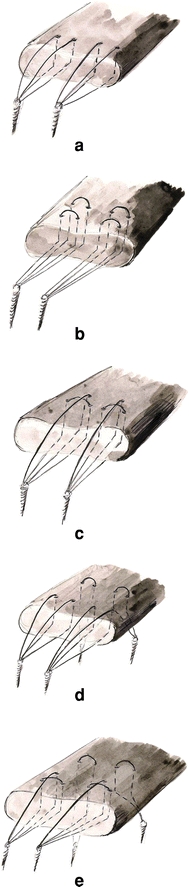
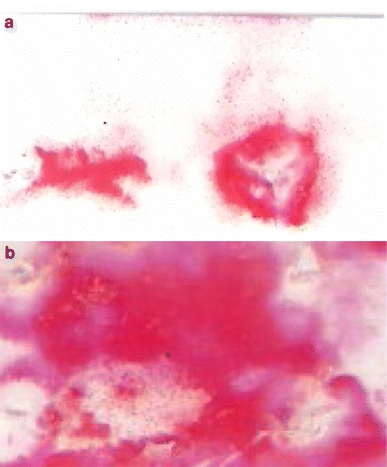
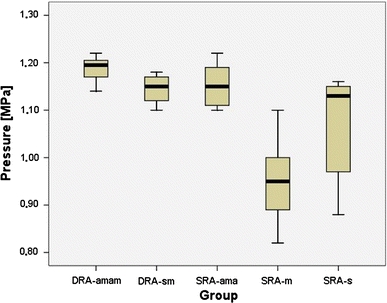
The aim of the study was to evaluate the time zero contact pressure over a defined rotator cuff footprint using different repair and stitch techniques in an established sheep model. Forty fresh-frozen sheep shoulders were randomly assigned to five repair groups: single-row repair using simple stitches (SRA-s), single-row repair using horizontal mattress stitches (SRA-m), and single-row repair using arthroscopic Mason-Allen stitches (SRA-ama). Double-row repair was either performed with a combination of simple and horizontal mattress stitches (DRA-sm) or with arthroscopic Mason-Allen/horizontal mattress stitches (DRA-amam). Investigations were performed using a pressure-sensitive film system. The average contact pressure and pressure pattern were measured for each group. Contact pressure was lowest in SRA-m followed by SRA-s. SRA-ama showed highest contact pressure of all single-row treatment groups (P < 0.05). DRA-amam presented the highest overall contact pressure (P < 0.05), whereas DRA-sm exerted contact pressure equal to that of SRA-ama. Both double-row techniques showed the most expanded pressure pattern. Average contact pressures for the more complex single- and double-row techniques utilizing arthroscopic Mason-Allen stitches were greater than were those of the repair techniques utilizing simple and horizontal mattress stitches. However, the contact pattern between the anchors could be increased by using the double-row technique, resulting in more footprint coverage compared to patterns utilizing the single-row techniques. These results support the use of the more complex arthroscopic Mason-Allen stitches and may improve the environment for healing of the repaired rotator cuff tendon.
Figures
References
-
- Apreleva M, Özbaydar M, Fitzgibbons PG, Warner JJP. Rotator cuff tears: the effect of the reconstruction method on three-dimensional repair site area. Arthroscopy. 2002;18:519–526. - PubMed
-
- Baums MH, Buchhorn GH, Spahn G, Poppendieck B, Schultz W, Klinger HM. Biomechanical characteristics of single-row repair in comparison to double-row repair with consideration of the suture configuration and suture material. Knee Surg Sports Traumatol Arthrosc. 2008;16:1052–1060. doi: 10.1007/s00167-008-0590-2. - DOI - PMC - PubMed
-
- Burkhart SS. The deadman theory of suture anchors: observations along a south Texas fence line. Arthroscopy. 1995;11:119–123. - PubMed
Publication types
MeSH terms
LinkOut - more resources
Full Text Sources
