


Cellular and mitochondrial glutathione redox imbalance in lymphoblastoid cells derived from children with autism
- PMID: 19307255
- PMCID: PMC2717775
- DOI: 10.1096/fj.08-128926
Cellular and mitochondrial glutathione redox imbalance in lymphoblastoid cells derived from children with autism
Abstract
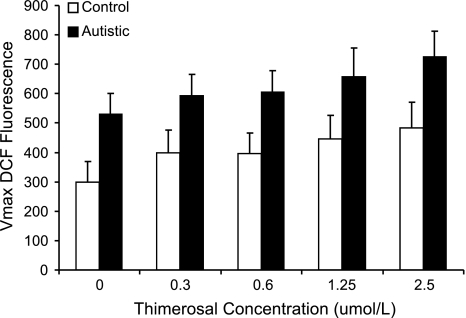
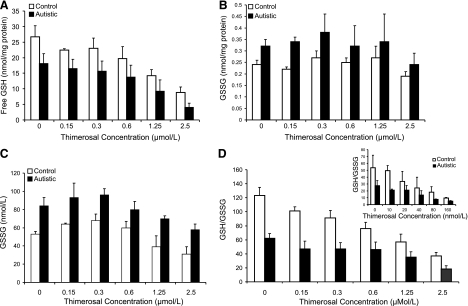
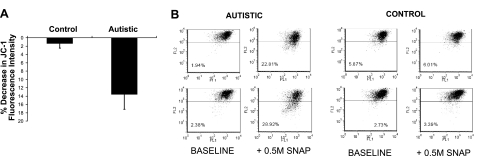
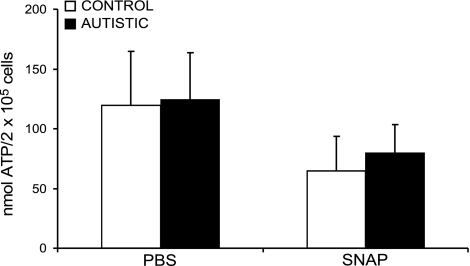
Research into the metabolic phenotype of autism has been relatively unexplored despite the fact that metabolic abnormalities have been implicated in the pathophysiology of several other neurobehavioral disorders. Plasma biomarkers of oxidative stress have been reported in autistic children; however, intracellular redox status has not yet been evaluated. Lymphoblastoid cells (LCLs) derived from autistic children and unaffected controls were used to assess relative concentrations of reduced glutathione (GSH) and oxidized disulfide glutathione (GSSG) in cell extracts and isolated mitochondria as a measure of intracellular redox capacity. The results indicated that the GSH/GSSG redox ratio was decreased and percentage oxidized glutathione increased in both cytosol and mitochondria in the autism LCLs. Exposure to oxidative stress via the sulfhydryl reagent thimerosal resulted in a greater decrease in the GSH/GSSG ratio and increase in free radical generation in autism compared to control cells. Acute exposure to physiological levels of nitric oxide decreased mitochondrial membrane potential to a greater extent in the autism LCLs, although GSH/GSSG and ATP concentrations were similarly decreased in both cell lines. These results suggest that the autism LCLs exhibit a reduced glutathione reserve capacity in both cytosol and mitochondria that may compromise antioxidant defense and detoxification capacity under prooxidant conditions.
Figures
References
-
- Centers for Disease Control and Prevention Prevalence of autism spectrum disorders: autism and developmental disabilities monitoring network, 14 sites, United States, 2002. MMWR Surveill Summ. 2007;56:12–28. - PubMed
-
- Andreazza A C, Kauer-Sant'anna M, Frey B N, Bond D J, Kapczinski F, Young L T, Yatham L N. Oxidative stress markers in bipolar disorder: a meta-analysis. J Affect Disord. 2008;111:135–144. - PubMed
-
- Berk M, Copolov D L, Dean O, Lu K, Jeavons S, Schapkaitz I, Anderson-Hunt M, Bush A I. N-acetyl cysteine for depressive symptoms in bipolar disorder: a double-blind randomized placebo-controlled trial. Biol Psychiatry. 2008;64:468–475. - PubMed
Publication types
MeSH terms
Substances
Grants and funding
LinkOut - more resources
Full Text Sources
Other Literature Sources
Research Materials
