A systems approach to prion disease
- PMID: 19308092
- PMCID: PMC2671916
- DOI: 10.1038/msb.2009.10
A systems approach to prion disease
Abstract
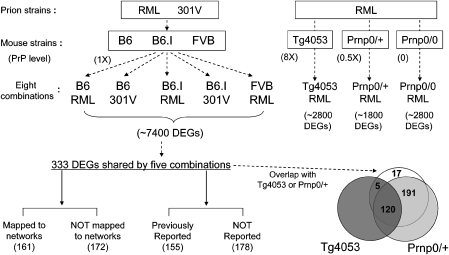
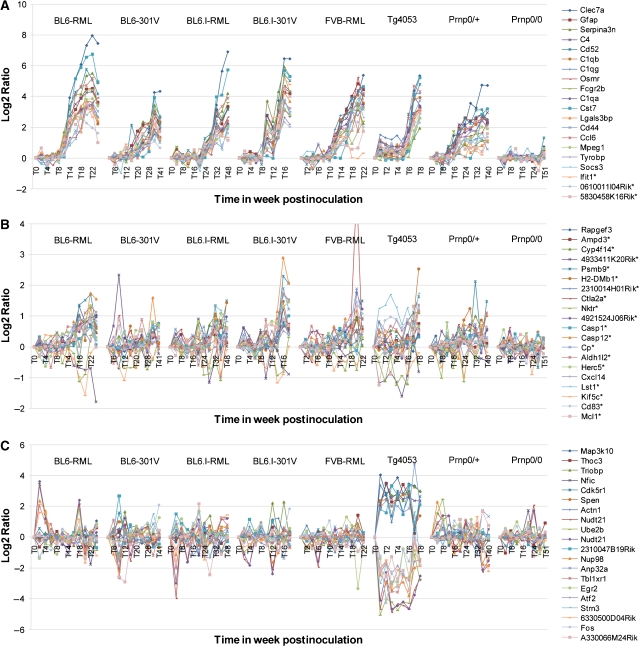
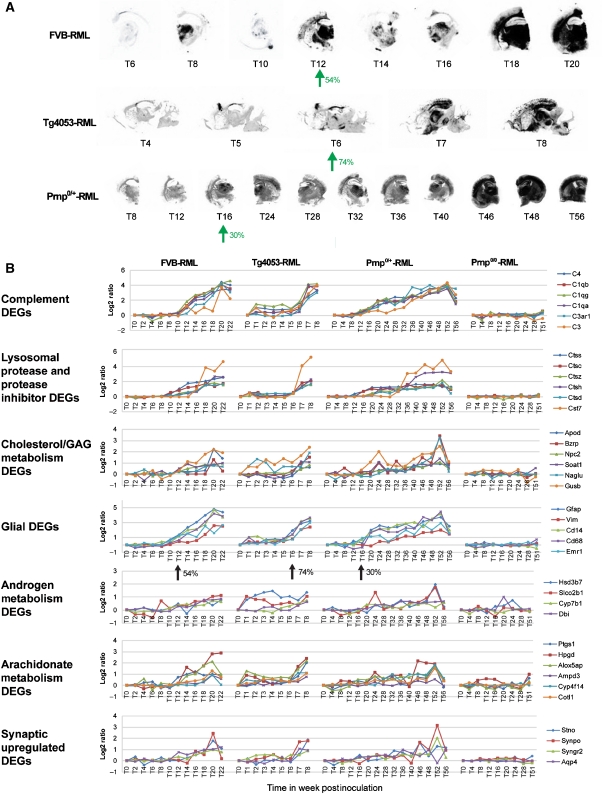
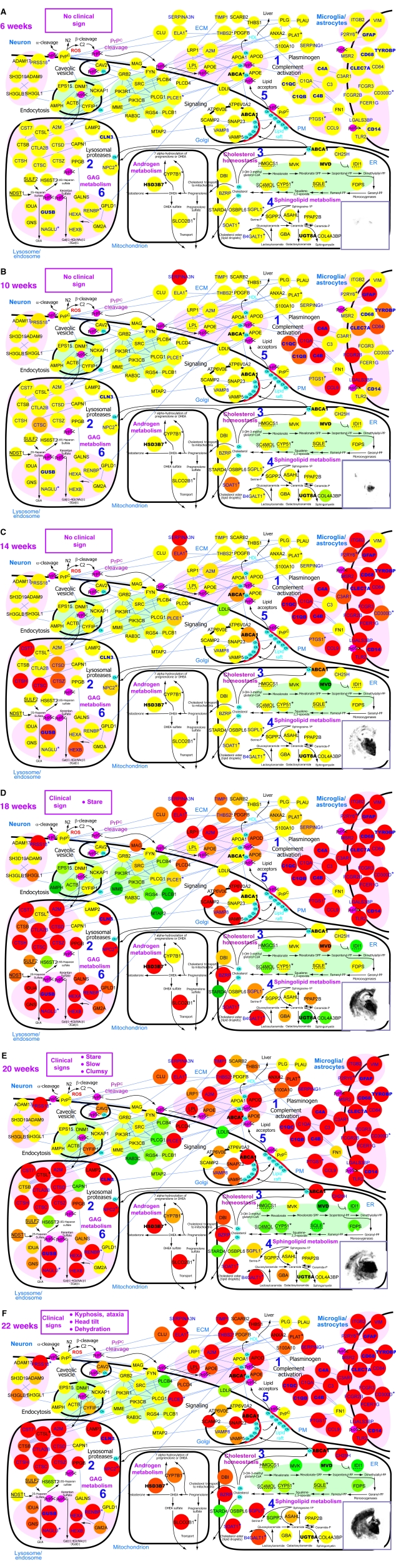
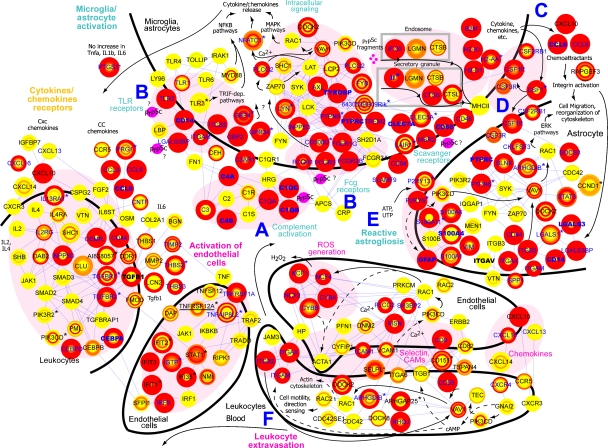
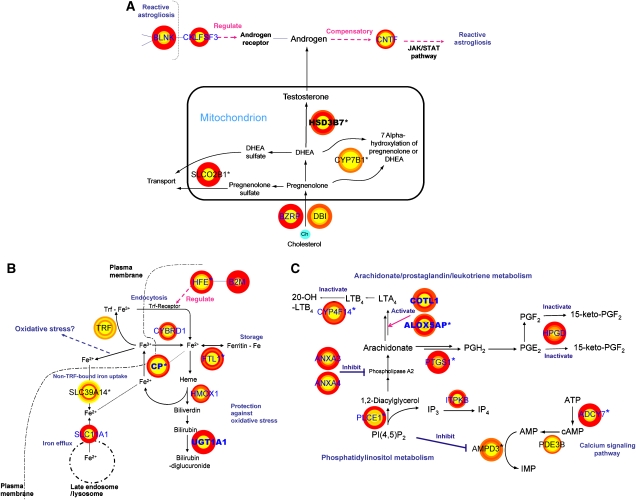
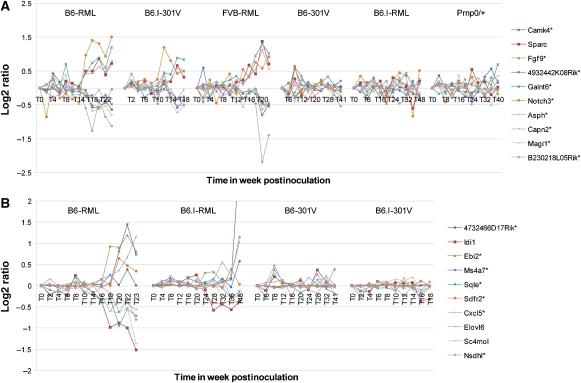
Prions cause transmissible neurodegenerative diseases and replicate by conformational conversion of normal benign forms of prion protein (PrP(C)) to disease-causing PrP(Sc) isoforms. A systems approach to disease postulates that disease arises from perturbation of biological networks in the relevant organ. We tracked global gene expression in the brains of eight distinct mouse strain-prion strain combinations throughout the progression of the disease to capture the effects of prion strain, host genetics, and PrP concentration on disease incubation time. Subtractive analyses exploiting various aspects of prion biology and infection identified a core of 333 differentially expressed genes (DEGs) that appeared central to prion disease. DEGs were mapped into functional pathways and networks reflecting defined neuropathological events and PrP(Sc) replication and accumulation, enabling the identification of novel modules and modules that may be involved in genetic effects on incubation time and in prion strain specificity. Our systems analysis provides a comprehensive basis for developing models for prion replication and disease, and suggests some possible therapeutic approaches.
Conflict of interest statement
The authors declare that they have no conflict of interest.
Figures
Comment in
-
A landmark systems analysis of prion disease of the brain.Mol Syst Biol. 2009;5:254. doi: 10.1038/msb.2009.12. Epub 2009 Mar 24. Mol Syst Biol. 2009. PMID: 19308093 Free PMC article. No abstract available.
References
-
- Ben-Zaken O, Tzaban S, Tal Y, Horonchik L, Esko JD, Vlodavsky I, Taraboulos A (2003) Cellular heparan sulfate participates in the metabolism of prions. J Biol Chem 278: 40041–40049 - PubMed
-
- Berriz GF, King OD, Bryant B, Sander C, Roth FP (2003) Characterizing gene sets with FuncAssociate. Bioinformatics 19: 2502–2504 - PubMed
Publication types
MeSH terms
Substances
Grants and funding
LinkOut - more resources
Full Text Sources
Other Literature Sources
Molecular Biology Databases
Research Materials