


Do new drugs increase life expectancy? A critique of a Manhattan Institute paper
- PMID: 19308335
- PMCID: PMC2669876
- DOI: 10.1007/s11606-009-0954-4
Do new drugs increase life expectancy? A critique of a Manhattan Institute paper
Abstract
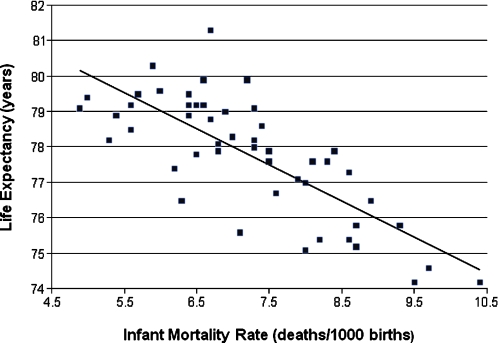
A recent study published by the Manhattan Institute, "Why Has Longevity Increased More in Some States than in Others? The Role of Medical Innovation and Other Factors," purported to show that the more rapid adoption of new drugs has substantial benefits in the form of increased life expectancy, higher productivity and lower non-drug health care expenditures. This study has been cited as evidence supporting the more rapid acceptance of new drugs in Medicaid, Medicare, and other public programs and has helped to shape public debate on the value of new drugs. This analysis questions the key conclusions of the study. It points out that the key statistical regressions appear to be misspecified, since they show anomalies such as a negative correlation between income growth and life expectancy and find no relationship between education and productivity growth. Methodological flaws addressed include lack of adjustment for infant mortality rates; inadequate proxy measures of health status; lack of adjustment for ages of individuals and other sociodemographic factors; inherent problems with the definition of drug age, or 'vintage;' and the failure to consider reverse causation as an obvious explanation for several findings. The Manhattan Institute study does not provide reliable evidence for favoring adoption of newer drugs in either public or private health care programs.
Figures
Comment in
-
Do new drugs save lives?J Gen Intern Med. 2009 Dec;24(12):1356; author reply 1357. doi: 10.1007/s11606-009-1101-y. J Gen Intern Med. 2009. PMID: 19756872 Free PMC article. No abstract available.
Comment on
-
Are the benefits of newer drugs worth their cost? Evidence from the 1996 MEPS.Health Aff (Millwood). 2001 Sep-Oct;20(5):241-51. doi: 10.1377/hlthaff.20.5.241. Health Aff (Millwood). 2001. PMID: 11558710
References
-
- Prescription Drug Trends. Kaiser Family Foundation 2007 (May) Available at http://www.kff.org/rxdrugs/upload/3057_06.pdf. Accessed December 23, 2008.
-
- The Value of Medicines: Facts and Figures 2006. Pharmaceutical Research and Manufacturers Association http://www.phrma.org/files/Value%20of%20Medicine%202006.pdf. Accessed December 24, 2008.
-
- EconPapers http://econpapers.repec.org/RAS/pli76.htm. Accessed February 1, 2009.
-
- Mintzes B, Lexchin J. Do higher drug costs lead to better health? Can J Clin Pharmacol. 2005;12(1):e22–7. - PubMed
Publication types
MeSH terms
Substances
LinkOut - more resources
Full Text Sources
