


Mild fasting hyperglycemia in children: high rate of glucokinase mutations and some risk of developing type 1 diabetes mellitus
- PMID: 19309449
- PMCID: PMC2864306
- DOI: 10.1111/j.1399-5448.2009.00499.x
Mild fasting hyperglycemia in children: high rate of glucokinase mutations and some risk of developing type 1 diabetes mellitus
Abstract
Background: Incidental hyperglycemia in children generates concern about the presence of preclinical type 1 diabetes mellitus (T1DM).
Objective: To genetically evaluate two common forms of maturity-onset diabetes of youth (MODY), the short-term prognosis in children with mild hyperglycemia, and a positive family history of diabetes mellitus.
Subjects: Asymptomatic children and adolescents (n = 14), younger than 15 yr, with fasting hyperglycemia, a positive family history of mild non-progressive hyperglycemia, and negative pancreatic autoantibodies were studied.
Patients and methods: Glucokinase gene (GCK) and hepatocyte nuclear factor 1 alpha gene (HNF1A) causing two common forms of MODY were sequenced. The clinical outcome was evaluated after a follow-up period of 2.8 +/- 1.3 yr.
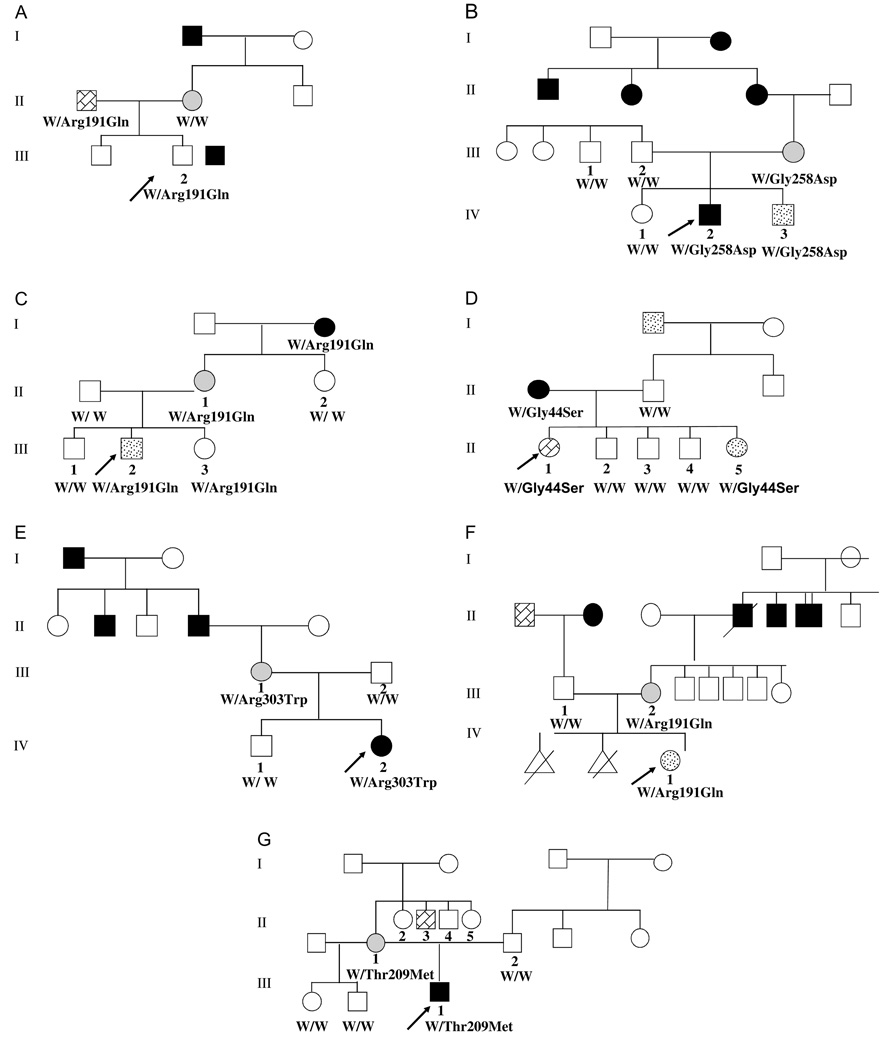
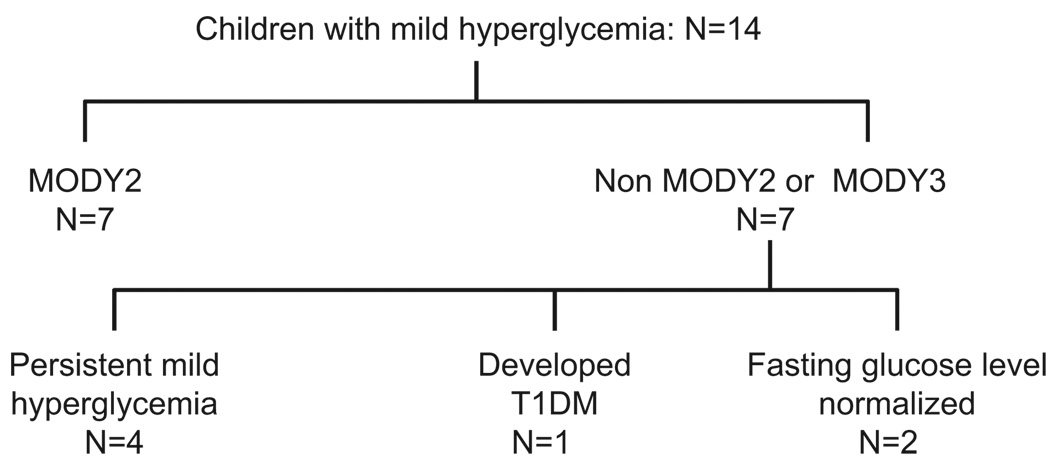
Results: GCK mutations were present in seven children. The confirmation of this diagnosis allowed discontinuation of insulin in two families and oral medications in three families. Mutations of HNF1A were not detected in any of the families. During the follow-up period, all the GCK mutation carrier children remained asymptomatic without medication and the last hemoglobin A1c levels were 6.4 +/- 0.7%. In the GCK-negative children (n = 7), one developed T1DM, corresponding to 7.2% of the total group. Mild fasting hyperglycemia persisted during follow-up in four GCK-negative children and normalized in the remaining two.
Conclusions: The presence of mild persistent hyperglycemia in any patient without autoantibodies should lead to genetic analysis of GCK, particularly if there is a positive family history. Furthermore, those without GCK mutations should be followed with repeat autoantibody testing, and other genetic types of diabetes should be considered if hyperglycemia worsens.
Figures
References
-
- Bhisitkul DM, Morrow AL, Vinik AI, Shults J, Layland JC, Rohn R. Prevalence of stress hyperglycemia among patients attending a pediatric emergency department. J Pediatr. 1994;124:547–551. - PubMed
-
- Steck AK, Eisenbarth GS. Genetic similarities between latent autoimmune diabetes and type 1 and type 2 diabetes. Diabetes. 2008;57:1160–1162. - PubMed
-
- American Diabetes Association. Diagnosis and classification of diabetes mellitus. Diabetes Care. 2004;27 Suppl. 1:S5–S10. - PubMed
-
- Lorini R, Alibrandi A, Vitali L, et al. Risk of type 1 diabetes development in children with incidental hyperglycemia: a multicenter Italian study. Diabetes Care. 2001;24:1210–1216. - PubMed
-
- Schatz DA, Kowa H, Winter WE, Riley WJ. Natural history of incidental hyperglycemia and glycosuria of childhood. J Pediatr. 1989;115:676–680. - PubMed
Publication types
MeSH terms
Substances
Grants and funding
LinkOut - more resources
Full Text Sources
Medical
Molecular Biology Databases
Miscellaneous
