


Population based prostate cancer screening in north Mexico reveals a high prevalence of aggressive tumors in detected cases
- PMID: 19317909
- PMCID: PMC2666762
- DOI: 10.1186/1471-2407-9-91
Population based prostate cancer screening in north Mexico reveals a high prevalence of aggressive tumors in detected cases
Abstract
Background: Prostate Cancer (PCa) is the second most frequent neoplasia in men worldwide. Previous reports suggest that the prevalence of PCa in Hispanic males is lower than in Africans (including communities with African ancestry) and Caucasians, but higher than in Asians. Despite these antecedents, there are few reports of open population screenings for PCa in Latin American communities. This article describes the results of three consecutive screenings in the urban population of Monterrey, Mexico.
Methods: After receiving approval from our University Hospital's Internal Review Board (IRB), the screening was announced by radio, television, and press, and it was addressed to male subjects over 40 years old in general. Subjects who consented to participate were evaluated at the primary care clinics of the University Health Program at UANL, in the Metropolitan area of Monterrey. Blood samples were taken from each subject for prostate specific antigen (PSA) determination; they underwent a digital rectal examination (DRE), and were subsequently interviewed to obtain demographic and urologic data. Based on the PSA (>4.0 ng/ml) and DRE results, subjects were appointed for transrectal biopsy (TRB).
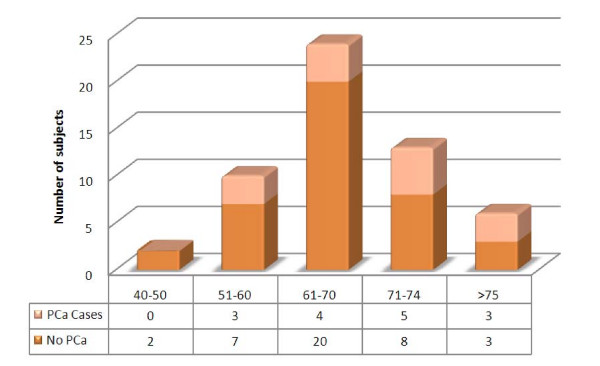
Results: A total of 973 subjects were screened. Prostate biopsy was recommended to 125 men based on PSA values and DRE results, but it was performed in only 55 of them. 15 of these biopsied men were diagnosed with PCa, mostly with Gleason scores > or = 7.
Conclusion: Our results reflect a low prevalence of PCa in general, but a high occurrence of high grade lesions (Gleason > or = 7) among patients that resulted positive for PCa. This observation remarks the importance of the PCa screening programs in our Mexican community and the need for strict follow-up campaigns.
Figures
References
-
- Sistema Nacional de Información en Salud: Base de datos 2005. http://sinais.salud.gob.mx/mortalidad/
-
- Programa de Acción: Cáncer de Próstata. Centro Nacional de Vigilancia Epidemiológica. Secretaría de Salud de México. 2001. http://bibliotecas.salud.gob.mx/gsdl/collect/publin1/index/assoc/HASH18a...
-
- Harris R, Lohr KN. Screening for prostate cancer: an update of the evidence for the U.S. Preventive Services Task Force. Ann Intern Med. 2002;137(11):917–929. - PubMed
-
- Kramer BS, Brown ML, Prorok PC, Potosky AL, Gohagan JK. Prostate cancer screening: what we know and what we need to know. Ann Intern Med. 1993;119(9):914–923. - PubMed
Publication types
MeSH terms
Substances
LinkOut - more resources
Full Text Sources
Medical
Research Materials
Miscellaneous
