


HlyU acts as an H-NS antirepressor in the regulation of the RTX toxin gene essential for the virulence of the human pathogen Vibrio vulnificus CMCP6
- PMID: 19320834
- PMCID: PMC2704492
- DOI: 10.1111/j.1365-2958.2009.06664.x
HlyU acts as an H-NS antirepressor in the regulation of the RTX toxin gene essential for the virulence of the human pathogen Vibrio vulnificus CMCP6
Abstract
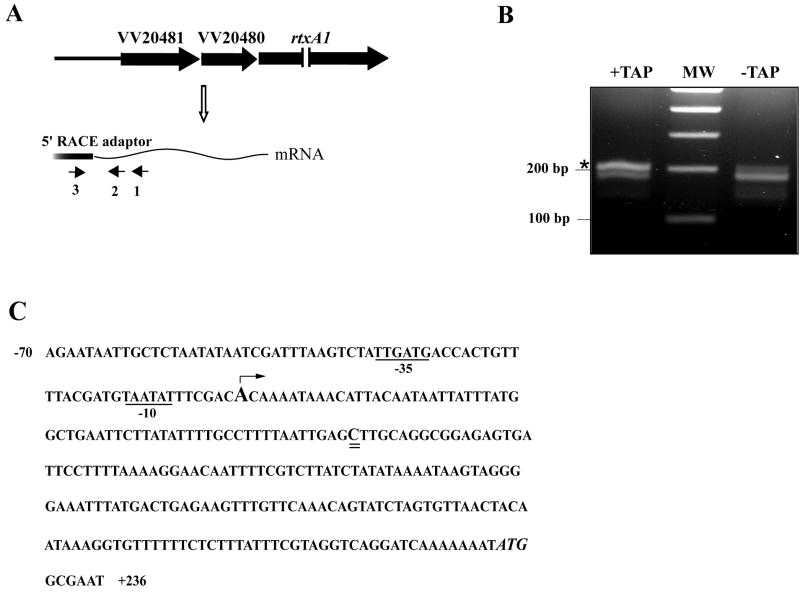
In Vibrio vulnificus, HlyU upregulates the expression of the large RTX toxin gene. In this work we identified the binding site of HlyU to -417 to -376 bp of the rtxA1 operon transcription start site. lacZ fusions for a series of progressive deletions from the rtxA1 operon promoter showed that transcriptional activity increased independently of HlyU when its binding site was absent. Thus HlyU must regulate the rtxA1 operon expression by antagonizing a negative regulator. Concomitantly we found that an hns mutant resulted in an increase in the expression of the rtxA1 operon genes. Multiple copies of HlyU can increase the promoter activity only in the presence of H-NS underscoring the hypothesis that HlyU must alleviate the repression by this protein. H-NS binds to a region that extends upstream and downstream of the rtxA1 operon promoter. In the upstream region it binds to five AT-rich sites of which two overlap the HlyU binding site. Competitive footprinting and gel shift data demonstrate HlyU's higher affinity as compared with H-NS resulting in the de-repression and a corresponding increased expression of the rtxA1 operon.
Figures


References
-
- Banos RC, Pons JI, Madrid C, Juarez A. A global modulatory role for the Yersinia enterocolitica H-NS protein. Microbiology. 2008;154:1281–1289. - PubMed
-
- Beloin C, Dorman CJ. An extended role for the nucleoid structuring protein H-NS in the virulence gene regulatory cascade of Shigella flexneri. Mol Microbiol. 2003;47:825–838. - PubMed
Publication types
MeSH terms
Substances
Grants and funding
LinkOut - more resources
Full Text Sources
Molecular Biology Databases
Miscellaneous
