Male circumcision for the prevention of HSV-2 and HPV infections and syphilis
- PMID: 19321868
- PMCID: PMC2676895
- DOI: 10.1056/NEJMoa0802556
Male circumcision for the prevention of HSV-2 and HPV infections and syphilis
Abstract
Background: Male circumcision significantly reduced the incidence of human immunodeficiency virus (HIV) infection among men in three clinical trials. We assessed the efficacy of male circumcision for the prevention of herpes simplex virus type 2 (HSV-2) and human papillomavirus (HPV) infections and syphilis in HIV-negative adolescent boys and men.
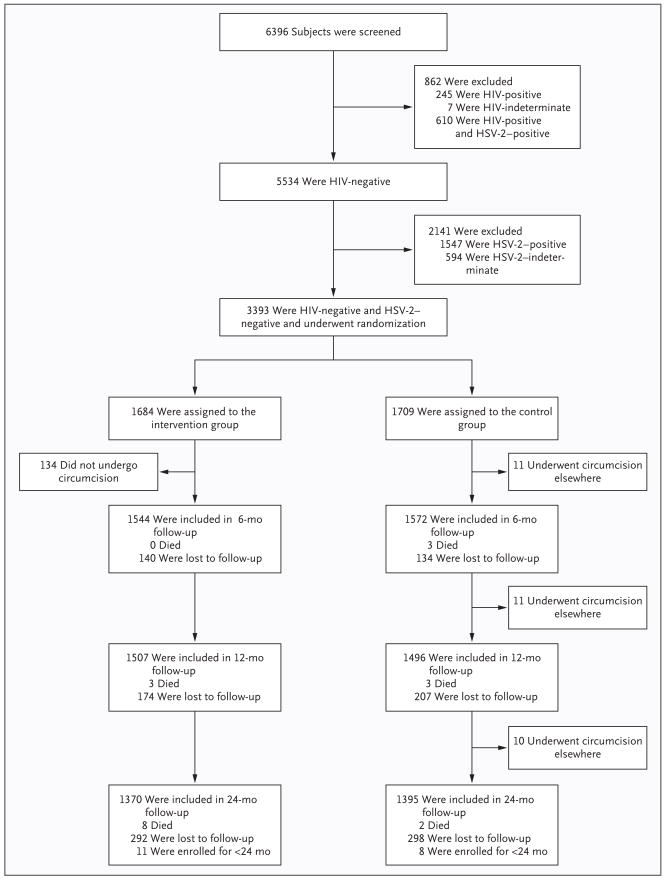
Methods: We enrolled 5534 HIV-negative, uncircumcised male subjects between the ages of 15 and 49 years in two trials of male circumcision for the prevention of HIV and other sexually transmitted infections. Of these subjects, 3393 (61.3%) were HSV-2-seronegative at enrollment. Of the seronegative subjects, 1684 had been randomly assigned to undergo immediate circumcision (intervention group) and 1709 to undergo circumcision after 24 months (control group). At baseline and at 6, 12, and 24 months, we tested subjects for HSV-2 and HIV infection and syphilis, along with performing physical examinations and conducting interviews. In addition, we evaluated a subgroup of subjects for HPV infection at baseline and at 24 months.
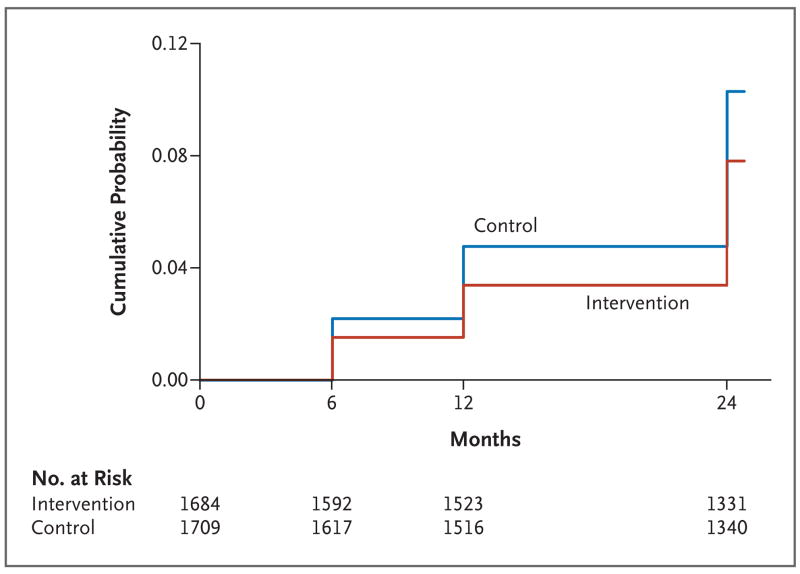
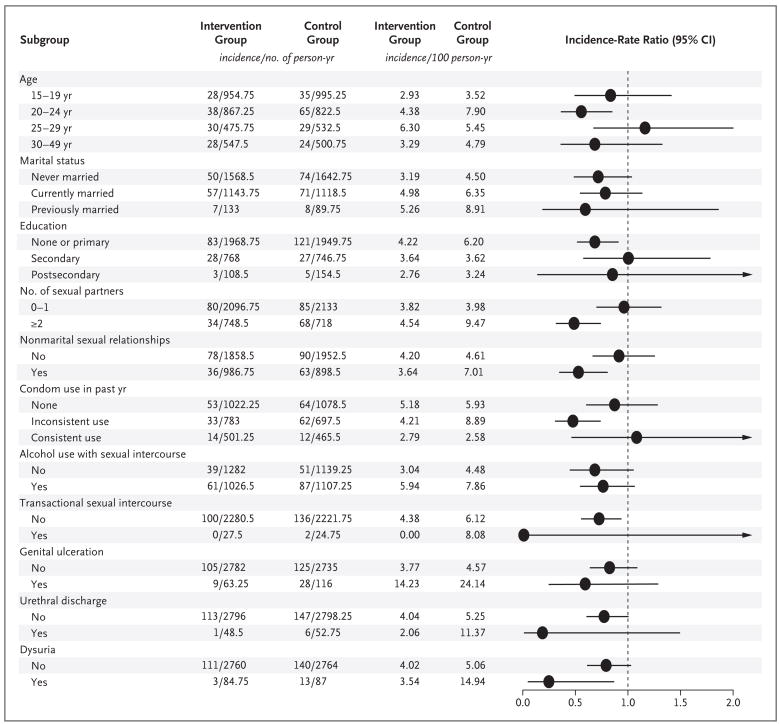
Results: At 24 months, the cumulative probability of HSV-2 seroconversion was 7.8% in the intervention group and 10.3% in the control group (adjusted hazard ratio in the intervention group, 0.72; 95% confidence interval [CI], 0.56 to 0.92; P=0.008). The prevalence of high-risk HPV genotypes was 18.0% in the intervention group and 27.9% in the control group (adjusted risk ratio, 0.65; 95% CI, 0.46 to 0.90; P=0.009). However, no significant difference between the two study groups was observed in the incidence of syphilis (adjusted hazard ratio, 1.10; 95% CI, 0.75 to 1.65; P=0.44).
Conclusions: In addition to decreasing the incidence of HIV infection, male circumcision significantly reduced the incidence of HSV-2 infection and the prevalence of HPV infection, findings that underscore the potential public health benefits of the procedure. (ClinicalTrials.gov numbers, NCT00425984 and NCT00124878.)
2009 Massachusetts Medical Society
Figures
Comment in
-
Prevention of viral sexually transmitted infections--foreskin at the forefront.N Engl J Med. 2009 Mar 26;360(13):1349-51. doi: 10.1056/NEJMe0900762. N Engl J Med. 2009. PMID: 19321872 No abstract available.
-
Male circumcision for the prevention of HSV-2 and HPV infections.N Engl J Med. 2009 Jul 16;361(3):307; author reply 307-8. doi: 10.1056/NEJMc090844. N Engl J Med. 2009. PMID: 19605839 No abstract available.
-
Male circumcision for the prevention of HSV-2 and HPV infections.N Engl J Med. 2009 Jul 16;361(3):307; author reply 307-8. N Engl J Med. 2009. PMID: 19610160 No abstract available.
References
-
- Whitley RJ, Roizman B. Herpes simplex virus infections. Lancet. 2001;357:1513–8. - PubMed
-
- Corey L, Wald A, Celum CL, Quinn TC. The effects of herpes simplex virus-2 on HIV-1 acquisition and transmission: a review of two overlapping epidemics. J Acquir Immune Defic Syndr. 2004;35:435–45. - PubMed
-
- Fenton KA, Breban R, Vardavas R, et al. Infectious syphilis in high-income settings in the 21st century. Lancet Infect Dis. 2008;8:244–53. - PubMed
-
- Serwadda D, Gray RH, Sewankambo NK, et al. Human immunodeficiency virus acquisition associated with genital ulcer disease and herpes simplex virus type 2 infection: a nested case-control study in Rakai, Uganda. J Infect Dis. 2003;188:1492–7. - PubMed
-
- de Sanjosé S, Diaz M, Castellsagué X, et al. Worldwide prevalence and genotype distribution of cervical human papilloma-virus DNA in women with normal cytology: a meta-analysis. Lancet Infect Dis. 2007;7:453–9. - PubMed
Publication types
MeSH terms
Associated data
Grants and funding
LinkOut - more resources
Full Text Sources
Other Literature Sources
Medical