


Effects of erythrocyte deformability and aggregation on the cell free layer and apparent viscosity of microscopic blood flows
- PMID: 19323969
- PMCID: PMC2917820
- DOI: 10.1016/j.mvr.2009.01.010
Effects of erythrocyte deformability and aggregation on the cell free layer and apparent viscosity of microscopic blood flows
Abstract
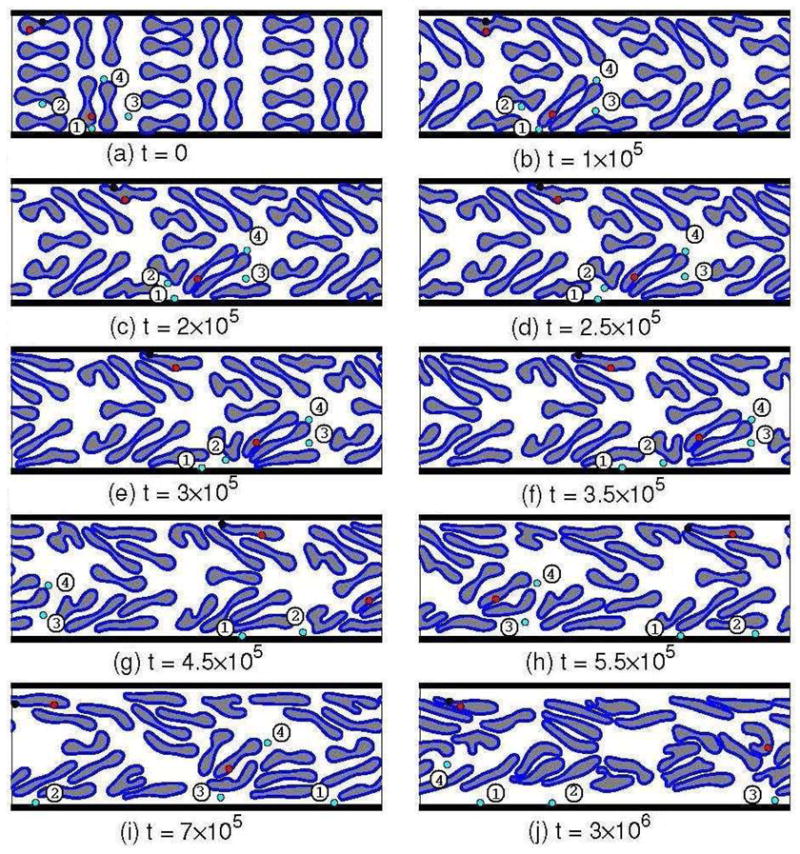
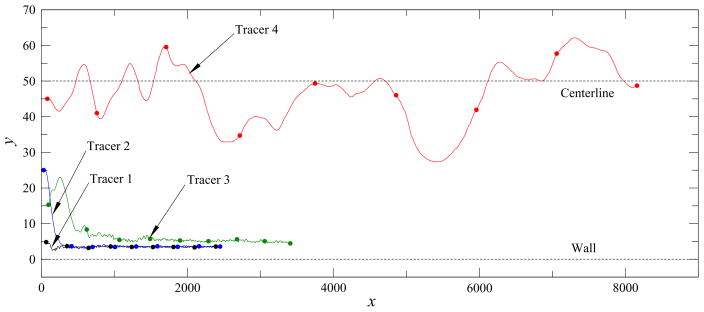
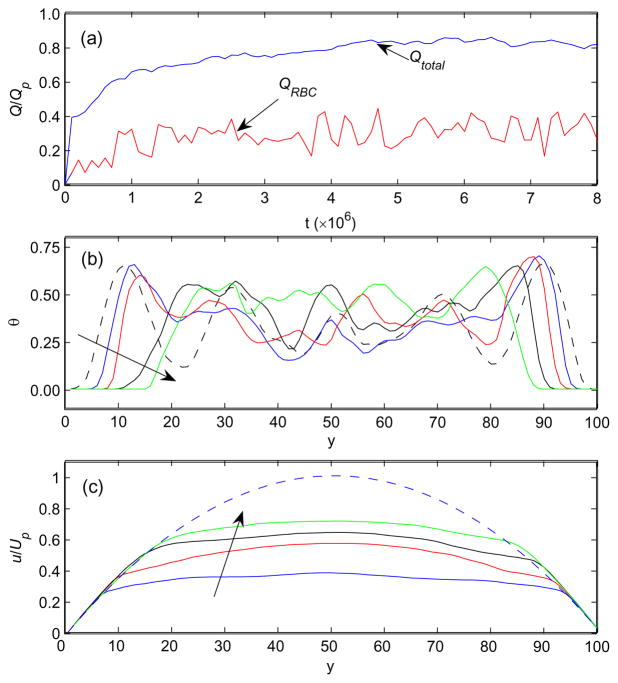
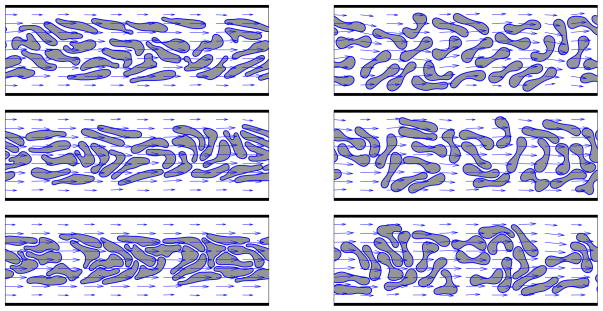
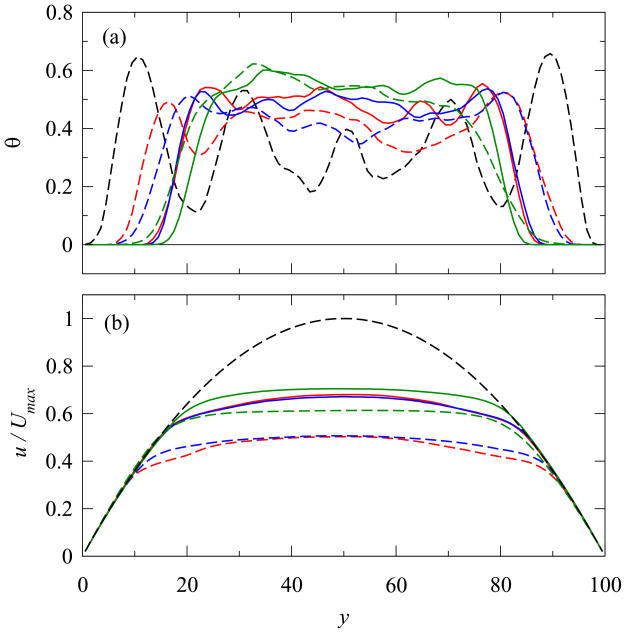
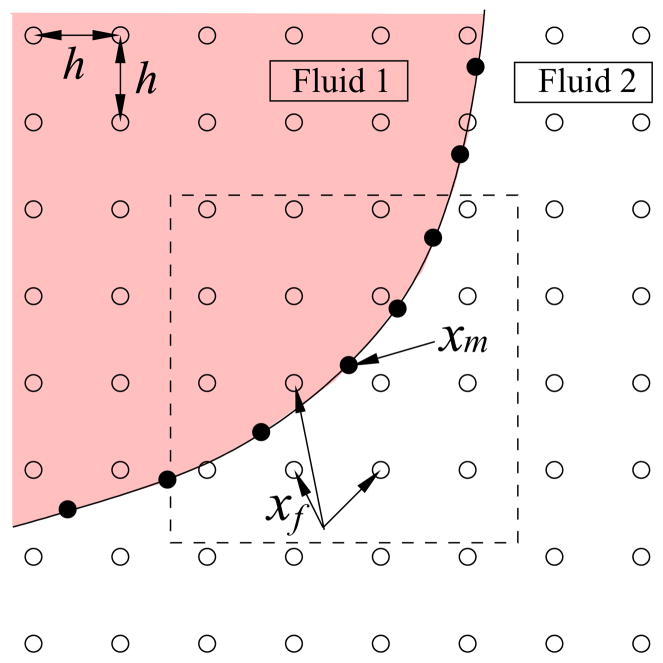
Concentrated erythrocyte (i.e., red blood cell) suspensions flowing in microchannels have been simulated with an immersed-boundary lattice Boltzmann algorithm, to examine the cell layer development process and the effects of cell deformability and aggregation on hemodynamic and hemorheological behaviors. The cells are modeled as two-dimensional deformable biconcave capsules and experimentally measured cell properties have been utilized. The aggregation among cells is modeled by a Morse potential. The flow development process demonstrates how red blood cells migrate away from the boundary toward the channel center, while the suspending plasma fluid is displaced to the cell free layer regions left by the migrating cells. Several important characteristics of microscopic blood flows observed experimentally have been well reproduced in our model, including the cell free layer, blunt velocity profile, changes in apparent viscosity, and the Fahraeus effect. We found that the cell free layer thickness increases with both cell deformability and aggregation strength. Due to the opposing effects of the cell free layer lubrication and the high viscosity of cell-concentrated core, the influence of aggregation is complex but the lubrication effect appears to dominate, causing the relative apparent viscosity to decrease with aggregation. It appears therefore that the immersed-boundary lattice Boltzmann numerical model may be useful in providing valuable information on microscopic blood flows in various microcirculation situations.
Figures
References
-
- Mchedlishvili G, Maeda N. Blood flow structure related to red cell flow: a determinant of blood fluidity in narrow microvessels. Japanese Journal of Physiology. 2001;51(1):19–30. - PubMed
-
- Stoltz JF, Singh M, Riha P. Hemorheology in Practice. IOS Press; Amsterbam, Netherlands: 1999.
-
- Baumler H, Neu B, Donath E, Kiesewetter H. Basic phenomena of red blood cell rouleaux formation biorheology. Biorheology. 1999;36:439–442. - PubMed
-
- Sharan M, Popel AS. A two-phase model for blood flow in narrow tubes with increased viscosity near the wall. Biorheology. 2001;38:415–428. - PubMed
Publication types
MeSH terms
Grants and funding
LinkOut - more resources
Full Text Sources
