


Socioeconomic and psychosocial factors mediate race differences in nocturnal blood pressure dipping
- PMID: 19325537
- PMCID: PMC2717016
- DOI: 10.1038/ajh.2009.58
Socioeconomic and psychosocial factors mediate race differences in nocturnal blood pressure dipping
Abstract
Background: Reduced nocturnal blood pressure (BP) dipping is more prevalent among blacks living in the United States than whites and is associated with increased target organ damage and cardiovascular risk. The primary aim of this study was to determine whether socioeconomic and psychosocial factors help to explain racial differences in dipping. In order to address the limited reproducibility of dipping measures, we investigated this question in a sample of participants who underwent multiple ambulatory BP monitoring (ABPM) sessions.
Methods: The study sample included 171 black and white normotensive and mildly hypertensive participants who underwent three ABPM sessions, each 1 month apart, and completed a battery of questionnaires to assess socioeconomic and psychosocial factors.
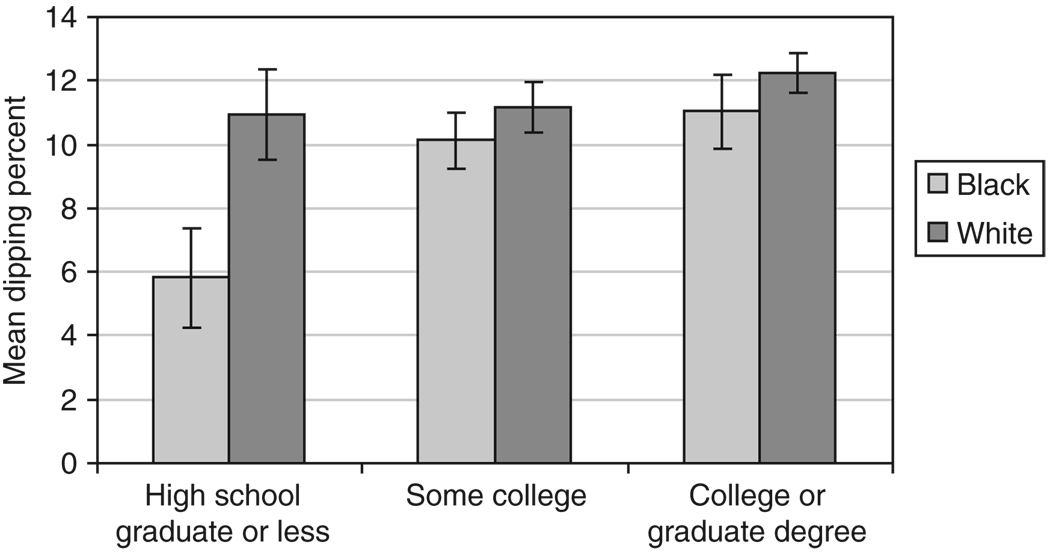
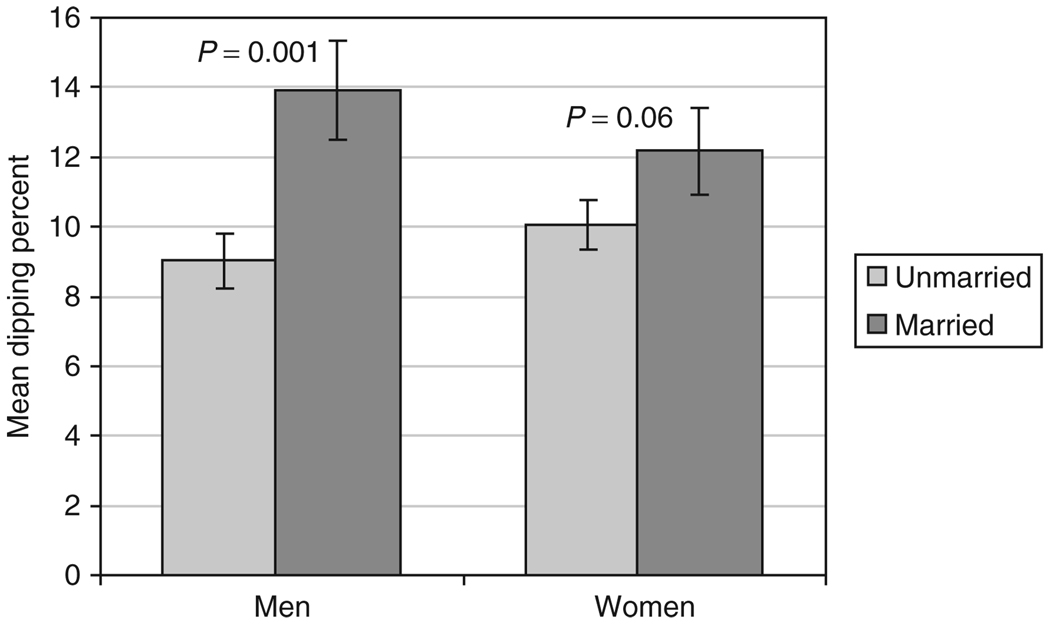
Results: As expected, blacks showed less dipping than whites, after adjusting for age, sex, body mass index (BMI), and mean 24-h BP level (mean difference = 3.3%, P = 0.002). Dipping was related to several of the socioeconomic and psychosocial factors examined, with higher education and income, being married, and higher perceived social support, each associated with a larger dipping percentage. Of these, marital status and education were independently associated with dipping and together accounted for 36% of the effect of race on dipping.
Conclusions: We identified a number of socioeconomic and psychosocial correlates of BP dipping and found that reduced dipping among blacks vs. whites is partially explained by marital status (being unmarried) and lower education among blacks. We also present results suggesting that repeated ABPM may facilitate the detection of associations between dipping and other variables.
Conflict of interest statement
Disclosure: The authors declared no conflict of interest.
Figures
Comment in
-
Psychosocial factors and racial differences in blood pressure dipping.Am J Hypertens. 2009 Jun;22(6):584. doi: 10.1038/ajh.2009.73. Am J Hypertens. 2009. PMID: 19455189 Review. No abstract available.
References
-
- Hertz RP, Unger AN, Cornell JA, Saunders E. Racial disparities in hypertension prevalence, awareness, and management. Arch Intern Med. 2005;165:2098–2104. - PubMed
-
- Wang X, Poole JC, Treiber FA, Harshfield GA, Hanevold CD, Snieder H. Ethnic and gender differences in ambulatory blood pressure trajectories: results from a 15-year longitudinal study in youth and young adults. Circulation. 2006;114:2780–2787. - PubMed
-
- Profant J, Dimsdale JE. Race and diurnal blood pressure patterns. A review and meta-analysis. Hypertension. 1999;33:1099–1104. - PubMed
-
- Pickering TG, Harshfield GA, Kleinert HD, Blank S, Laragh JH. Blood pressure during normal daily activities, sleep, and exercise. Comparison of values in normal and hypertensive subjects. JAMA. 1982;247:992–996. - PubMed
-
- Pickering TG, Shimbo D, Haas D. Ambulatory blood-pressure monitoring. N Engl JMed. 2006;354:2368–2374. - PubMed
Publication types
MeSH terms
Grants and funding
LinkOut - more resources
Full Text Sources
Medical
Research Materials
