. 2009;4(3):e5022.
doi: 10.1371/journal.pone.0005022. Epub 2009 Mar 27.

Panorama phylogenetic diversity and distribution of Type A influenza virus

Affiliations

Panorama phylogenetic diversity and distribution of Type A influenza virus

Shuo Liu et al. PLoS One. 2009.

Abstract

Background: Type A influenza virus is one of important pathogens of various animals, including humans, pigs, horses, marine mammals and birds. Currently, the viral type has been classified into 16 hemagglutinin and 9 neuraminidase subtypes, but the phylogenetic diversity and distribution within the viral type largely remain unclear from the whole view.

Methodology/principal findings: The panorama phylogenetic trees of influenza A viruses were calculated with representative sequences selected from approximately 23,000 candidates available in GenBank using web servers in NCBI and the software MEGA 4.0. Lineages and sublineages were classified according to genetic distances, topology of the phylogenetic trees and distributions of the viruses in hosts, regions and time.

Conclusions/significance: Here, two panorama phylogenetic trees of type A influenza virus covering all the 16 hemagglutinin subtypes and 9 neuraminidase subtypes, respectively, were generated. The trees provided us whole views and some novel information to recognize influenza A viruses including that some subtypes of avian influenza viruses are more complicated than Eurasian and North American lineages as we thought in the past. They also provide us a framework to generalize the history and explore the future of the viral circulation and evolution in different kinds of hosts. In addition, a simple and comprehensive nomenclature system for the dozens of lineages and sublineages identified within the viral type was proposed, which if universally accepted, will facilitate communications on the viral evolution, ecology and epidemiology.


Conflict of interest statement

Competing Interests: The authors have declared that no competing interests exist.

Figures

Figure 1
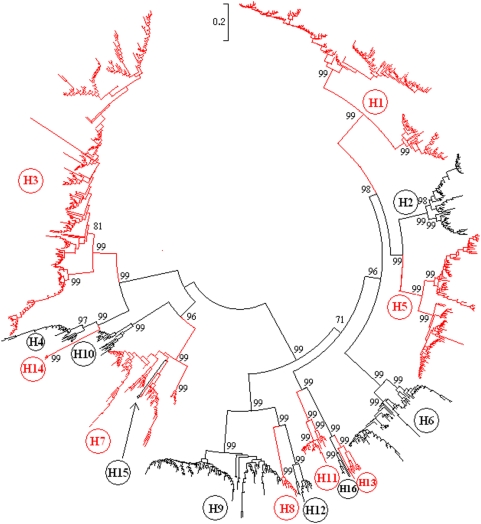
Figure 1. The panorama phylogenetic tree of type A influenza virus based on the viral HA sequences.
The tree demonstrated that subtype H16 is close to subtype H13, and subtype H15 is similar to a lineage within subtype H7. The panorama diversity of each of the HA subtypes was detailed in Figure 3∼ Figure 9. Bootstrap values were given at relevant nodes.
Figure 2
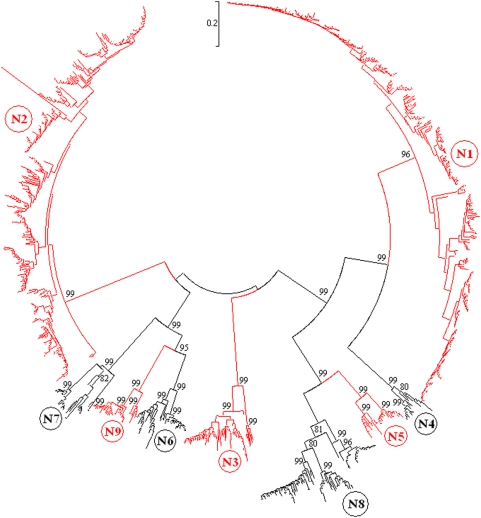
Figure 2. The panorama phylogenetic tree of type A influenza virus based on the viral NA representative sequences.
The tree demonstrated that all the 9 NA subtypes were genetically distant to each other, and subtypes N1 and N2 were more dominant than others. The panorama diversity of each of the NA subtypes was detailed in Figure 10∼ Figure 14. Bootstrap values were given at relevant nodes.
Figure 3
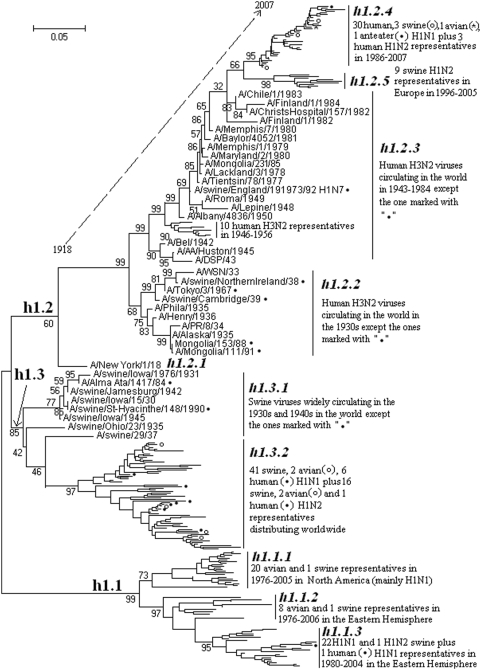
Figure 3. The panorama phylogenetic tree of subtype H1 influenza virus based on the viral HA sequences.
The tree suggested that H1 influenza viruses could be divided into 3 lineages largely corresponding to the avian, human and classical swine H1 influenza viruses, respectively. Bootstrap values were given at relevant nodes.
Figure 4
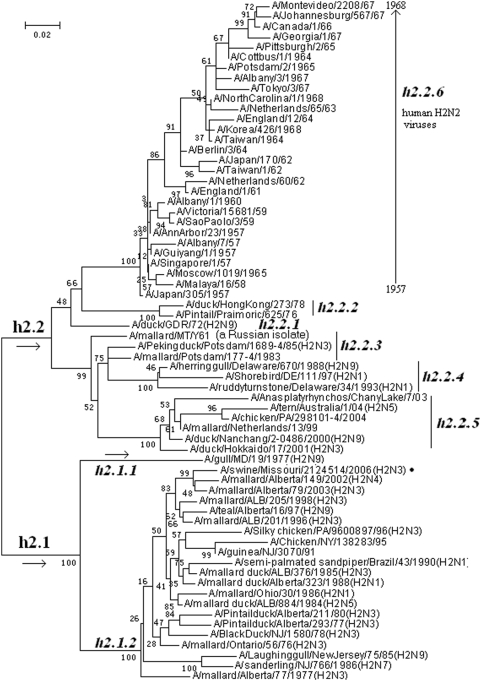
Figure 4. The panorama phylogenetic tree of subtype H2 influenza virus based on the viral HA sequences.
The tree suggested that H2 influenza viruses could be divided into 2 lineages, h2.1 and h2.2, comprising the avian viruses isolated from the Western Hemisphere and Eastern Hemisphere, respectively. Human H2N2 influenza viruses circulating in 1957–1968 formed a separate sublineage in lineage h2.2. Few swine H2 influenza viruses (•) were identified within this subtype. Bootstrap values were given at relevant nodes.
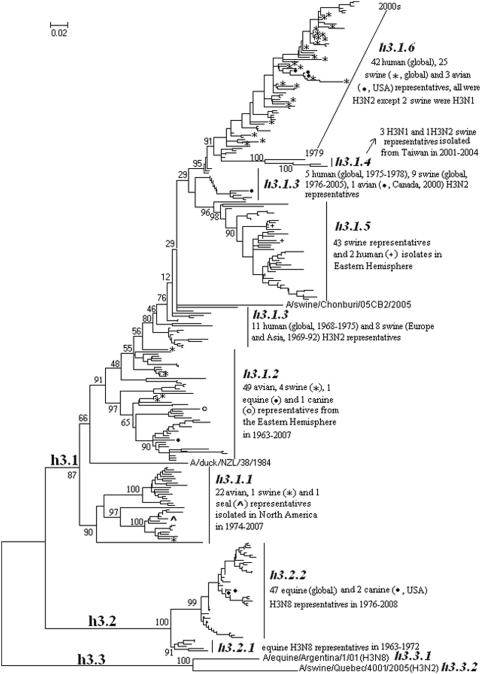
Figure 5
Figure 5. The panorama phylogenetic tree of subtype H3 influenza virus based on the viral HA sequences.
Bootstrap values were given at relevant nodes.
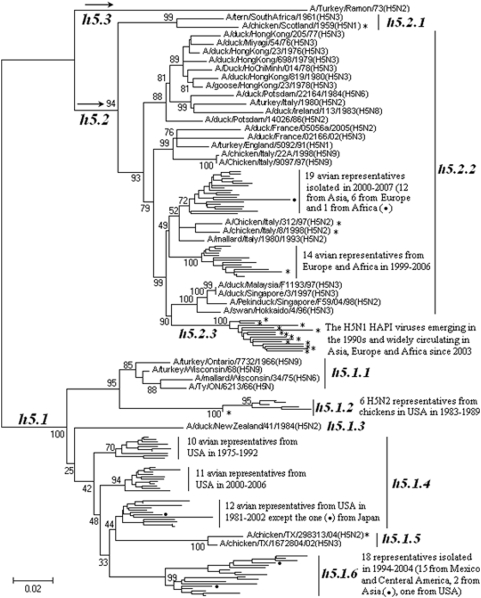
Figure 6
Figure 6. The panorama phylogenetic tree of subtype H5 influenza virus based on the viral HA sequences.
The tree suggested that avian H5 influenza viruses isolated from the Western Hemisphere and the Eastern Hemisphere were located in the sublineages h5.1 and h5.2, respectively. The current HPAI H5N1 widely circulating in the Eastern Hemisphere formed a distinct sublineage (h5.2.3) within lineage h5.2 which were partially detailed in Text S2. For space limitation, most representatives within h5.2.3 were not shown in this figure. HPAI viruses were marked with “*”. Bootstrap values were given at relevant nodes.
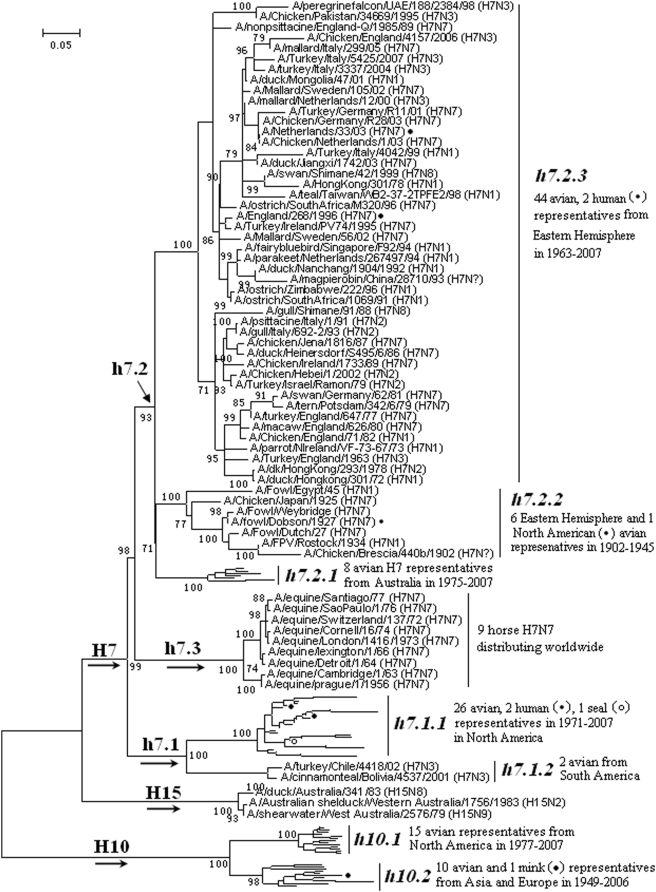
Figure 7
Figure 7. The panorama phylogenetic tree of subtypes H7, H10 and H15 influenza virus based on the viral HA sequences.
Bootstrap values were given at relevant nodes.
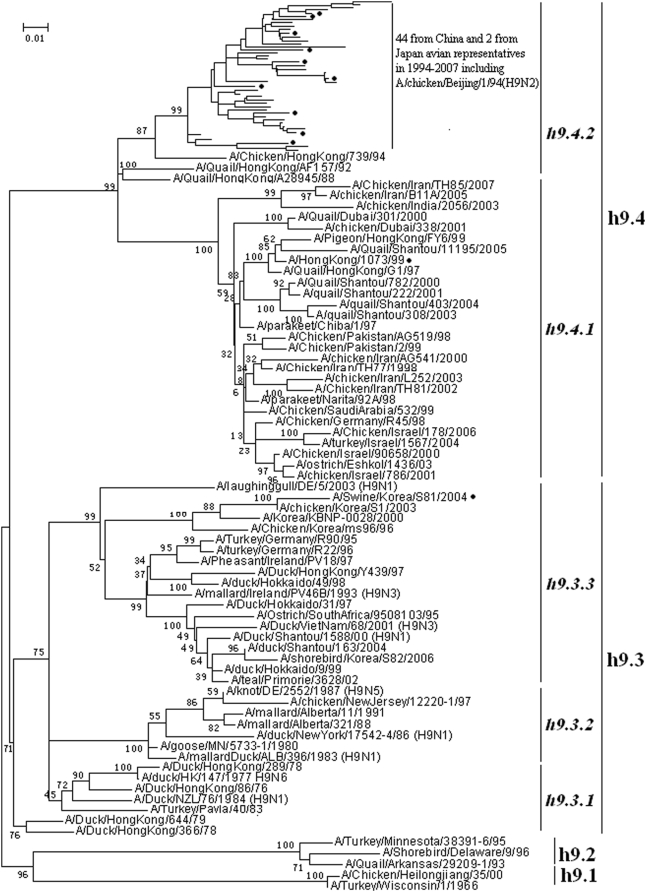
Figure 8
Figure 8. The panorama phylogenetic tree of subtype H9 influenza virus based on the viral HA sequences.
The strains marked with “•” were isolated from mammals. Bootstrap values were given at relevant nodes.
Figure 9
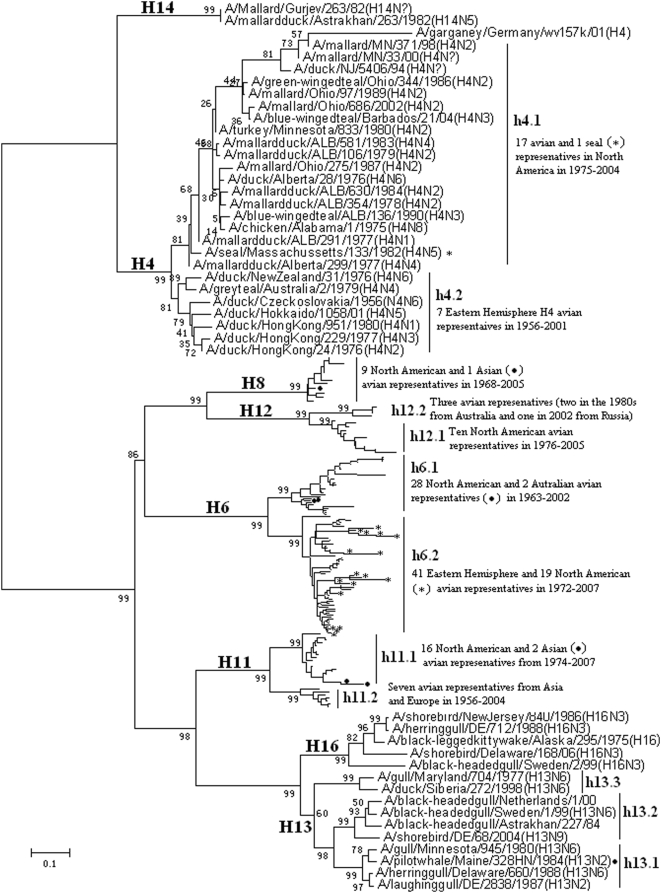
Figure 9. The panorama phylogenetic tree of subtypes H4, H6, H8, H11, H12, H13 and H16 based on the viral HA sequences.
Bootstrap values were given at relevant nodes.
Figure 10
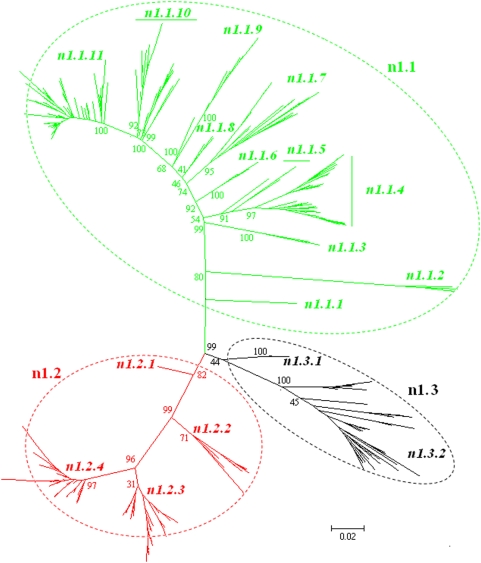
Figure 10. The panorama diversity of N1 influenza viruses which could be divided into 3 lineages, n1.1, n1.2 and n1.3, largely corresponding to avian, human and classical swine N1 influenza viruses.
Bootstrap values were given at relevant nodes.
Figure 11
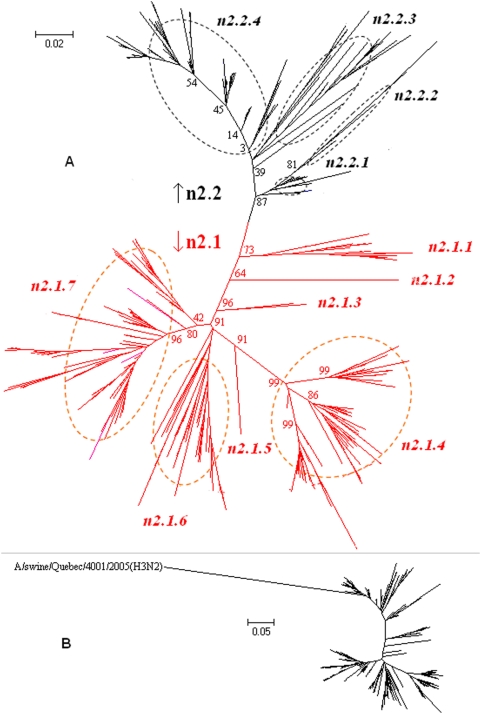
Figure 11. The panorama phylogenetic diversity and distribution of N2 influenza viruses without (A) and with (B) the isolate A/swine/Quebec/4001/2005(H3N2).
Bootstrap values were given at relevant nodes.
Figure 12
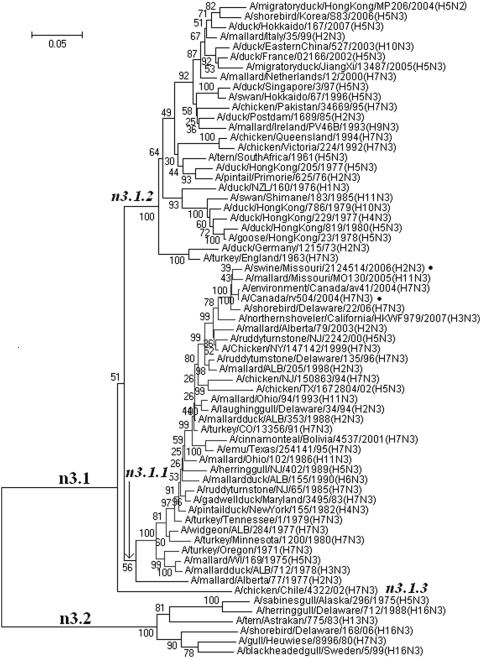
Figure 12. The panorama diversity of subtype N3 influenza viruses which could be divided into two lineages.
Lineage n3.1 was further divided into 3 sublineages. Some viruses in sublineage n3.1.2 isolated from humans or pigs were marked with “•”. Bootstrap values were given at relevant nodes.
Figure 13
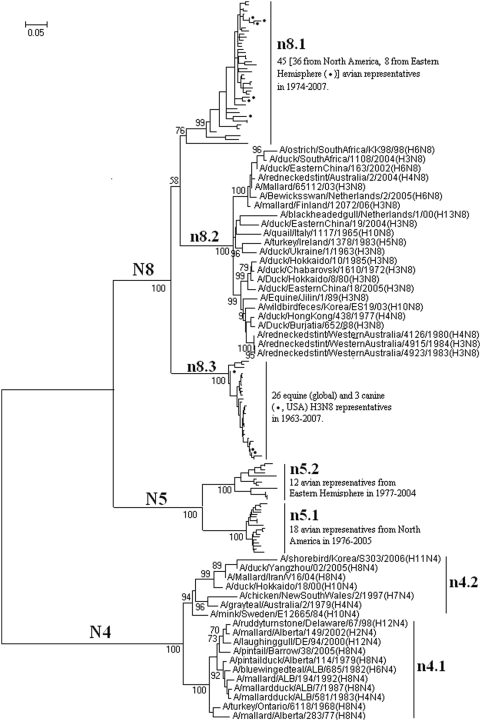
Figure 13. The panorama diversity of subtypes N4, N5 and N8 influenza viruses.
Avian influenza viruses of these subtypes all could be classified into 2 lineages corresponding to the Western and Eastern Hemisphere, respectively, with some exceptions in sublineage n8.1. The equine H3N8 influenza viruses formed a separate lineage (n8.3) within subtype N8. Bootstrap values were given at relevant nodes.
Figure 14
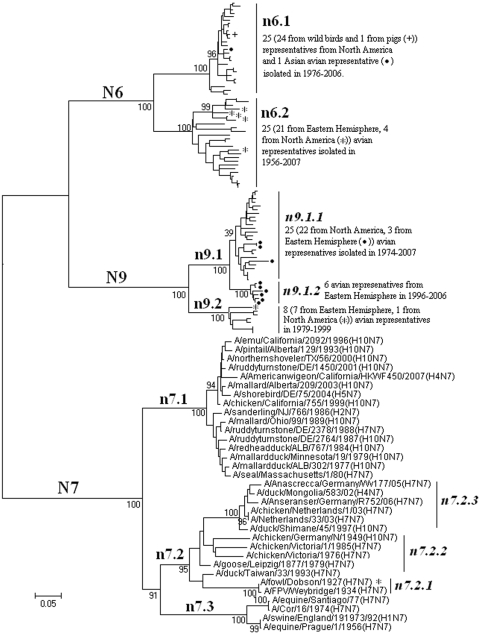
Figure 14. The panorama diversity of subtypes N6, N7 and N9 influenza viruses.
Avian influenza viruses of these subtypes all could be classified into 2 lineages corresponding to the Western and Eastern Hemisphere, respectively, with some exceptions marked with “*” or “•”. The equine N7 influenza viruses formed a separate lineage (n7.3) within subtype N7. Bootstrap values were given at relevant nodes.

References

    1. Webster RG, Bean WJ, Gorman OT, Chambers TM, Kawaoka Y. Evolution and ecology of influenza A viruses. Microbiol Rev. 1992;56:152–179. - PMC - PubMed
    1. Fouchier RA, Munster V, Wallensten A, Bestebroer TM, Herfst S, et al. Characterization of a novel influenza A virus hemagglutinin subtype (H16) obtained from black-headed gulls. J Virol. 2005;79:2814–2822. - PMC - PubMed
    1. Campitelli L, Donatelli I, Foni E, Castrucci MR, Fabiani C, et al. Continued evolution of H1N1 and H3N2 influenza viruses in pigs in Italy. Virology. 1997;232:310–318. - PubMed
    1. Brown IH, Ludwig S, Olsen CW, Hannoun C, Scholtissek C, et al. Antigenic and genetic analyses of H1N1 influenza A viruses from European pigs. J Gen Virol. 1997;78:553–562. - PubMed
    1. Marozin S, Gregory V, Cameron K, Bennett M, Valette M, et al. Antigenic and genetic diversity among swine influenza A H1N1 and H1N2 viruses in Europe. J Gen Virol. 2002;83:735–745. - PubMed

Publication types