


Early planned institution of biventricular mechanical circulatory support results in improved outcomes compared with delayed conversion of a left ventricular assist device to a biventricular assist device
- PMID: 19327526
- PMCID: PMC3232461
- DOI: 10.1016/j.jtcvs.2008.09.021
Early planned institution of biventricular mechanical circulatory support results in improved outcomes compared with delayed conversion of a left ventricular assist device to a biventricular assist device
Abstract
Objective: It is generally accepted that patients who require biventricular assist device support have poorer outcomes than those requiring isolated left ventricular assist device support. However, it is unknown how the timing of biventricular assist device insertion affects outcomes. We hypothesized that planned biventricular assist device insertion improves survival compared with delayed conversion of left ventricular assist device support to biventricular assist device support.
Methods: We reviewed and compared outcomes of 266 patients undergoing left ventricular assist device or biventricular assist device placement at the University of Pennsylvania from April 1995 to June 2007. We subdivided patients receiving biventricular assist devices into planned biventricular assist device (P-BiVAD) and delayed biventricular assist device (D-BiVAD) groups based on the timing of right ventricular assist device insertion. We defined the D-BiVAD group as any failure of isolated left ventricular assist device support.
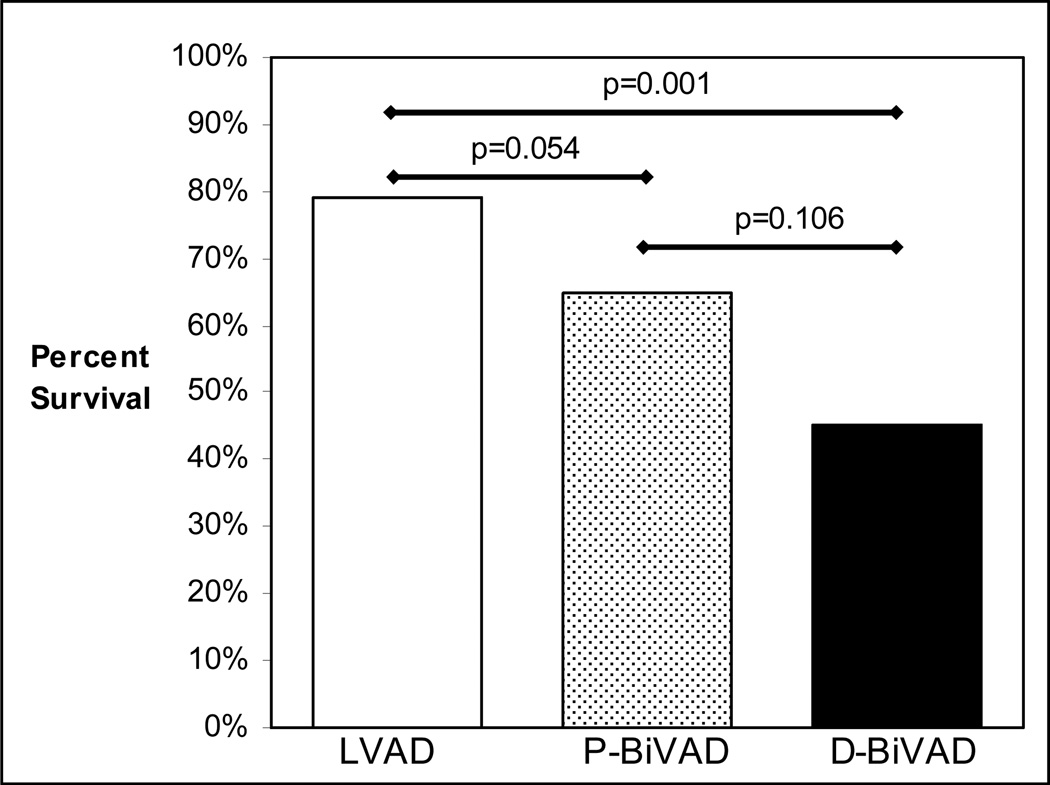
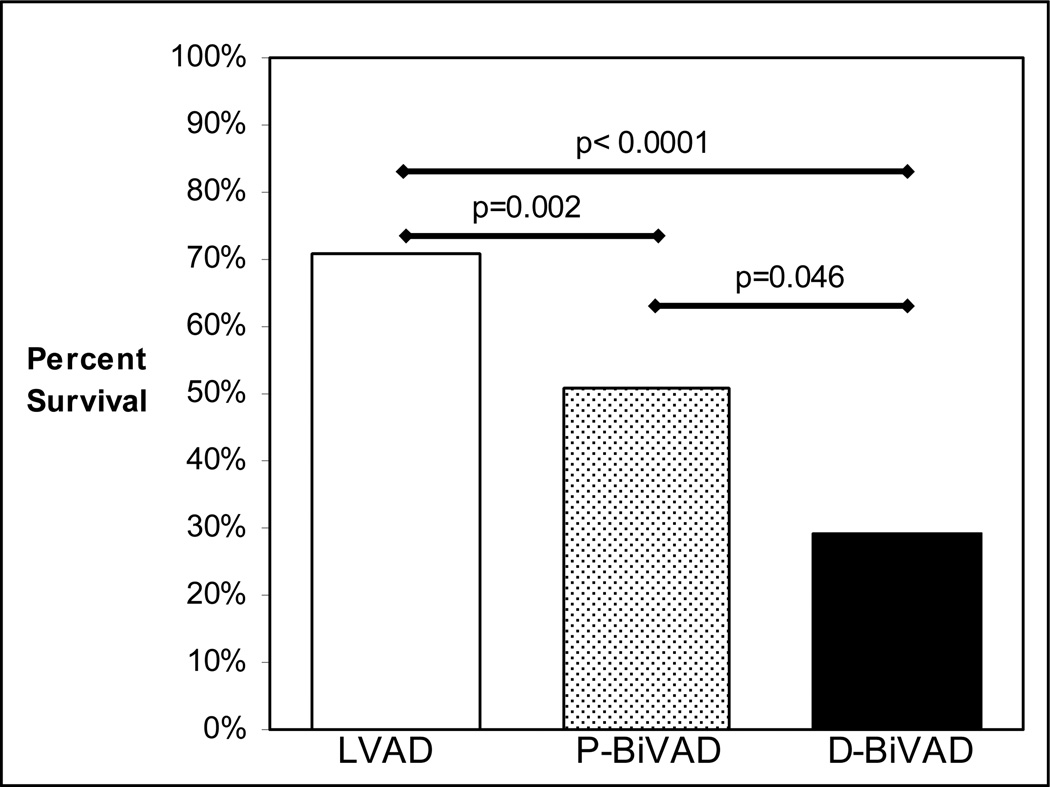
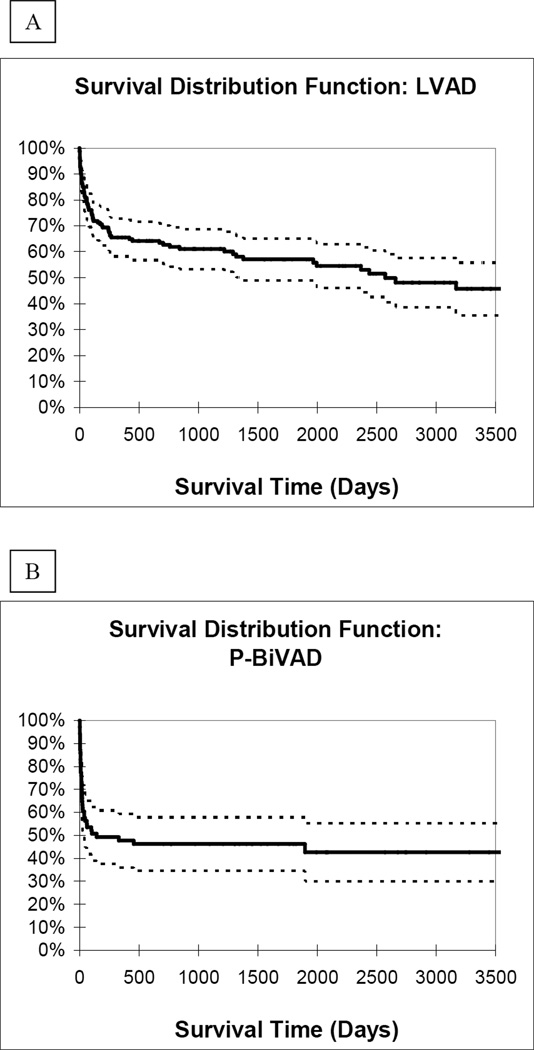
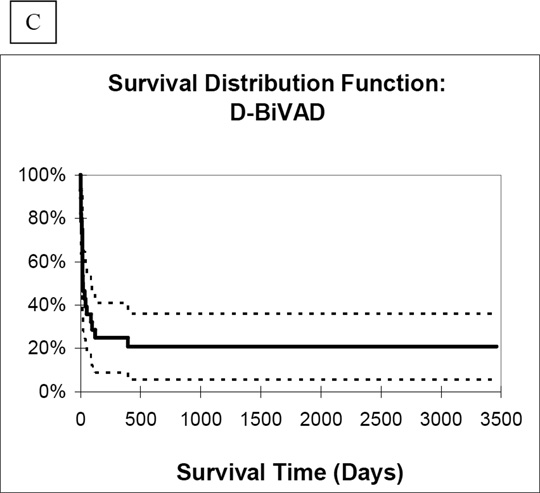
Results: Of 266 patients who received left ventricular assist devices, 99 (37%) required biventricular assist device support. We compared preoperative characteristics, successful bridging to transplantation, survival to hospital discharge, and Kaplan-Meier 1-year survival between the P-BiVAD (n = 71) and D-BiVAD (n = 28) groups. Preoperative comparison showed that patients who ultimately require biventricular support have similar preoperative status. Left ventricular assist device (n = 167) outcomes in all categories exceeded both P-BiVAD and D-BiVAD group outcomes. Furthermore, patients in the P-BiVAD group had superior survival to discharge than patients in the D-BiVAD group (51% vs 29%, P < .05). One-year and long-term Kaplan-Meier survival distribution confirmed this finding. There was also a trend toward improved bridging to transplantation in the P-BiVAD (n = 55) versus D-BiVAD (n = 22) groups (65% vs 45%, P = .10).
Conclusion: When patients at high risk for failure of isolated left ventricular assist device support are identified, proceeding directly to biventricular assist device implantation is advised because early institution of biventricular support results in dramatic improvement in survival.
Figures
References
-
- Goldstein DJ, Oz MC, Rose EA. Implantable left ventricular assist devices. N Engl J Med. 1998;339(21):1522–1533. - PubMed
-
- Rao V, Oz MC, Flannery MA, Catanese KA, Argenziano M, Naka Y. Revised screening scale to predict survival after insertion of a left ventricular assist device. J Thorac Cardiovasc Surg. 2003;125:855–861. - PubMed
-
- Potapov EV, Loforte A, Weng Y, Jurmann M, Pasic M, Drews T, et al. Experience with over 1000 implanted ventricular assist devices. J Card Surg. 2008;23(3):185–194. - PubMed
-
- Aaronson KD, Eppinger MJ, Dyke DB, Wright S, Pagani FD. Left ventricular assist device therapy improves utilization of donor hearts. J Am Coll Cardiol. 2002;9:1247–1254. - PubMed
-
- Rose EA, Moskowitz AJ, Packer M, Sollano JA, Williams DL, Tierney AR, et al. The REMATCH trial: rationale, design, and end points. Randomized Evaluation of Mechanical Assistance for the Treatment of Congestive Heart Failure. Ann Thorac Surg. 1999;67(3):723–730. - PubMed
Publication types
MeSH terms
Grants and funding
LinkOut - more resources
Full Text Sources
Medical
Miscellaneous
