


Implementing a low-fat eating plan in the Women's Intervention Nutrition Study
- PMID: 19328264
- PMCID: PMC5108363
- DOI: 10.1016/j.jada.2008.12.016
Implementing a low-fat eating plan in the Women's Intervention Nutrition Study
Abstract
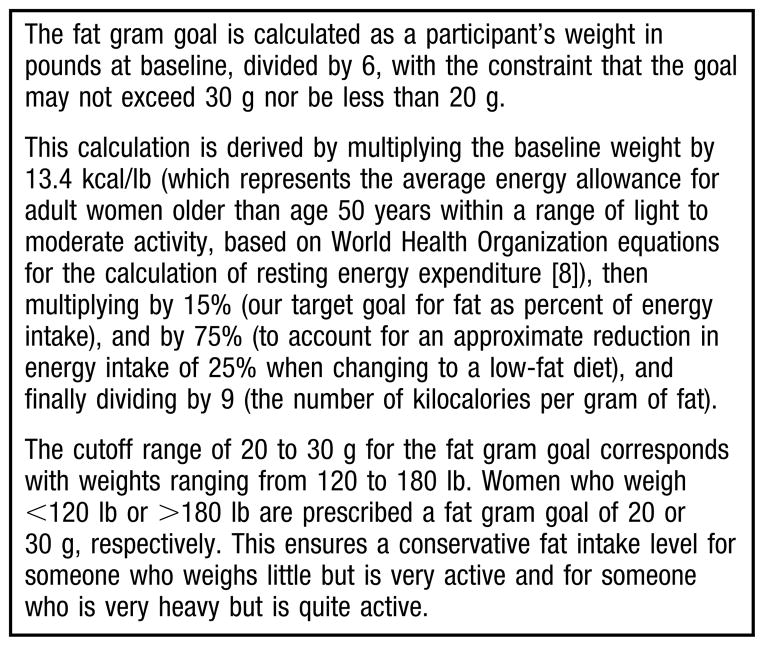
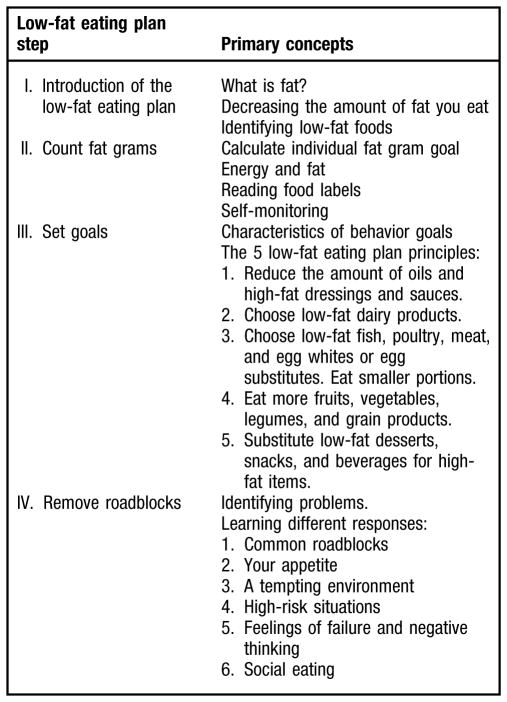
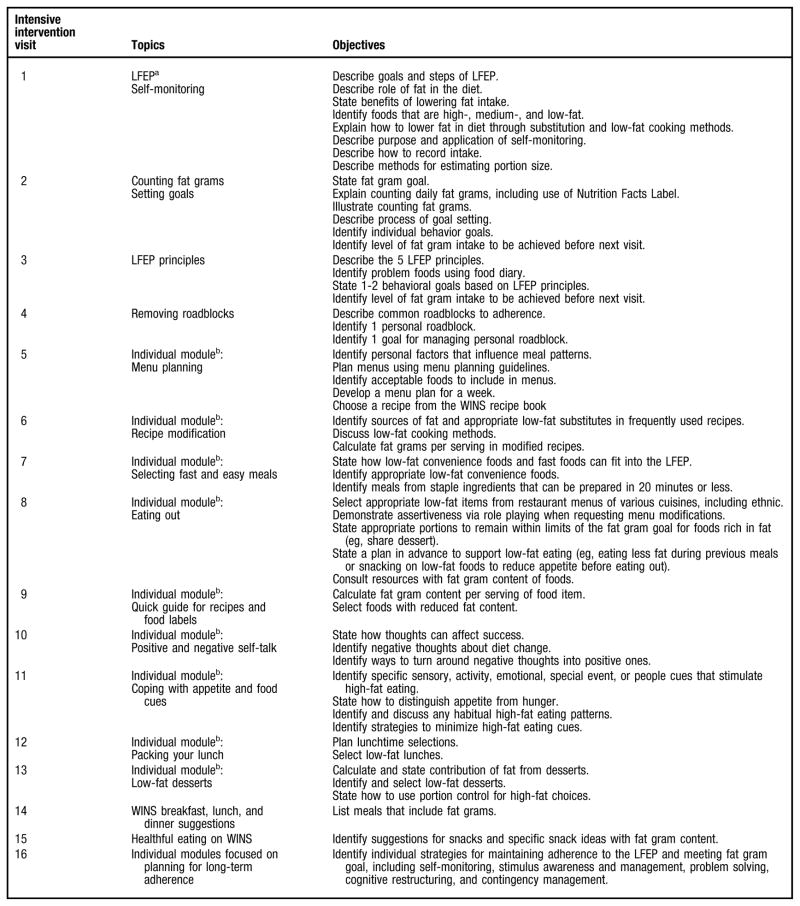
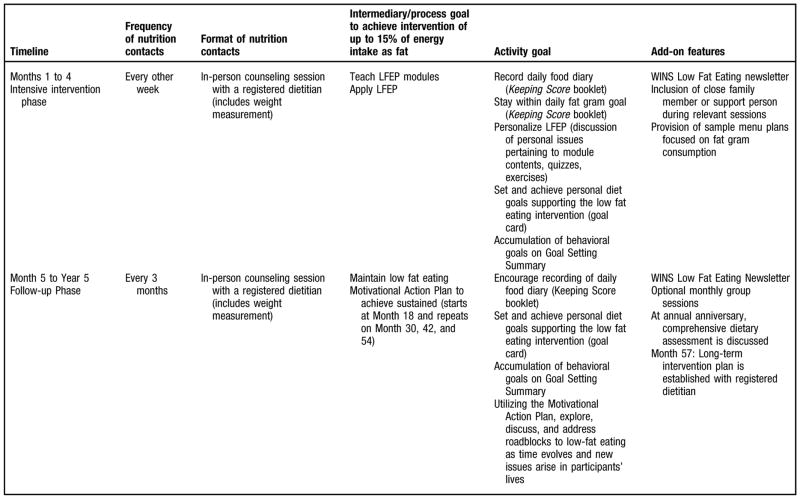
The Women's Intervention Nutrition Study is a randomized clinical trial designed to evaluate if a lifestyle intervention targeting fat intake reduction influences breast cancer recurrence in women with early stage, resected disease receiving conventional cancer management. This report details the concept, content, and implementation of the low-fat eating plan used in the dietary intervention group of this trial. Intervention group participants were given a daily fat gram goal. The intervention was delivered by centrally trained, registered dietitians who applied behavioral, cognitive, and motivational counseling techniques. The low-fat eating plan was implemented in an intensive phase with eight biweekly (up to Month 4), individual counseling sessions followed by a maintenance phase (Month 5 up to and including Year 5) with registered dietitian visits every 3 months and optional monthly group sessions. Self-monitoring (daily fat gram counting and recording), goal setting, and motivational interviewing strategies were key components. Dietary fat intake was equivalent at baseline and consistently lower in the intervention compared with the control group at all time points (percent energy from fat at 60 months 23.2%+/-8.4% vs 31.2%+/-8.9%, respectively, P<0.0001) and was associated with mean 6.1 lb mean weight difference between groups (P=0.005) at 5 years (baseline and 5 years, respectively: control 160.0+/-35.0 and 161.7+/-32.8 lb; intervention 160.2+/-35.1 and 155.6+/-32.1 lb). Together with previously reported efficacy results, this information suggests that a lifestyle intervention that reduces dietary fat intake and is associated with modest weight loss may favorably influence breast cancer recurrence. The Women's Intervention Nutrition Study low-fat eating plan can serve as a model for implementing such a long-term dietary intervention in clinical practice.
Figures
References
-
- Chlebowski RT, Aiello E, McTiernan A. Weight loss in breast cancer patient management. J Clin Oncol. 2002;20:1128–1143. - PubMed
-
- Kushi LH, Kwan ML, Lee MM, Ambrosone CB. Lifestyle factors and survival in women with breast cancer. J Nutr. 2007;137(suppl):236S–242S. - PubMed
-
- Chlebowski RT, Blackburn GL, Thomson CA, Nixon DW, Shapiro A, Hoy MK, Goodman MT, Giuliano AE, Karanja N, McAndrew P, Hudis C, Butler J, Merkel D, Kristal A, Caan B, Michaelson R, Vinciguerra V, Del Prete S, Winkler M, Hall R, Simon M, Winters BL, Elashoff RM. Dietary fat reduction and breast cancer outcome: Interim efficacy results from the Women’s Intervention Nutrition Study. J Natl Cancer Inst. 2006;98:1767–1776. - PubMed
-
- Chlebowski RT, Nixon DW, Blackburn GL, Jochimsen P, Scanlon EF, Insull W, Jr, Buzzard IM, Elashoff R, Butrum R, Wynder EL. A breast cancer Nutrition Adjuvant Study (NAS): Protocol design and initial patient adherence. Breast Cancer Res Treat. 1987;10:21–29. - PubMed
-
- Chlebowski RT, Blackburn GL, Buzzard IM, Rose DP, Martino S, Khandekar JD, York RM, Jeffery RW, Elashoff RM, Wynder EL. Adherence to a dietary fat intake reduction program in postmenopausal women receiving therapy for early breast cancer. The Women’s Intervention Nutrition Study. J Clin Oncol. 1993;11:2072–2080. - PubMed
