


Ponicidin inhibits monocytic leukemia cell growth by induction of apoptosis
- PMID: 19330074
- PMCID: PMC2635634
- DOI: 10.3390/ijms9112265
Ponicidin inhibits monocytic leukemia cell growth by induction of apoptosis
Abstract
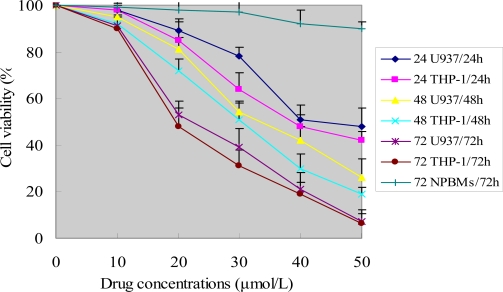
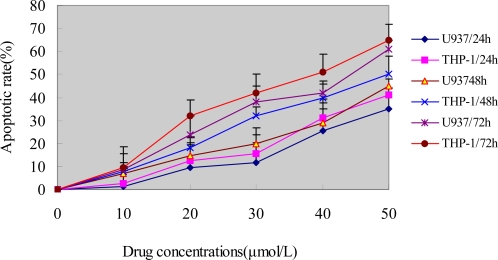
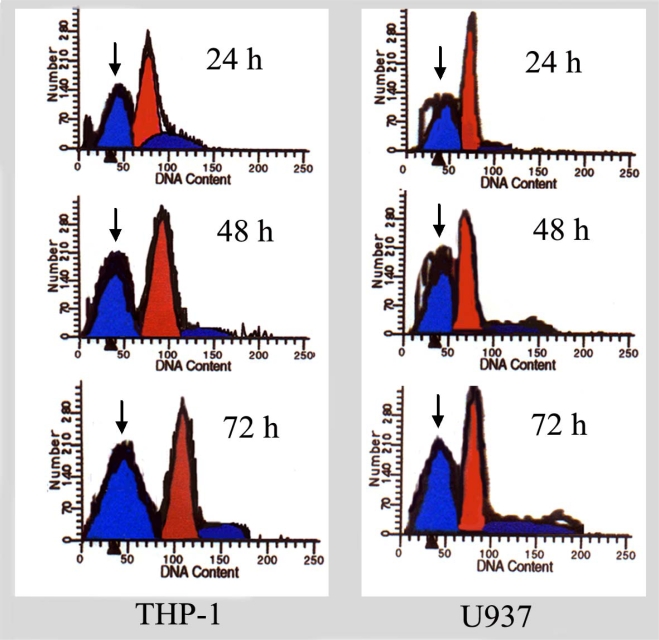
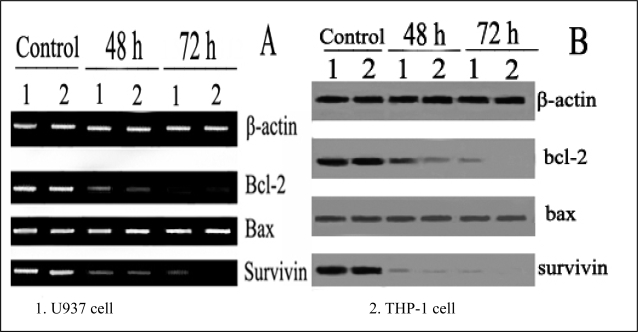
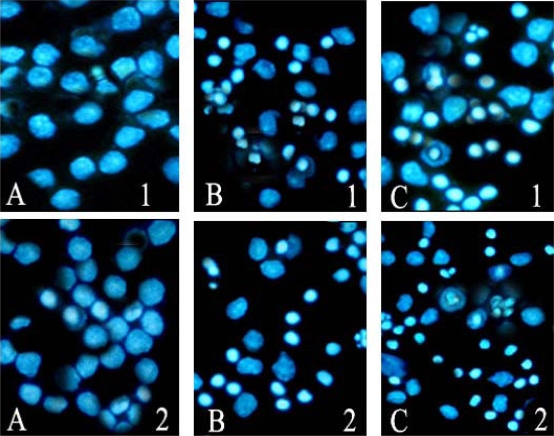
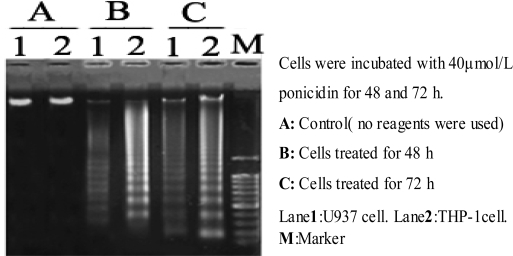
In this study two monocytic leukemia cell lines, U937 and THP-1 cells, were used to investigate the anti-proliferation effects caused by ponicidin. Cell viability was measured by an MTT assay. Cell apoptosis was assessed by flow cytometry as well as DNA fragmentation analysis. Cell morphology was observed using an inverted microscope and Hoechst 33258 staining. RT-PCR and Western blot analysis were used to detect survivin as well as Bax and Bcl-2 expressions after the cells were treated with different concentrations of ponicidin. The results revealed that ponicidin could inhibit the growth of U937 and THP-1 cells significantly by induction of apoptosis. The suppression was in both time- and dose-dependent manner. Marked morphological changes of cell apoptosis were observed clearly after the cells were treated with ponicidin for 48 approximately 72 h. RT-PCR and Western blot analysis demonstrated that both survivin and Bcl-2 expressions were down-regulated remarkably while Bax expression remained constant before and after apoptosis occurred. We therefore conclude that ponicidin has significant anti-proliferation effects by inducing apoptosis on leukemia cells in vitro, downregulation of survivin as well as Bcl-2 expressions may be the important apoptosis inducing mechanisms. The results suggest that ponicidin may serve as potential therapeutic agent for leukemia.
Keywords: Bax; Bcl-2; Leukemia; Ponicidin; Survivin.
Figures
References
-
- Han QB, Li ML, Li SH, Mou YK, Lin ZW, Sun HD. Ent-kaurane diterpenoids from Isodon rubescens var. lushanensis. Chem. Pharm. Bull. 2003;51:790–793. - PubMed
-
- Zhang JX, Han QB, Zhao AH, Sun HD. Diterpenoids from Isodon japonica. Fitoterapia. 2003;74:435–438. - PubMed
-
- Osawa K, Yasuda H, Maruyama T, Morita H, Takeya K, Itokawa H. Antibactirial trichorabdal diterpenes from Rabdosia trichocarpa. Phytochemistry. 1994;36:1287–1291. - PubMed
-
- Li SH, Niu XM, Peng LY, Zhang HJ, Yao P, Sun HD. Ent-Kaurane diterpenoids from the leaves of Isodon xerophilus. Planta. Med. 2002;68:946–948. - PubMed
-
- Hayashi K, Hayashi T, Sun HD, Takeda Y. Contribution of a combination of ponicidin and acyclovir/ganciclovir to the antitumor efficacy of the herpes simplex virus thymidine kinase gene therapy system. Hum. Gene Ther. 2002;13:415–423. - PubMed
LinkOut - more resources
Full Text Sources
Research Materials
