Cerebellar inactivation impairs cross modal savings of eyeblink conditioning
- PMID: 19331453
- PMCID: PMC2679372
- DOI: 10.1037/a0014483
Cerebellar inactivation impairs cross modal savings of eyeblink conditioning
Abstract
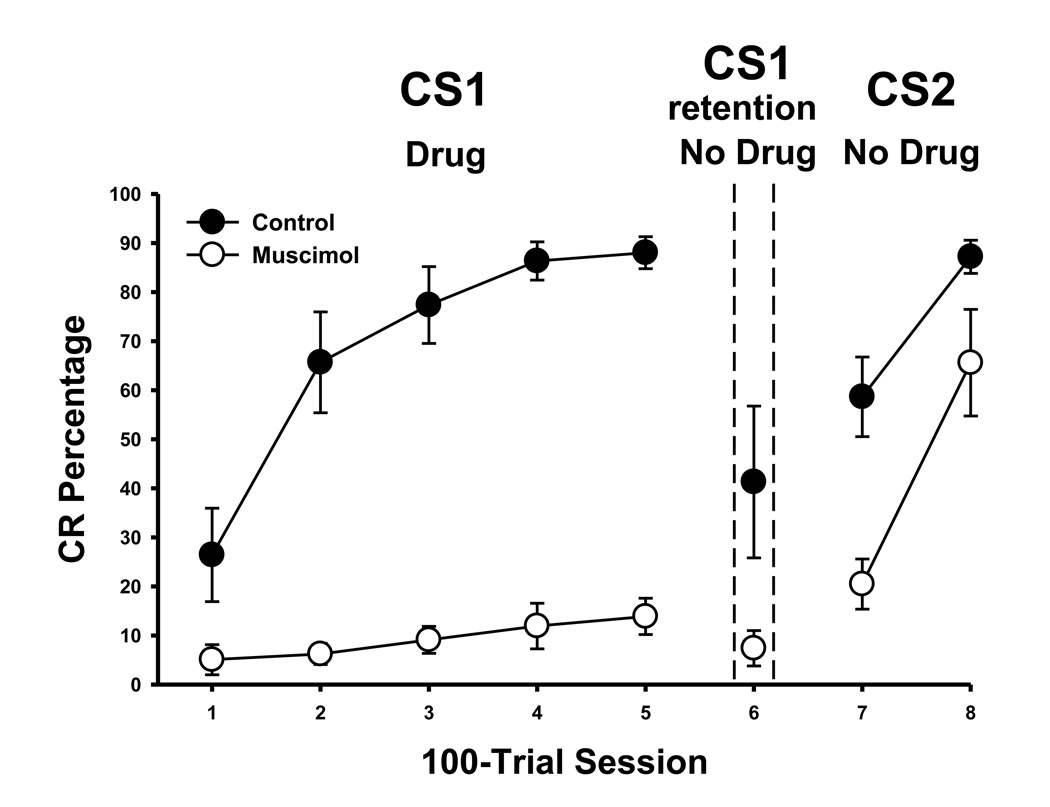
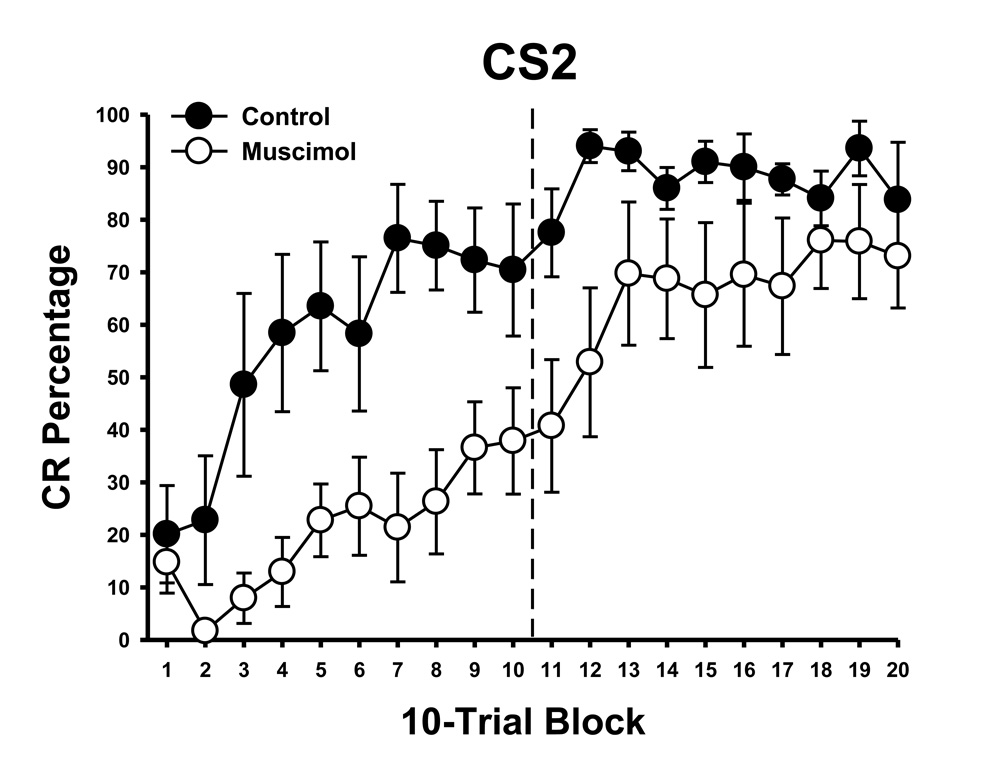
Eyeblink conditioning using a conditioned stimulus (CS) from one sensory modality (e.g., an auditory CS) is greatly enhanced when the subject is previously trained with a CS from a different sensory modality (e.g., a visual CS). The enhanced acquisition to the second modality CS results from cross modal savings. The current study was designed to examine the role of the cerebellum in establishing cross modal savings in eyeblink conditioning with rats. In the first experiment rats were given paired or unpaired presentations with a CS (tone or light) and an unconditioned stimulus. All rats were then given paired training with a different modality CS. Only rats given paired training showed cross modal savings to the second modality CS. Experiment 2 showed that cerebellar inactivation during initial acquisition to the first modality CS completely prevented savings when training was switched to the second modality CS. Experiment 3 showed that cerebellar inactivation during initial cross modal training also prevented savings to the second modality stimulus. These results indicate that the cerebellum plays an essential role in establishing cross modal savings of eyeblink conditioning.
(c) 2009 APA, all rights reserved.
Figures




References
-
- Aizemen CD, Linden DJ. Rapid, synaptically driven increases in the intrinsic excitability of cerebellar deep nuclear neurons. Nature Neuroscience. 2000;3(2):109–111. - PubMed
-
- Allen MT, Chelius L, Masand V, Gluck MA, Myers CE, Schnirman G. Integrative Physiological & Behavioral Science. 2002;37(3):188–124. - PubMed
-
- Attwell PJ, Cooke SF, Yeo CH. Cerebellar function in consolidation of a motor memory. Neuron. 2002;34(6):1011–1020. - PubMed
-
- Attwell PJ, Ivarsson M, Millar L, Yeo CH. Cerebellar mechanisms in eyeblink conditioning. Annals of the New York Academy of Sciences. 2002;978:79–92. - PubMed