Nicotine deprivation and trait impulsivity affect smokers' performance on cognitive tasks of inhibition and attention
- PMID: 19331485
- PMCID: PMC2863308
- DOI: 10.1037/a0015657
Nicotine deprivation and trait impulsivity affect smokers' performance on cognitive tasks of inhibition and attention
Abstract
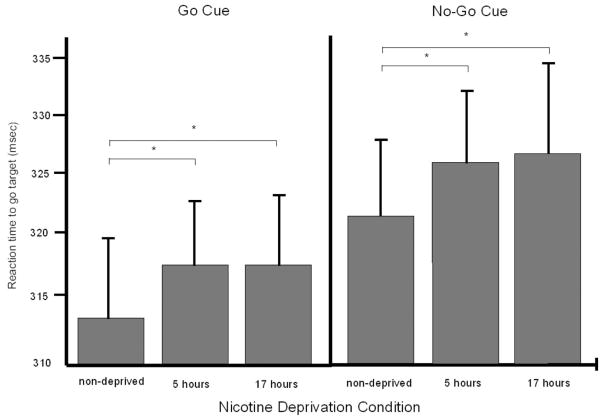
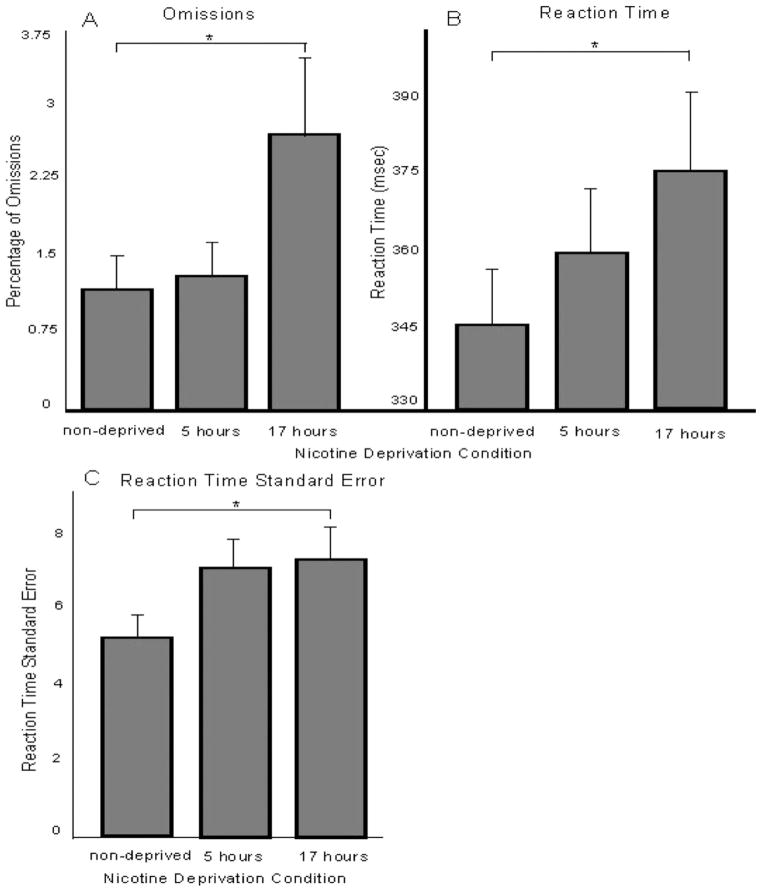
Increased nicotine deprivation and impulsivity have been associated with relapse but the degree to which they together influence cognitive processing has not been explored. We examined the effects of increasing levels of nicotine deprivation on cognitive processing, and assessed the relationship of trait impulsivity with these effects in daily smokers (n=30). Using a within-subject design with three deprivation conditions (nondeprived, 5-hr, 17-hr), volunteers completed the Conners' Continuous Performance Task-II and the Cued Go/No-Go Task. Trait impulsivity was assessed at intake with the Barratt Impulsiveness Scale (Patton et al., 1995). Mixed-model regression analyses revealed deprivation slowed reaction time, increased errors, increased variability in responding, and increased failures of inhibitory control. Performance at 17 hours of deprivation was most likely to be affected. Significant deprivation and impulsivity interactions indicated impulsiveness was negatively correlated with deprivation-associated performance decrements. Less impulsive smokers were more affected by deprivation, demonstrating greater impairment. Research is needed to understand mechanisms by which impulsivity confers greater risk for relapse. Our results suggest deprivation may not increase relapse risk among impulsive smokers by increasing impairment of cognitive processing.
Copyright (c) 2009 APA, all rights reserved.
Figures
References
-
- al’Absi M, Amunrud T, Wittmers LE. Psychophysiological effects of nicotine abstinence and behavioral challenges in habitual smokers. Pharmacology, Biochemistry, and Behavior. 2002;72:707–716. - PubMed
-
- American Psychological Association. Diagnostic and Statistical Manual of Mental Disorders DSM–IV–TR. 4 2000.
-
- Baker TB, Piper ME, McCarthy DE, Majeskie MR, Fiore MC. Addiction motivation reformulated: An affective processing model of negative reinforcement. Psychological Review. 2004;111:33–51. - PubMed
-
- Baumeister RF. Ego depletion and self-regulation failure: A resource model of self-control. Alcoholism: Clinical and Experimental Research. 2003;27:281–284. - PubMed
-
- Bell SL, Taylor RC, Singleton EG, Henningfield JE, Heishman SJ. Smoking after nicotine deprivation enhances cognitive performance and decreases tobacco craving in drug abusers. Nicotine & Tobacco Research. 1999;1:45–52. - PubMed