


Everybody's talking: using entertainment-education video to reduce barriers to discussion of cervical cancer screening among Thai women
- PMID: 19332440
- PMCID: PMC2738956
- DOI: 10.1093/her/cyp019
Everybody's talking: using entertainment-education video to reduce barriers to discussion of cervical cancer screening among Thai women
Abstract
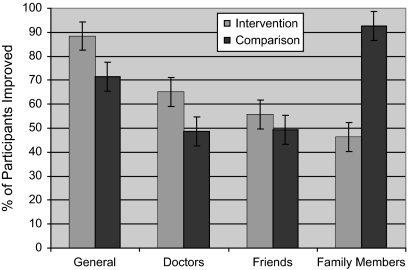
Although Southeast Asian women are at exceedingly high risk for cervical cancer, low rates of the Pap testing necessary for early detection and successful treatment continue among this group. Previous research suggests that discussions about Pap testing with important people in a woman's life, particularly her doctor, may increase the likelihood of screening; therefore increasing women's discussions about cancer screenings is an important step toward behavior change. The purpose of this study was to determine the effectiveness of a culturally sensitive, seven-minute video intervention in reducing barriers to discussions about Pap tests among Thai women. This unique video presented Thai actors, speaking in Thai, in a soap opera format. Participants completed a self-report questionnaire at baseline, immediately after the intervention and at 3-month follow-up. The comparison group received an educational pamphlet. Although the results indicated that both groups experienced reductions in barriers to communicating with others about Pap tests, the intervention group had significantly stronger outcomes than the comparison group for communicating about Pap tests in general as well as to doctors. These findings suggest that intermediate communication effects such as self-efficacy, collective efficacy and perhaps interpersonal communication may reduce barriers to discussion and positive decision making regarding Pap tests.
Figures

References
-
- Coughlin SS, Uhler RJ. Breast and cervical cancer screening practices among Asian and Pacific Islander Women in the United States, 1994-1997. Cancer Epidemiol Biomarkers Prev. 2000;9:597–603. - PubMed
-
- Adams EK, Breen N, Joski PJ. Impact of the national breast and cervical cancer early detection program on mammography and pap test utilization among white, Hispanic and African-American women: 1996-2000. Cancer. 2007;109(2 Suppl.):348–58. - PubMed
-
- Taylor VM, Schwartz SM, Jackson JC, et al. Cervical cancer screening among Cambodian-American women. Cancer Epidemiol Biomarkers Prev. 1999;8:541–6. - PubMed
-
- Tsui J, Tanjasiri SP. Cervical cancer screening among Thai women in Northern California. J Womens Health. 2008;17:393–401. - PubMed
-
- Special Service for Groups. Report on the Breast and Cervical Cancer Screening Needs and Recommendations for Cambodians, Chamorros, Laotians, Samoans, Thais, Tongans, and Vietnamese. Los Angeles: Special Service for Groups, Inc.; 2001.
Publication types
MeSH terms
Grants and funding
LinkOut - more resources
Full Text Sources
Medical
Research Materials
