


doi: 10.1073/pnas.0811910106.
Epub 2009 Mar 30.
Childhood poverty, chronic stress, and adult working memory
Affiliations
- PMID: 19332779
- PMCID: PMC2662958
- DOI: 10.1073/pnas.0811910106
Item in Clipboard
Childhood poverty, chronic stress, and adult working memory
Proc Natl Acad Sci U S A.
.
Abstract
The income-achievement gap is a formidable societal problem, but little is known about either neurocognitive or biological mechanisms that might account for income-related deficits in academic achievement. We show that childhood poverty is inversely related to working memory in young adults. Furthermore, this prospective relationship is mediated by elevated chronic stress during childhood. Chronic stress is measured by allostatic load, a biological marker of cumulative wear and tear on the body that is caused by the mobilization of multiple physiological systems in response to chronic environmental demands.
Conflict of interest statement
The authors declare no conflict of interest.
Figures
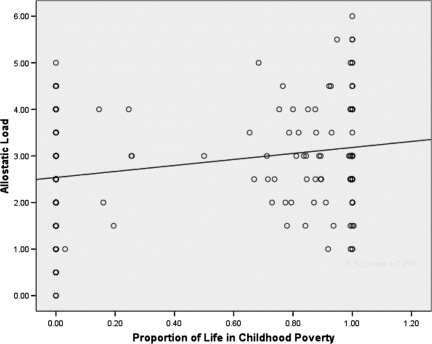
Duration of childhood poverty and children's levels of chronic stress.
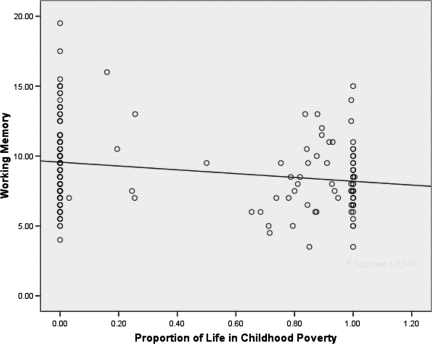
Duration of childhood poverty and working memory in young adults.
References
-
- Bradley RH, Corwyn R. Socioeconomic status and child development. Annu Rev Psych. 2002;53:371–399. - PubMed
-
- Conger RD, Donnellan MB. An interactionist perspective on the socioeconomic context of human development. Annu Rev Psych. 2007;58:175–199. - PubMed
-
- McLoyd VC. Socioeconomic disadvantage and child development. Am Psychol. 1998;53:185–204. - PubMed
-
- National Institute of Child Health and Human Development Early Child Care Research Network. Duration and developmental timing of poverty and children's cognitive and social development. Child Dev. 2005;76:795–810. - PubMed
-
- Korenman S, Miller JE, Sjaastad JE. Long-term poverty and child development: Evidence from the NLSY. Child Youth Serv Rev. 1995;17:127–155.
Publication types
MeSH terms
LinkOut - more resources
Full Text Sources
Other Literature Sources
Medical
Miscellaneous
