


Sympathetic block with botulinum toxin to treat complex regional pain syndrome
- PMID: 19334078
- PMCID: PMC2763598
- DOI: 10.1002/ana.21601
Sympathetic block with botulinum toxin to treat complex regional pain syndrome
Abstract
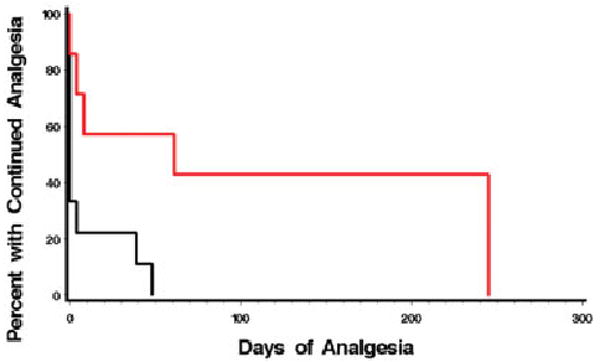
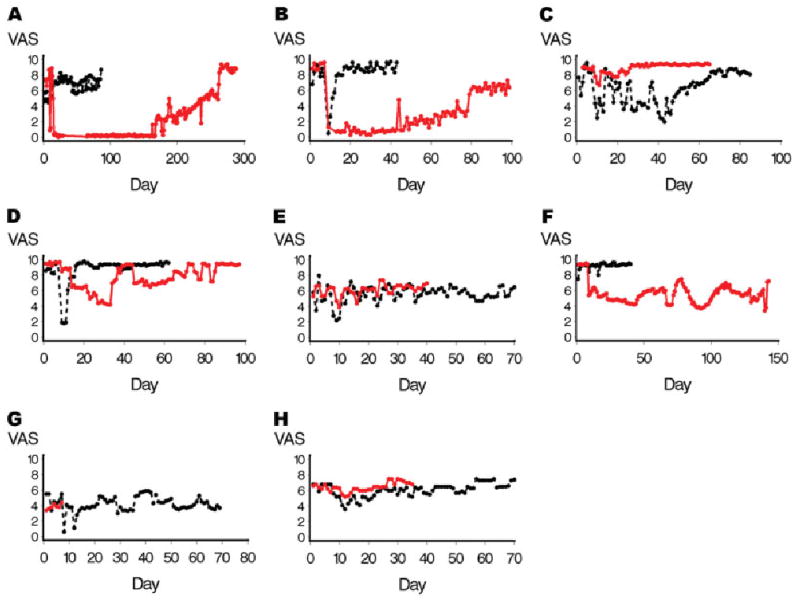
Complex regional pain syndrome is a refractory pain condition with few tested therapies. We hypothesized that botulinum toxin A (BTA) would prolong analgesia after sympathetic blocks in patients with complex regional pain syndrome. We compared the duration of standard lumbar sympathetic block (LSB) with bupivacaine to LSB with bupivacaine and BTA in nine patients with refractory complex regional pain syndrome. Median time to analgesic failure was 71 (95% confidence interval, 12-253) days after LSB with BTA compared with fewer than 10 days (95% confidence interval, 0-12) after standard LSB (log-rank, p < 0.02). BTA profoundly prolonged the analgesia from sympathetic block in this preliminary study.
Conflict of interest statement
Potential conflict of interest: The authors report filing a patent for the use of botulinum toxins in sympathetic block.
Figures
References
-
- Raja SN, Grabow TS. Complex regional pain syndrome I (reflex sympathetic dystrophy) Anesthesiology. 2002;96:1254–1260. - PubMed
-
- Sandroni P, Benrud-Larson LM, McClelland RL, Low PA. Complex regional pain syndrome type I: incidence and prevalence in Olmsted County, a population-based study. Pain. 2003;103:199–207. - PubMed
-
- de Mos M, de Bruijn AG, Huygen FJ, et al. The incidence of complex regional pain syndrome: a population-based study. Pain. 2007;129:12–20. - PubMed
-
- Mailis A, Furlan A. Sympathectomy for neuropathic pain. Cochrane Database Syst Rev. 2003 CD002918. - PubMed
-
- Sato J, Perl ER. Adrenergic excitation of cutaneous pain receptors induced by peripheral nerve injury. Science. 1991;251:1608–1610. - PubMed
Publication types
MeSH terms
Substances
Grants and funding
LinkOut - more resources
Full Text Sources
Other Literature Sources
Medical
