


The serum D-xylose test as a useful tool to identify malabsorption in rats with antigen specific gut inflammatory reaction
- PMID: 19335552
- PMCID: PMC2676701
- DOI: 10.1111/j.1365-2613.2008.00627.x
The serum D-xylose test as a useful tool to identify malabsorption in rats with antigen specific gut inflammatory reaction
Abstract
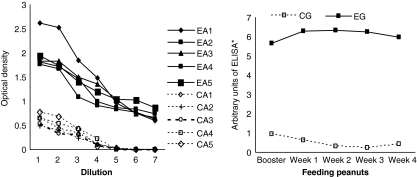
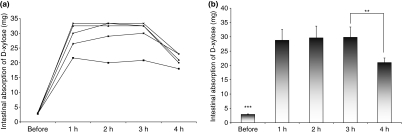
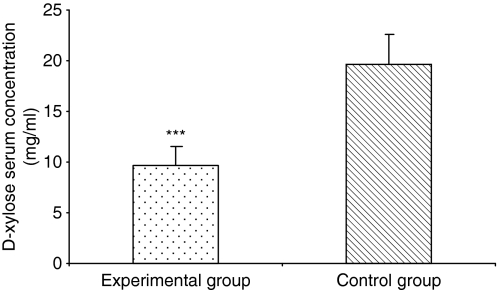
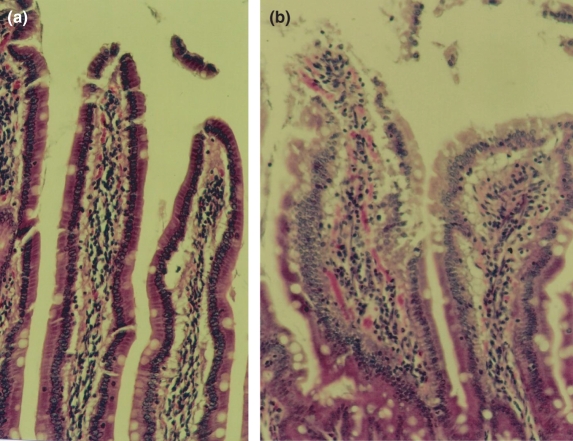
The inappropriate immune response to foods, such as peanut, wheat and milk may be the basis in the pathogenesis of enteropathies like coeliac and Crohn disease, which present small intestinal malabsorption. A number of recent studies have utilized d-xylose absorption as an investigative tool to study small intestinal function in a variety of clinical settings. Thus, the aim of this experimental study was to evaluate the intestinal absorption of D-xylose in an antigen-specific gut inflammatory reaction rat model. Animals of the experimental group were inoculated with peanut protein extract before their exposure to a challenge diet containing exclusively peanut seeds to induce the gut inflammatory reaction caused by peanut allergy. Our results show that systemic inoculation with peanut protein extract renders significantly higher antibody titres (5.085 +/- 0.126 units) (P < 0.0001) than control rats (0.905 +/- 0.053 units) and that the antibody titres correlate positively to an inflammatory alteration of the gut morphology (P < 0.0001). Animals pertaining to the experimental group showed an intestinal absorption of D-xylose lower than control rats (P < 0.0001). We also observed that D-xylose absorption correlates negatively with IgG titres and positively with morphometric parameters (Pearson correlation). In conclusion, the use of serum D-xylose test was useful to identify the presence of small intestinal malabsorption in our antigen specific gut inflammatory reaction rat model.
Figures
References
-
- Antunes DMF, Castro Júnior AB, Campos SMN, et al. Induction of an antigen specific gut inflammatory reaction in mice and rats: a model for human inflammatory bowel disease. Braz. Arch. Biol. Technol. 2008 ??????, ??????.in press.
-
- Bamias G, Nyce MR, De La Rue SA, Cominelli F. New concepts in the pathophysiology of inflammatory bowel disease. Ann. Intern. Med. 2005;143:895–904. - PubMed
-
- Burks W, Sampson HA, Bannon GA. Peanut allergens. Allergy. 1998;53:725–730. - PubMed
-
- Craig RM, Atkinson AJ., Jr D-xylose testing: a review. Gastroenterology. 1988;95:223–231. - PubMed
-
- Craig RM, Ehrenpreis ED. D-xylose testing [clinical review: the small intestine, nutrition, and malabsorption] J. Clin. Gastroenterol. 1999;29(2):143–150. - PubMed
Publication types
MeSH terms
Substances
LinkOut - more resources
Full Text Sources
Medical
