Challenging dogma: radical conservation surgery for early stage cervical cancer in order to retain fertility
- PMID: 19335966
- PMCID: PMC2764998
- DOI: 10.1308/003588409X392108
Challenging dogma: radical conservation surgery for early stage cervical cancer in order to retain fertility
Abstract
Introduction: Cervical cancer is the second commonest cancer to affect women with over half a million cases world-wide yearly. Screening programmes have reduced the incidence and death rate dramatically in Western societies. At the same time, professional and social pressures may delay child bearing such that a significant number of women will present with early stage disease, but be anxious to retain their fertility potential. Standard treatment by radical hysterectomy or radiotherapy has good results, but inevitably renders the women infertile. The rationale for extensive surgery resecting parametrium or destructive radiotherapy treating the whole pelvis in all cases of cervical cancer has been questioned.
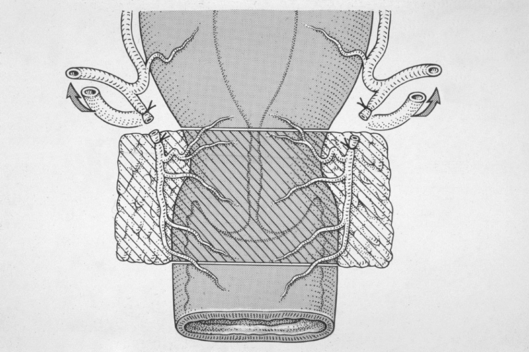
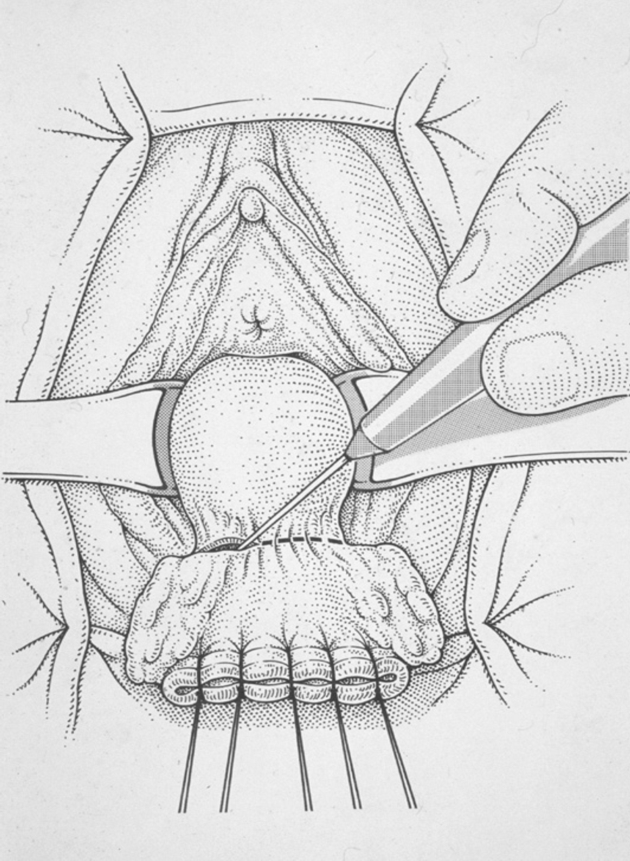
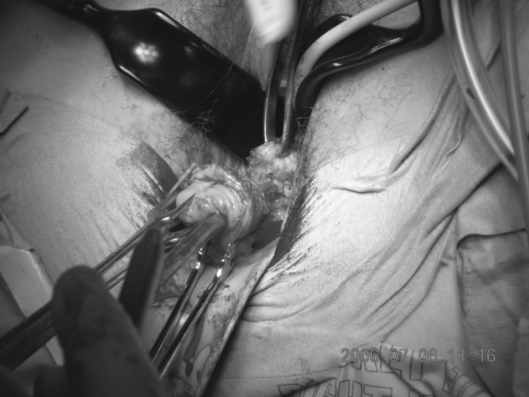
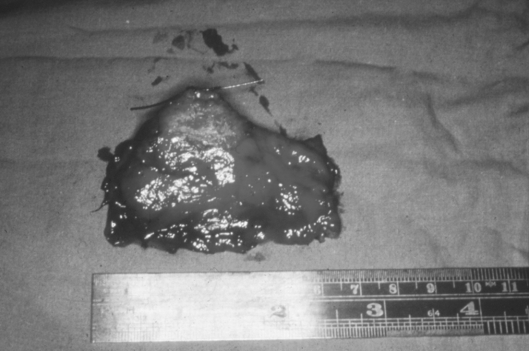
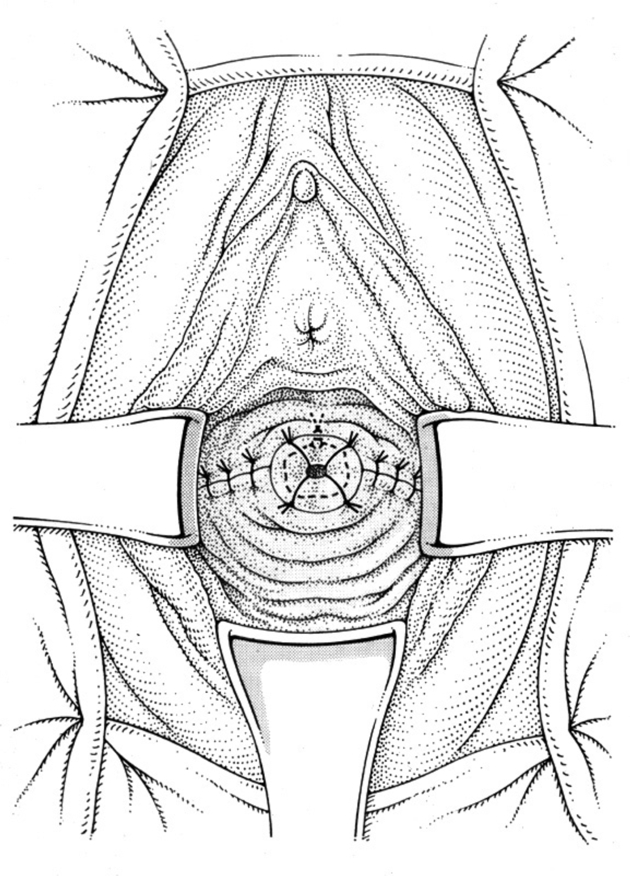
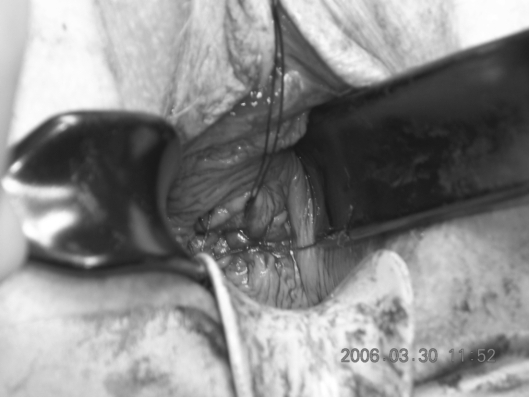
Patients and methods: Lessons learnt from the less radical surgical approach to breast cancer can be applied to cervical cancer whilst still observing Halstead's principles of surgical oncology. Wide, local excision of early stage small tumours by radical vaginal trachelectomy combined with a laparoscopic pelvic lymphadenectomy utilises modern technology with traditional surgery. Radical vaginal trachelectomy comprises the distal half of a radical abdominal (Wertheim's) or vaginal (Schauta's) hysterectomy. An isthmic-vaginal anastomosis restores continuity of the lower genital tract after insertion of a cerclage that is necessary to maintain competence during future pregnancies.
Results: A total of 142 cases were performed between 1994 and 2006, most (98%) in women with Stage 1B carcinoma of the cervix with a mean follow-up of 57 months. Twelve (9%) had completion treatment, 11 with chemo/radiotherapy and one radical hysterectomy. There were four recurrences (3%) among the women who did not have completion treatment, and two (18%) in those that did. There were 72 pregnancies in 43 women and 33 live births in 24 women. The 5-year accumulative pregnancy rate among women trying to conceive was 53%. Delivery was by classical caesarean section in a high-risk fetomaternal units with 8 babies (25%) born before 32 weeks.
Conclusions: Radical vaginal trachelectomy appears safe when performed in centres with appropriate experience of radical vaginal surgery and laparoscopic techniques. The impact of this new approach questions traditional teaching whilst preserving potential fertility in hitherto impossible circumstances.
Figures
Similar articles
-
Conservative surgery for carcinoma of the cervix.Clin Oncol (R Coll Radiol). 2008 Aug;20(6):395-400. doi: 10.1016/j.clon.2008.05.002. Clin Oncol (R Coll Radiol). 2008. PMID: 18606356 Review.
-
Uterus-conserving surgery for invasive cervical cancer.Best Pract Res Clin Obstet Gynaecol. 2005 Aug;19(4):577-90. doi: 10.1016/j.bpobgyn.2005.02.009. Best Pract Res Clin Obstet Gynaecol. 2005. PMID: 15955744 Review.
-
Radical vaginal trachelectomy as a fertility-sparing procedure in women with early-stage cervical cancer-cumulative pregnancy rate in a series of 123 women.BJOG. 2006 Jun;113(6):719-24. doi: 10.1111/j.1471-0528.2006.00936.x. BJOG. 2006. PMID: 16709216
-
Abdominal radical trachelectomy: a fertility-preserving option for women with early cervical cancer.BJOG. 2005 Mar;112(3):366-9. doi: 10.1111/j.1471-0528.2004.00421.x. BJOG. 2005. PMID: 15713156
-
A fertility-preserving option in early cervical carcinoma: laparoscopy-assisted vaginal radical trachelectomy and pelvic lymphadenectomy.Eur J Obstet Gynecol Reprod Biol. 2008 Jan;136(1):90-3. doi: 10.1016/j.ejogrb.2006.10.014. Epub 2006 Nov 29. Eur J Obstet Gynecol Reprod Biol. 2008. PMID: 17137704
Cited by
-
Radical Trachelectomy for the Treatment of Early-Stage Cervical Cancer: A Systematic Review.Obstet Gynecol. 2020 Sep;136(3):533-542. doi: 10.1097/AOG.0000000000003952. Obstet Gynecol. 2020. PMID: 32769648 Free PMC article.
-
Reproductive outcomes following treatment for a gynecological cancer diagnosis: a systematic review.J Cancer Surviv. 2019 Apr;13(2):269-281. doi: 10.1007/s11764-019-00749-x. Epub 2019 Apr 17. J Cancer Surviv. 2019. PMID: 30997658
-
Oncologic and obstetrical outcomes with fertility-sparing treatment of cervical cancer: a systematic review and meta-analysis.Oncotarget. 2017 Jul 11;8(28):46580-46592. doi: 10.18632/oncotarget.16233. Oncotarget. 2017. PMID: 28418849 Free PMC article.
-
Long-Term Oncologic Outcomes of Uterine-Preserving Surgery in Young Women With Stage Ib1 Cervical Cancer.Int J Gynecol Cancer. 2018 Sep;28(7):1350-1359. doi: 10.1097/IGC.0000000000001319. Int J Gynecol Cancer. 2018. PMID: 30036225 Free PMC article.
-
Fertility-Sparing Surgery in Gynecologic Cancer: A Systematic Review.Cancers (Basel). 2021 Feb 28;13(5):1008. doi: 10.3390/cancers13051008. Cancers (Basel). 2021. PMID: 33670929 Free PMC article. Review.
References
-
- Sims JM. The treatment of epithelioma of the cervix uteri. Am J Obstet. 1879;12:451–89.
-
- Clark JG. More radical method of performing hysterectomy for cancer of the uterus. John Hopkins Hosp Bull. 1895;6:120.
-
- Wertheim E. Zur Frage der Radi Raloperation beam Uterus Krebs. Arch Gynakol. 1900;61:627.
-
- Schauta F. Die Operation des Gebär mutter Krebes Mittels des Schuchardt Schen Paravaginatschmittes. Monatsschrift Geburtsch Gynakol. 1902;15:133.
-
- Mitra S. In: Surgical Treatment of Carcinoma of the Cervix. Meigs JV, editor. New York: Grune and Stratton; 1954.