


Post-traumatic stress, depression, and anxiety in patients with injury-related chronic pain: A pilot study
- PMID: 19337465
- PMCID: PMC2646654
Post-traumatic stress, depression, and anxiety in patients with injury-related chronic pain: A pilot study
Abstract
Aim: To investigate, in patients with injury-related chronic pain, pain intensity, levels of post-traumatic stress, anxiety and depressions.
Methods: One hundred and sixty patients aged 17-62 years, admitted for assessment to the Pain Rehabilitation Clinic at the Umeå University Hospital, Umeå Sweden, for chronic pain caused by an injury, answered a set of questionnaires to assess post-traumatic stress (Impact of Event Scale [IES]), pain intensity (VAS), depression, and anxiety (Hospital Anxiety and Depression Scale [HAD]).
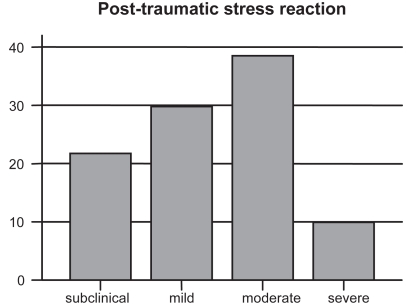
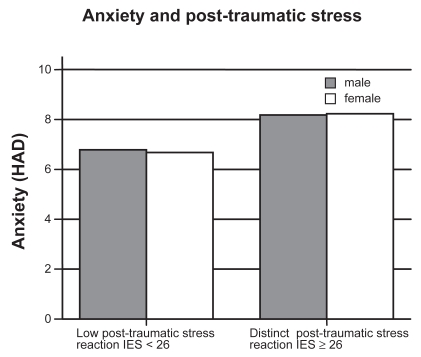
Results: Moderate to severe post-traumatic stress was reported by 48.1% of the patients. Possible-probable anxiety on the HAD was scored by 44.5% and possible-probable depression by 45.2%. Pain intensity (VAS) was significantly correlated to post-traumatic stress (r = 0.183, p = 0.022), the HAD-scores anxiety (r = 0.186, p = 0.0021), and depression (r = 0.252, p = 0.002). No statistically significant differences were found between genders for post-traumatic stress, pain intensity, anxiety, or depression. Participants with moderate to severe stress reaction reported statistically significant higher anxiety scores on the HAD (p = 0.030) in comparison with patients with mild stress.
Conclusion: The findings of relationships between pain intensity, post-traumatic stress, depression, and anxiety may have implications for clinicians and underline the importance of considering all these factors when managing patients with injury-related chronic pain.
Keywords: anxiety; chronic pain; post-traumatic stress disorder.
Figures
References
-
- Andersson AL, Bunketorp O, Allebeck P. High rates of psychosocial complications after road traffic injuries. Injury. 1997;28:539–43. - PubMed
-
- Barnsley L, Lord S, Bogduk N. Whiplash injury. Pain. 1994;58:283–307. - PubMed
-
- Becker N, Sjogren P, Bech P, et al. Treatment outcome of chronic non-malignant pain patients managed in a danish multidisciplinary pain centre compared to general practice: a randomised controlled trial. Pain. 2000;84:203–11. - PubMed
-
- Berglund A, Bodin L, Jensen I, et al. The influence of prognostic factors on neck pain intensity, disability, anxiety and depression over a 2-year period in subjects with acute whiplash injury. Pain. 2006;125:244–56. - PubMed
-
- Borg J, Gerdle B, Stibrant Sunnerhagen K. Rehabiliteringsmedicin-bakgrund och aktuell roll i sjukvården. In: Borg J, Gerdle B, Grimby G, et al., editors. Rehabiliteringsmedicin Teori och Praktik. Denmark: Narayana Press; 2006. p. 17.
LinkOut - more resources
Full Text Sources
