


Proximity to traffic, inflammation, and immune function among women in the Seattle, Washington, area
- PMID: 19337511
- PMCID: PMC2661906
- DOI: 10.1289/ehp.11580
Proximity to traffic, inflammation, and immune function among women in the Seattle, Washington, area
Abstract
Background: Traffic-related air pollution has been associated with adverse health outcomes, and the immune system may be a biologic mediator of health effects.
Objectives: We analyzed associations between living near major roads and immune status as measured by five immune assays. We hypothesized that living near a freeway, arterial, or truck route would be associated with increased inflammation and decreased immune function.
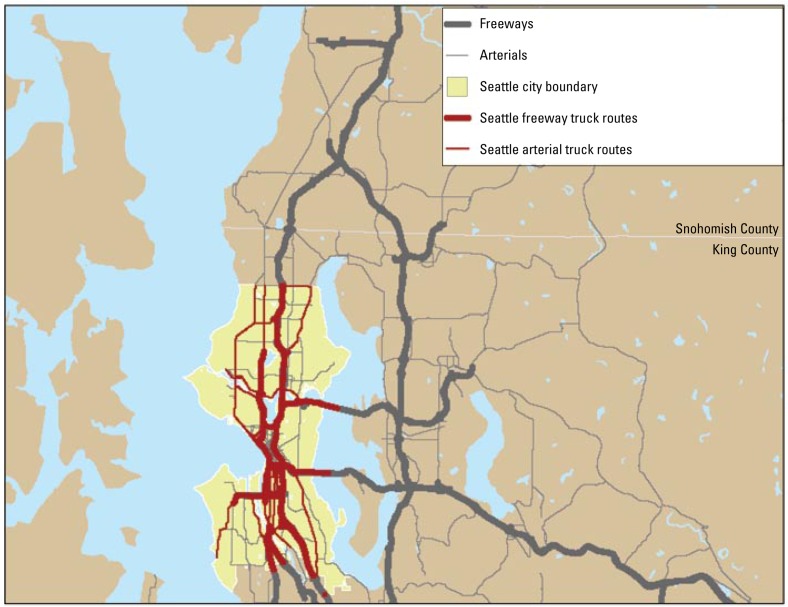
Methods: We used a geographic information system (GIS) to determine residential proximity to major roads among 115 postmenopausal, overweight women in the greater Seattle, Washington (USA), area whose immunity was assessed at the baseline visit of an exercise intervention trial. We evaluated three inflammatory markers (C-reactive protein, serum amyloid A, and interleukin-6) and two functional assays of cellular immunity [natural killer (NK) cell cytotoxicity and T-lymphocyte proliferation].
Results: Women living within 150 m of arterial roads had 21% lower NK cytotoxicity compared with women who lived farther from an arterial [mean cytotoxicity, 19.5%; 95% confidence interval (CI), 15.6-23.5%; vs. mean cytotoxicity, 24.8%; 95% CI, 22.0-27.5%], after adjustment for both individual-level and census tract-level demographic characteristics. This association was limited to women who reported exercising near traffic. Fewer women lived near freeways and truck routes. Markers of inflammation and lymphocyte proliferation did not consistently differ according to proximity to major roads.
Conclusions: If the observed association between residential proximity to traffic and decreased NK cytotoxicity is confirmed in other populations, our results may have implications for local land use policy.
Keywords: C-reactive protein; air pollution; cytotoxicity; immune function; inflammation; lymphocyte proliferation; natural killer cell; traffic.
Figures
References
-
- Albers R, Antoine JM, Bourdet-Sicard R, Calder PC, Gleeson M, Lesourd B, et al. Markers to measure immunomodulation in human nutrition intervention studies. Br J Nutr. 2005;94:452–481. - PubMed
-
- Boynton A, Neuhouser ML, Wener MH, Wood B, Sorensen B, Chen-Levy Z, et al. Associations between healthy eating patterns and immune function or inflammation in overweight or obese postmenopausal women. Am J Clin Nutr. 2007;86:1445–1455. - PubMed
-
- Brauer M, Hoek G, Smit HA, de Jongste JC, Gerritsen J, Postma DS, et al. Air pollution and development of asthma, allergy and infections in a birth cohort. Eur Respir J. 2007;29:879–888. - PubMed
-
- Brauer M, Hoek G, van Vliet P, Meliefste K, Fischer PH, Wijga A, et al. Air pollution from traffic and the development of respiratory infections and asthmatic and allergic symptoms in children. Am J Respir Crit Care Med. 2002;166:1092–1098. - PubMed
Publication types
MeSH terms
Substances
Grants and funding
LinkOut - more resources
Full Text Sources
Research Materials