


Kidney pathological changes in metabolic syndrome: a cross-sectional study
- PMID: 19339092
- PMCID: PMC2765403
- DOI: 10.1053/j.ajkd.2009.01.255
Kidney pathological changes in metabolic syndrome: a cross-sectional study
Abstract
Background: The worldwide prevalence of metabolic syndrome is increasing and has been associated with chronic kidney disease. Kidney pathological findings in patients with metabolic syndrome have not been well described, as was explored in this study.
Study design: Cross-sectional study.
Setting & participants: We retrospectively screened clinical information for 146 patients who underwent elective nephrectomy for renal cell carcinoma between January 2005 and March 2007 at Brigham and Women's Hospital, Boston, MA. Twelve patients with metabolic syndrome were identified. Twelve age- and sex-matched patients who did not have any of the criteria for metabolic syndrome were used as controls.
Predictor: Presence of metabolic syndrome defined by using Adult Treatment Panel III criteria.
Outcomes: Histological characteristics in each group, decrease in kidney function at 1-year follow-up.
Measurements: Two pathologists blinded to the clinical diagnosis independently evaluated nephrectomy specimens using Banff criteria to objectively assess histological characteristics.
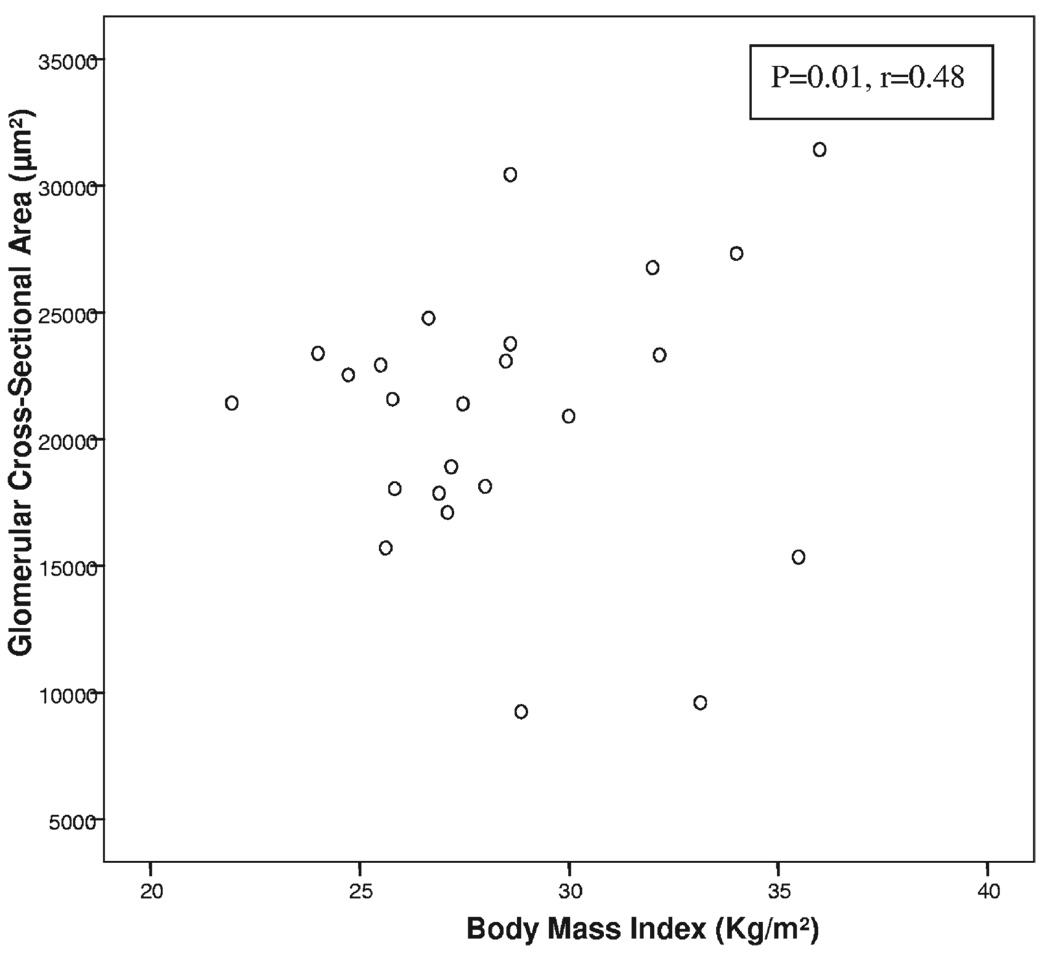
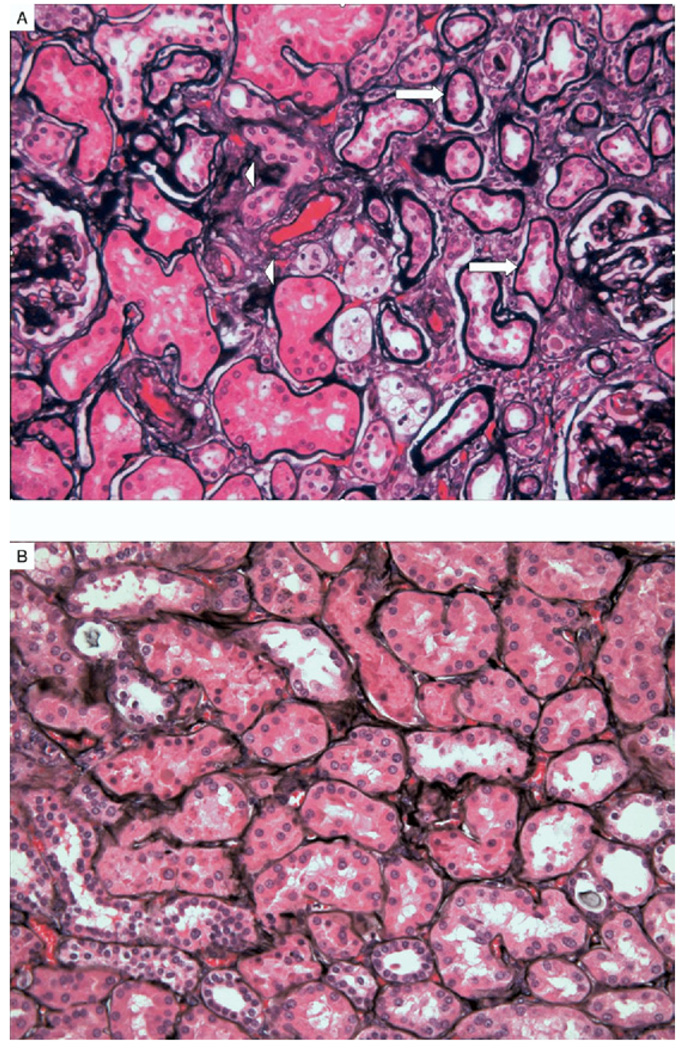
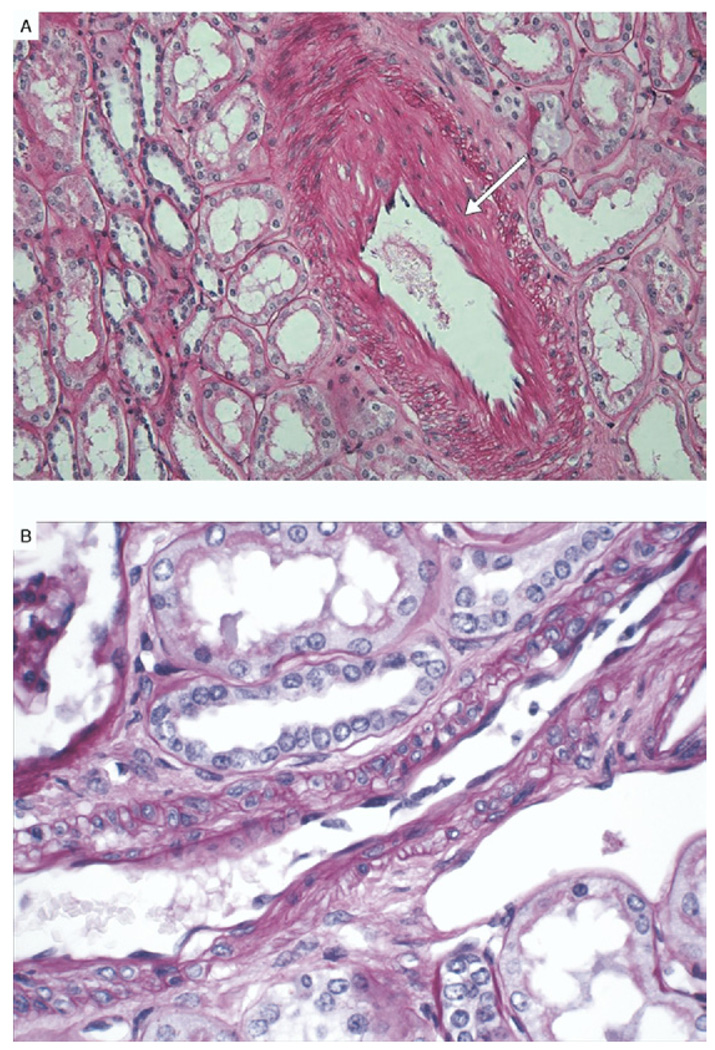
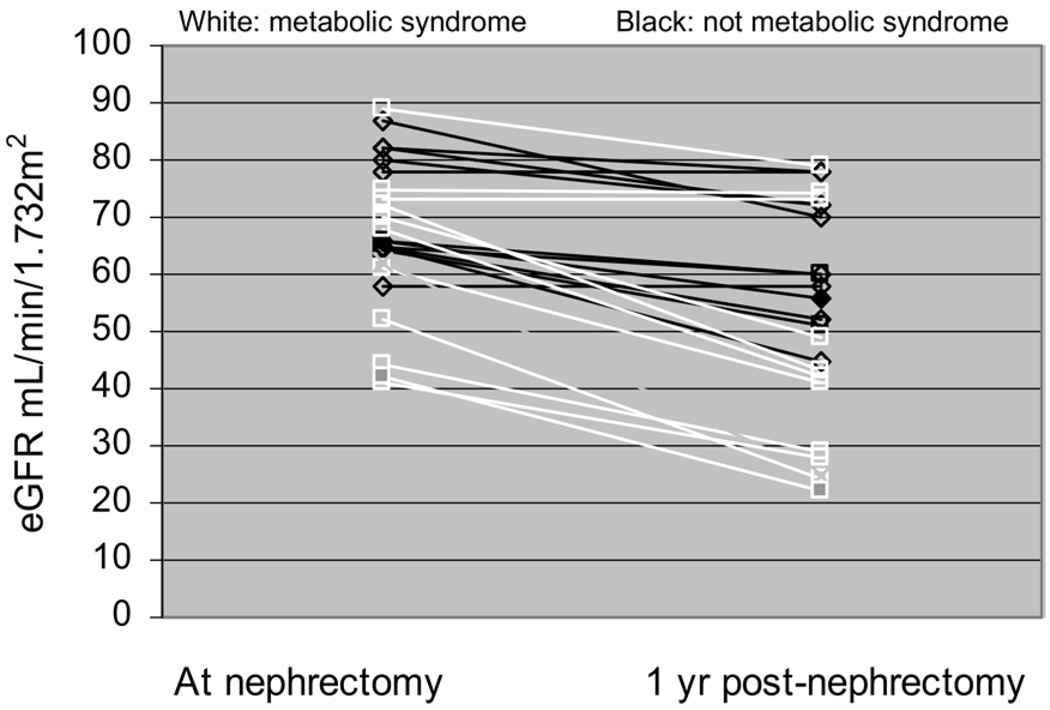
Results: Baseline characteristics were similar between the 2 groups. On histopathologic examination, patients with metabolic syndrome compared with controls had a greater prevalence of tubular atrophy (P = 0.006), interstitial fibrosis (P = 0.001), and arterial sclerosis (P = 0.001), suggesting microvascular disease. Patients with metabolic syndrome had greater global (P = 0.04) and segmental glomerulosclerosis (P = 0.05). Glomerular volume and cross-sectional surface area were not different. The combined end point of tubular atrophy greater than 5%, interstitial fibrosis greater than 5%, and presence of arterial sclerosis was more prevalent in patients with metabolic syndrome (P = 0.003; odds ratio, 33; confidence interval, 2.9 to 374.3) than controls. After 1 year, estimated glomerular filtration rate was significantly lower in patients with metabolic syndrome compared with controls (P = 0.03).
Limitations: Small sample size, retrospective design.
Conclusions: We report a high prevalence of microvascular disease in patients with metabolic syndrome. There was a steeper decrease in kidney function over time in patients with metabolic syndrome, suggesting limited renal reserve. Aggressive screening and management may be warranted in patients with metabolic syndrome to protect kidney function.
Figures
Comment in
-
Kidney damage in metabolic syndrome: nip it in the bud.Am J Kidney Dis. 2009 May;53(5):726-9. doi: 10.1053/j.ajkd.2009.02.001. Am J Kidney Dis. 2009. PMID: 19393470 No abstract available.
References
-
- Reaven GM. Banting lecture 1988. Role of insulin resistance in human disease. Diabetes. 1988;37:1595–1607. - PubMed
-
- Alberti KG, Zimmet P, Shaw J. The metabolic syndrome—A new worldwide definition. Lancet. 2005;366:1059–1062. - PubMed
-
- Ford ES, Giles WH, Mokdad AH. Increasing prevalence of the metabolic syndrome among U.S. adults. Diabetes Care. 2004;27:2444–2449. - PubMed
-
- Cameron AJ, Shaw JE, Zimmet PZ. The metabolic syndrome: Prevalence in worldwide populations. Endocrinol Metab Clin North Am. 2004;33:351–375. table of contents. - PubMed
-
- Ford ES. Risks for all-cause mortality, cardiovascular disease, and diabetes associated with the metabolic syndrome: A summary of the evidence. Diabetes Care. 2005;28:1769–1778. - PubMed
Publication types
MeSH terms
Grants and funding
LinkOut - more resources
Full Text Sources
Medical
