. 2009;4(4):e5137.
doi: 10.1371/journal.pone.0005137. Epub 2009 Apr 2.

Somatic LKB1 mutations promote cervical cancer progression

Affiliations

Somatic LKB1 mutations promote cervical cancer progression

Shana N Wingo et al. PLoS One. 2009.

Abstract

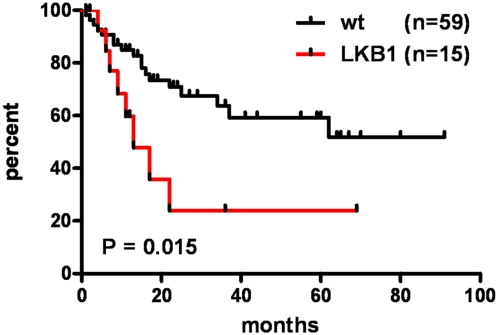
Human Papilloma Virus (HPV) is the etiologic agent for cervical cancer. Yet, infection with HPV is not sufficient to cause cervical cancer, because most infected women develop transient epithelial dysplasias that spontaneously regress. Progression to invasive cancer has been attributed to diverse host factors such as immune or hormonal status, as no recurrent genetic alterations have been identified in cervical cancers. Thus, the pressing question as to the biological basis of cervical cancer progression has remained unresolved, hampering the development of novel therapies and prognostic tests. Here we show that at least 20% of cervical cancers harbor somatically-acquired mutations in the LKB1 tumor suppressor. Approximately one-half of tumors with mutations harbored single nucleotide substitutions or microdeletions identifiable by exon sequencing, while the other half harbored larger monoallelic or biallelic deletions detectable by multiplex ligation probe amplification (MLPA). Biallelic mutations were identified in most cervical cancer cell lines; HeLa, the first human cell line, harbors a homozygous 25 kb deletion that occurred in vivo. LKB1 inactivation in primary tumors was associated with accelerated disease progression. Median survival was only 13 months for patients with LKB1-deficient tumors, but >100 months for patients with LKB1-wild type tumors (P = 0.015, log rank test; hazard ratio = 0.25, 95% CI = 0.083 to 0.77). LKB1 is thus a major cervical tumor suppressor, demonstrating that acquired genetic alterations drive progression of HPV-induced dysplasias to invasive, lethal cancers. Furthermore, LKB1 status can be exploited clinically to predict disease recurrence.


Conflict of interest statement

Competing Interests: The authors have declared that no competing interests exist.

Figures

Figure 1
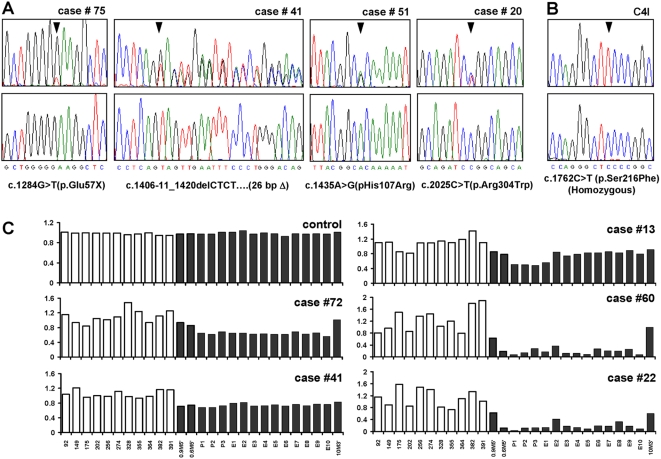
Figure 1. Somatic mutations and deletions of LKB1 in cervical tumors.
(A) Representative chromatograms of primary tumors. (B) C4I cell line. Lower panels, control DNA samples from each patient (for C4I, human peripheral leukocyte DNA). Wild-type sequences are shown below. Chromatograms represent forward strand except case #41 where reverse complement is shown to more clearly illustrate the deletion. Mutations are heterozygous except where indicated. (C) LKB1 deletions in primary cervical tumors by MLPA. Bars = relative signal intensity per probe. Sixteen probes (black) correspond to LKB1 locus on chromosome 19. Probe identifiers shown below. Probes 0.9M5′ and 0.6M5′ are ∼900 and 600 kb 5′ of locus (telomeric), while 10M3′ is ∼10000 kb 3′ (centromeric); remaining 13 probes correspond to LKB1 noncoding/coding exons. White bars correspond to randomly selected probes from other chromosomes.
Figure 2
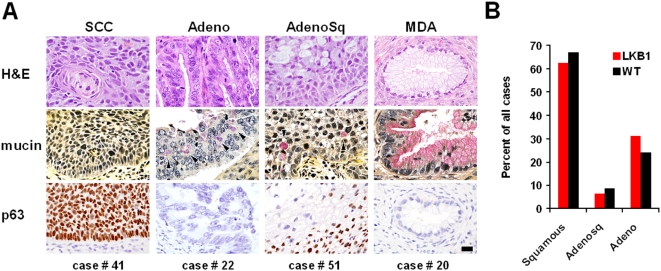
Figure 2. LKB1 mutations occur in each of the principal histologic subtypes of cervical cancer.
(A) Histology of representative cases with LKB1 mutations (SCC = squamous cell carcinoma; Adeno = adenocarcinoma; AdenoSq = adenosquamous carcinoma; MDA = minimal deviation adenocarcinoma). Scale bar = 20 microns. (B) Relative distribution of the three principal histologic subtypes among LKB1-mutant (red) vs. LKB1-wild type (black) cases (totals = 100%) shows that the histologic spectrum is virtually identical in LKB1 null vs. wild-type tumors.
Figure 3
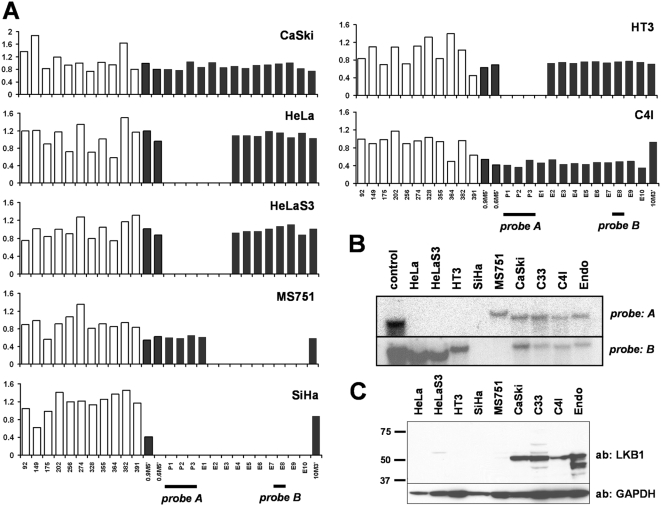
Figure 3. Homozygous LKB1 deletions occur in majority of cervical cancer cell lines.
(A) MLPA; see Figure 1 for probe details. HeLa, MS751, SiHa, and HT3 (and HeLa subclone HeLaS3) contain distinctive homozygous deletions. C4I harbors a monoallelic deletion, as evidenced by contiguous probes with half-intensity signals. (B) Southern analysis of control DNA, above cell lines, C33 (no deletion by MLPA) and HPV16/E6E7-immortalized endocervical cells from a normal patient (Endo = End1/E6E7; ATCC #CRL-2615). (C) Western analysis. LKB1 protein is undetectable in lines harboring homozygous deletions and decreased by ∼50% in C4I, consistent with monoallelic loss.
Figure 4
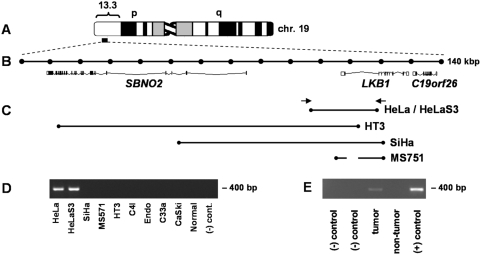
Figure 4. LKB1 deletion breakpoints in cervical cancer cell lines.
(A) LKB1 locus (chromosome 19p13.3). (B) 140 kb region (Ensembl50; 1050000–1190000) spanning LKB1 and immediately flanking loci; intervals = 10 kb. (C) Deletion breakpoints for cell lines harboring homozygous deletions. In MS751, deleted sequences are discontinuous as shown, consistent with a more complex rearrangement. Arrows = PCR primers for HeLa specific PCR (400 bp). (D) HeLa specific PCR (400 bp) confirms presence of deletion in HeLaS3. (E) HeLa intragenic LKB1 deletion occurred in vivo. Archival blocks were cored for DNA preparation. Lanes are as follows: (−) control = no template control; tumor = metastatic adrenal deposit; non-tumor = normal adrenal (same tissue block); (+) control = HeLa cell line DNA.
Figure 5
Figure 5. Progression-free survival of patients with LKB1-wild type vs. LKB1-mutant tumors.
Kaplan-Meier curves show the percentage of patients with disease progression over time. The curves compare patients whose tumors were heterozygous or homozygous for mutations/deletions (LKB1) vs. patients with no mutations/deletions (wt). Patients with >1 follow-up visit were included in the analysis. P value per log-rank test.

References

    1. Schoell WM, Janicek MF, Mirhashemi R. Epidemiology and biology of cervical cancer. Semin Surg Oncol. 1999;16:203–211. - PubMed
    1. Steben M, Duarte-Franco E. Human papillomavirus infection: epidemiology and pathophysiology. Gynecol Oncol. 2007;107:S2–5. - PubMed
    1. Ellenson LH, Wu TC. Focus on endometrial and cervical cancer. Cancer Cell. 2004;5:533–538. - PubMed
    1. Crum CP, Lee KR. Diagnostic Gynecologic and Obstetric Pathology. Carlsbad, CA: Saunders; 2006.
    1. Arbyn M, Bergeron C, Klinkhamer P, Martin-Hirsch P, Siebers AG, et al. Liquid compared with conventional cervical cytology: a systematic review and meta-analysis. Obstet Gynecol. 2008;111:167–177. - PubMed

Publication types

Substances