


Abdominal expiratory muscle activity in anesthetized vagotomized neonatal rats
- PMID: 19340545
- PMCID: PMC10717712
- DOI: 10.1007/s12576-009-0020-3
Abdominal expiratory muscle activity in anesthetized vagotomized neonatal rats
Abstract
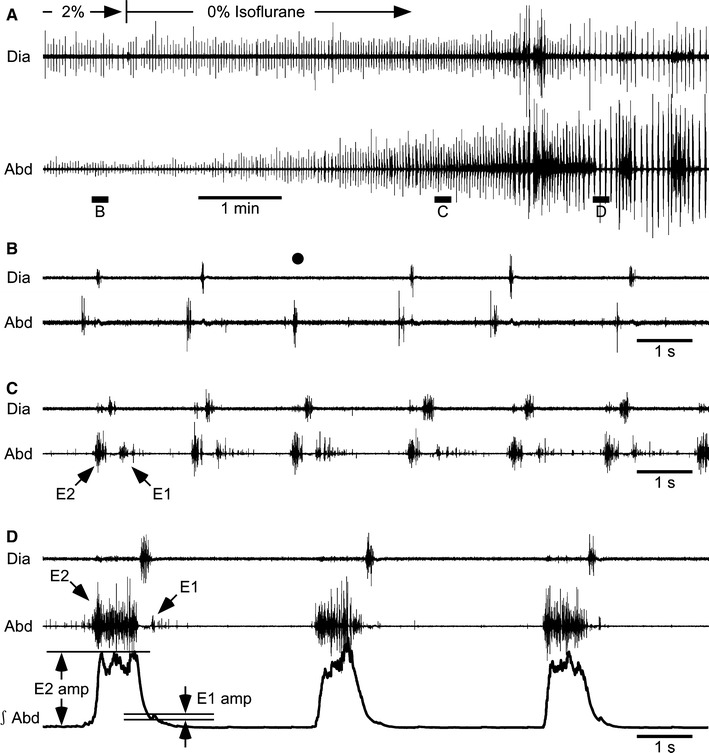
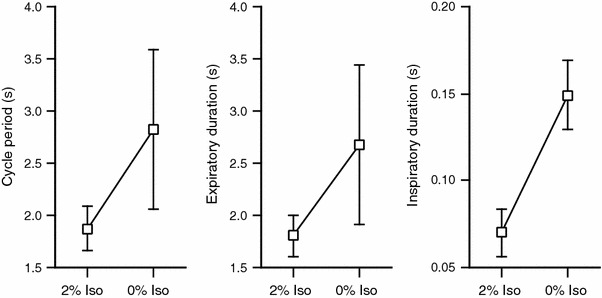
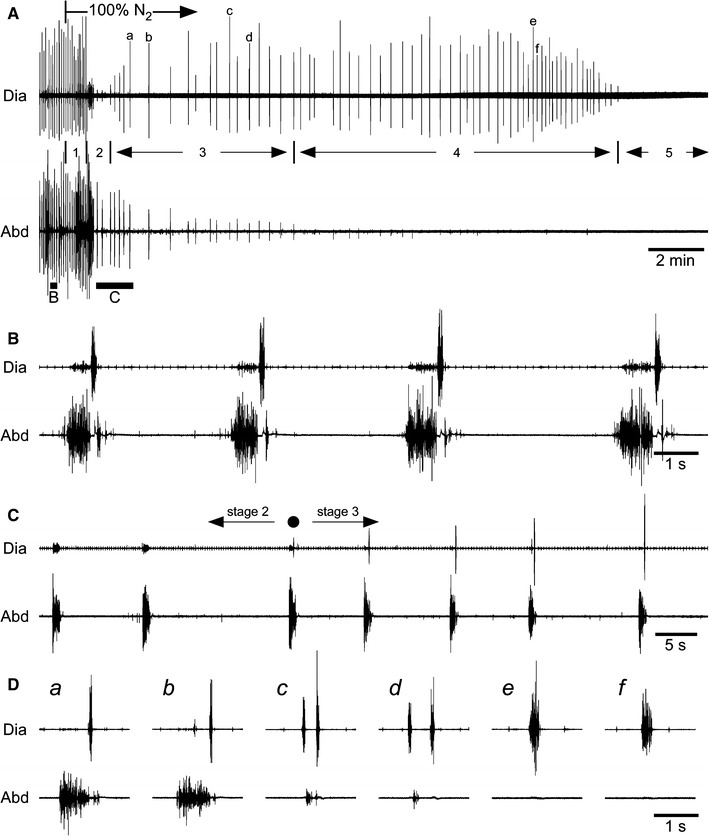
The pattern of respiratory activity in abdominal muscles was studied in anesthetized, spontaneously breathing, vagotomized neonatal rats at postnatal days 0-3. Anesthesia (2.0% isoflurane, 50% O(2)) depressed breathing and resulted in hypercapnia. Under this condition, abdominal muscles showed discharge late in the expiratory phase (E2 activity) in most rats. As the depth of anesthesia decreased, the amplitude of discharges in the diaphragm and abdominal muscles increased. A small additional burst frequently occurred in abdominal muscles just after the termination of diaphragmatic inspiratory activity (E1 or postinspiratory activity). Since this E1 activity is not often observed in adult rats, the abdominal respiratory pattern likely changes during postnatal development. Anoxia-induced gasping after periodic expiratory activity without inspiratory activity, and in most rats, abdominal expiratory activity disappeared before terminal apnea. These results suggest that a biphasic abdominal motor pattern (a combination of E2 and E1 activity) is a characteristic of vagotomized neonatal rats during normal respiration.
Figures
References
-
- Janczewski WA, Aoki M. Expiratory activity in the 1–4 day old rat. Jpn J Physiol. 1999;49(Suppl):S84.
-
- Janczewski WA, Aoki M. Expiratory muscle activity in neonatal rats. Soc Neurosci Abst. 1999;25:279.
MeSH terms
Substances
LinkOut - more resources
Full Text Sources
Research Materials
