Clinical Trial
. 2009 Apr;49(4):1013-20.
doi: 10.1016/j.jvs.2008.11.049.

Inflammatory cytokine levels in chronic venous insufficiency ulcer tissue before and after compression therapy

Affiliations
Clinical Trial

Inflammatory cytokine levels in chronic venous insufficiency ulcer tissue before and after compression therapy

Stephanie K Beidler et al. J Vasc Surg. 2009 Apr.

Abstract

Objective: Elevated inflammatory cytokine levels have been implicated in the pathogenesis of non-healing chronic venous insufficiency (CVI) ulcers. The goal of this study was to determine the protein levels of a wide range of inflammatory cytokines in untreated CVI ulcer tissue before and after 4 weeks of high-strength compression therapy. These levels were compared to cytokines present in healthy tissue.

Methods: Thirty limbs with untreated CVI and leg ulceration received therapy for 4 weeks with sustained high-compression bandaging at an ambulatory wound center. Biopsies were obtained from healthy and ulcerated tissue before and after therapy. A multiplexed protein assay was used to measure multiple cytokines in a single sample. Patients were designated as rapid or delayed healers based on ulcer surface area change.

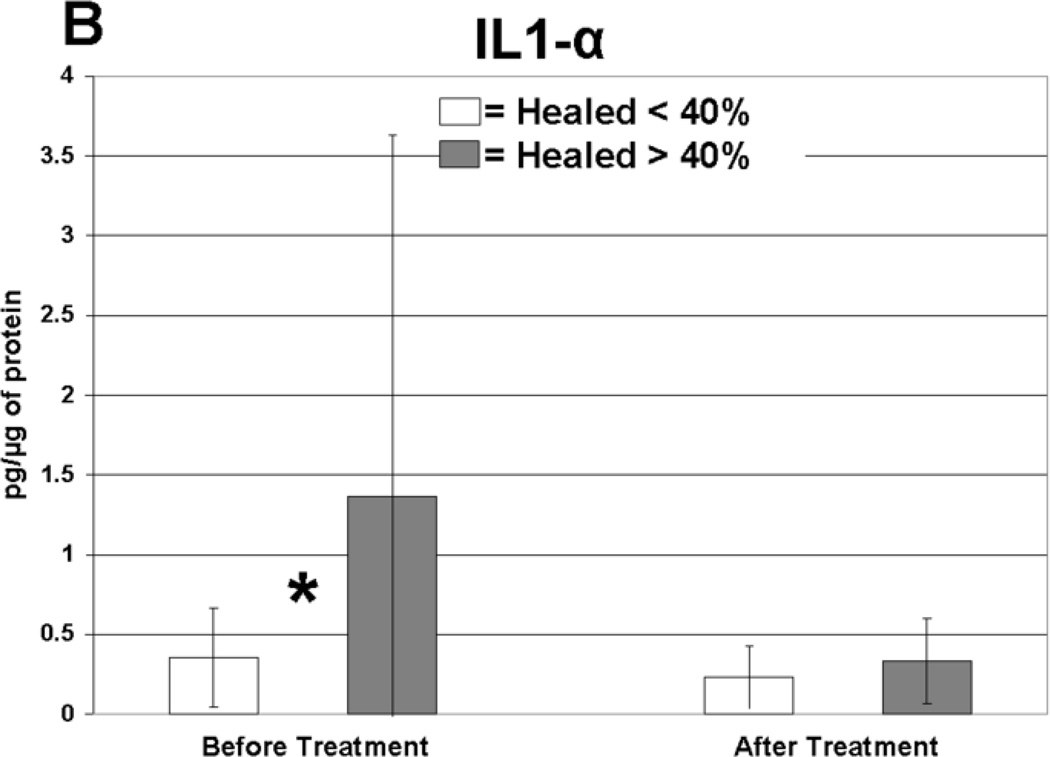
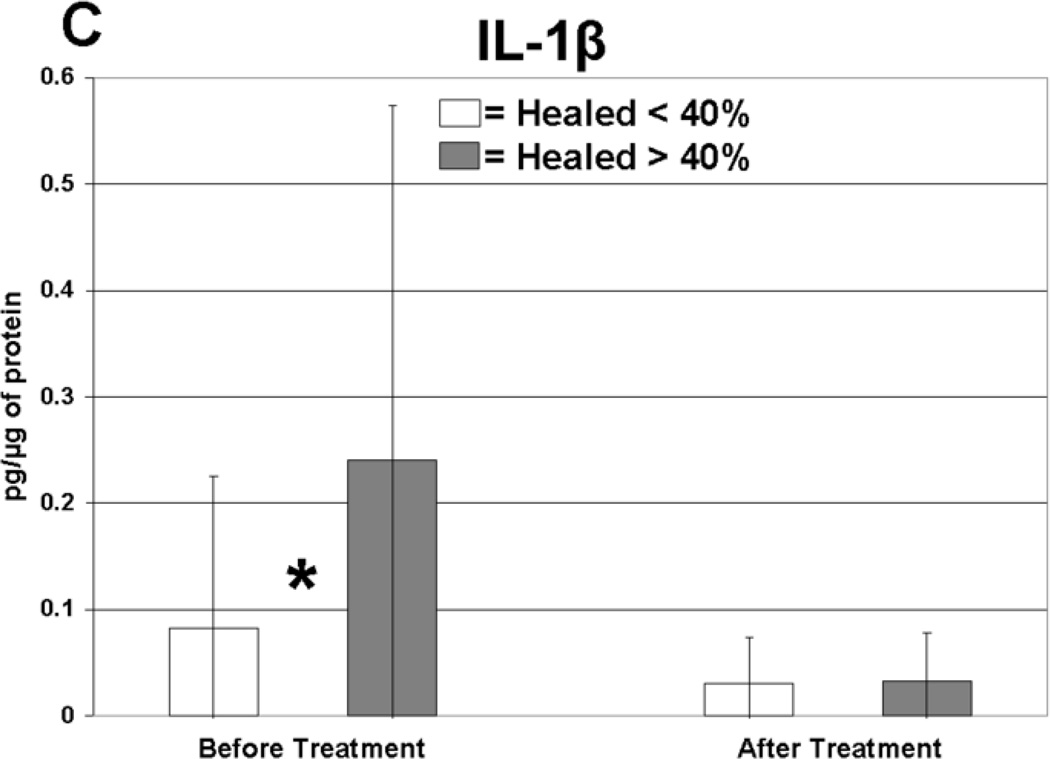
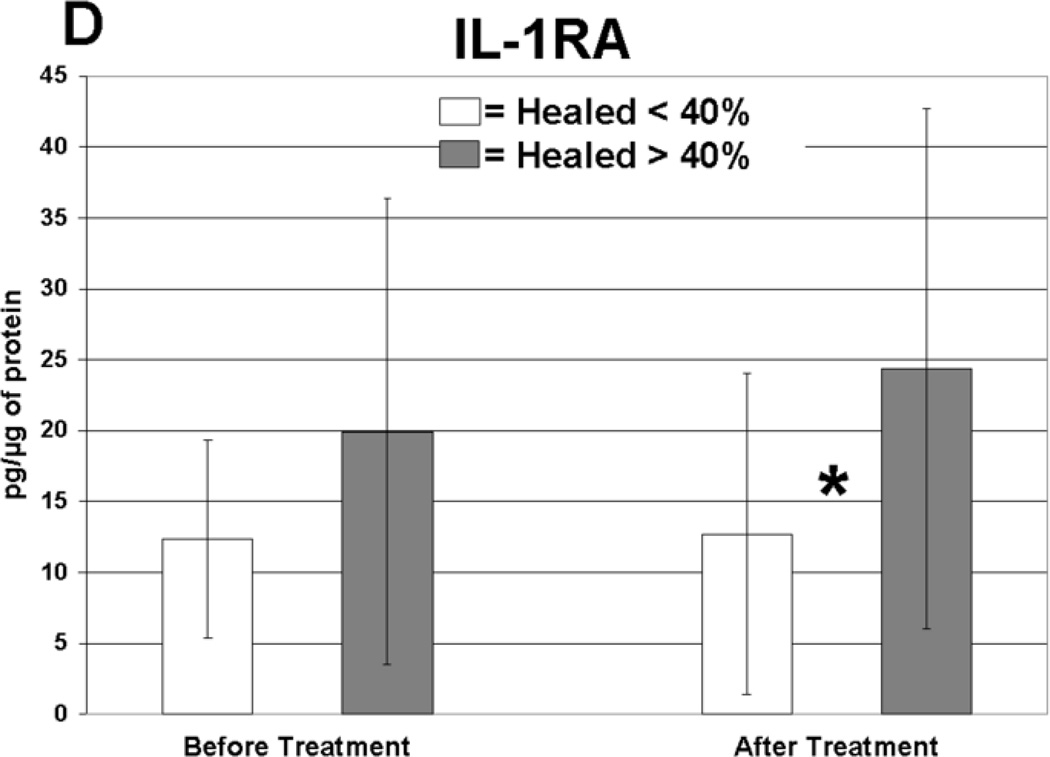
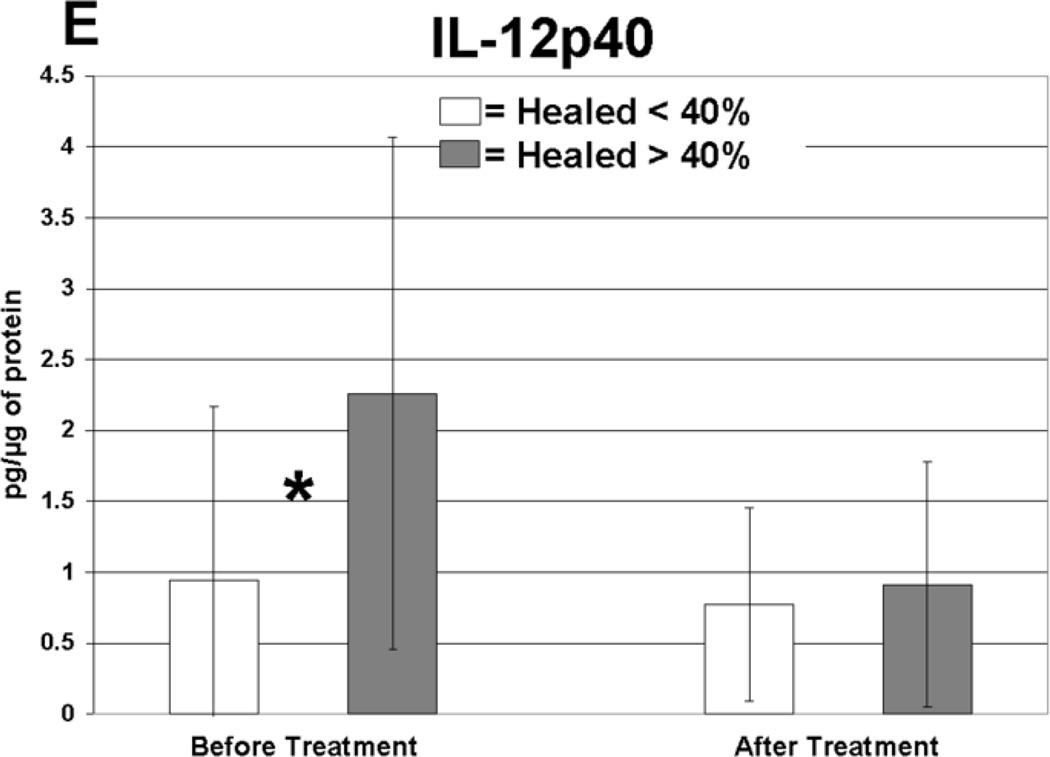
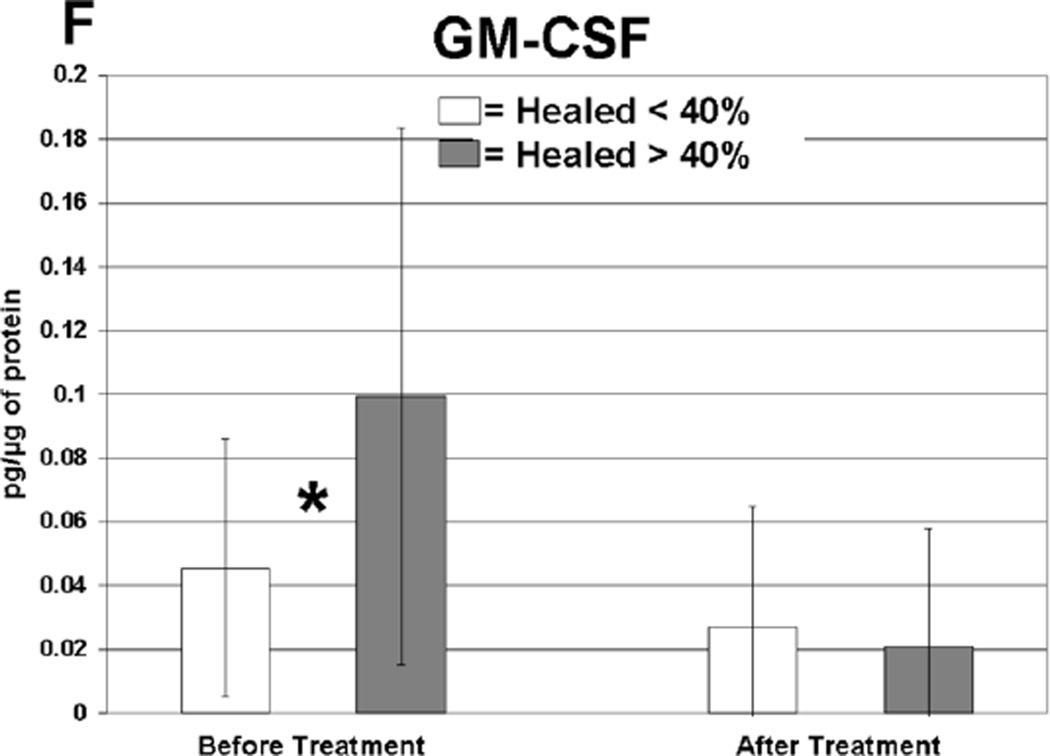
Results: The majority of pro-inflammatory cytokine protein levels were elevated in ulcer tissue compared to healthy tissue, and compression therapy significantly reduced these cytokines. TGF-beta1 was upregulated in ulcer tissue following compression therapy. Rapid healing ulcers had significantly higher levels of IL-1alpha, IL-1beta, IFN-gamma, IL-12p40, and granulocyte macrophage colony stimulating factor (GM-CSF) before compression therapy, and IL-1 Ra after therapy. IFN-gamma levels significantly decreased following therapy in the rapidly healing patients.

Conclusion: CVI ulcer healing is associated with a pro-inflammatory environment prior to treatment that reflects metabolically active peri-wound tissue that has the potential to heal. Treatment with compression therapy results in healing that is coupled with reduced pro-inflammatory cytokine levels and higher levels of the anti-inflammatory cytokine IL-1 Ra.


Figures
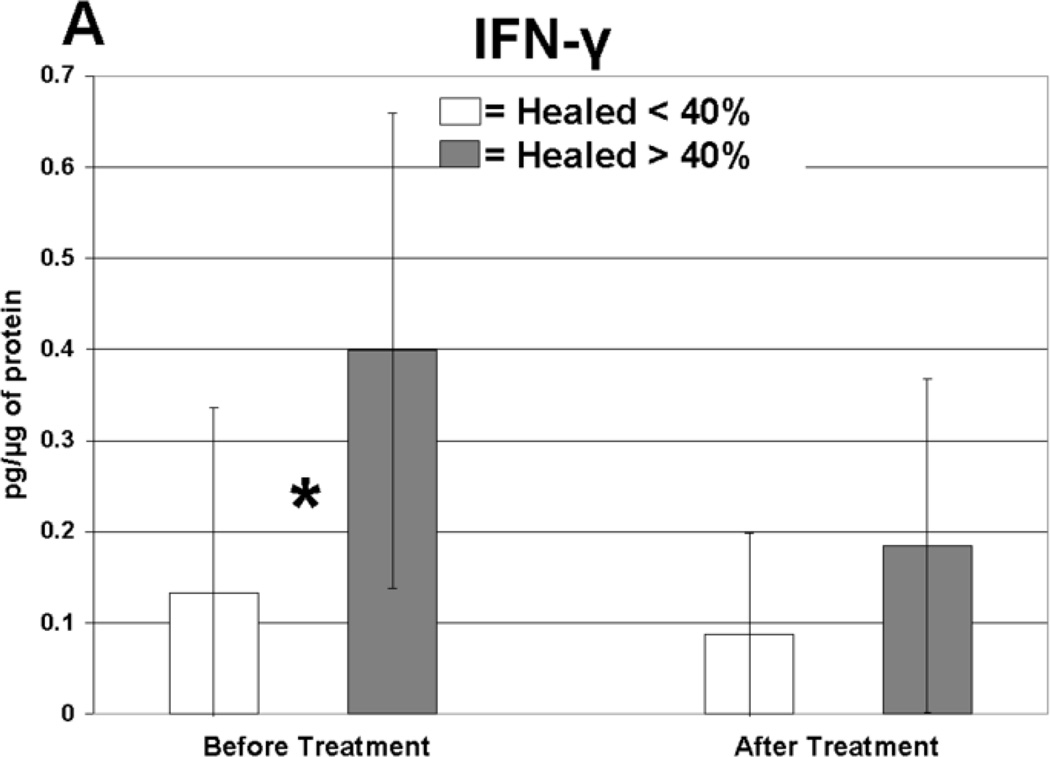
Fig 1
Fig 1
Levels of cytokine in ulcer tissue before and after 4 weeks of compression therapy for ulcers that healed > 40% compared to ulcers that healed < 40% at 4 weeks. A: Interferon-gamma (IFN-γ), B: Interleukin-1α (IL–1α), C: Interleukin-1β (IL-1β), D: Interleukin-1 receptor antagonist (IL-1RA), E: Interleukin-12p40 (IL-12p40), F: Granulocyte macrophage colony stimulating factor (GM-CSF). All levels are expressed in picograms of cytokine per microgram of protein in the tissue biopsy sample. * = statistically significant with P < .05.
Fig 1
Fig 1
Levels of cytokine in ulcer tissue before and after 4 weeks of compression therapy for ulcers that healed > 40% compared to ulcers that healed < 40% at 4 weeks. A: Interferon-gamma (IFN-γ), B: Interleukin-1α (IL–1α), C: Interleukin-1β (IL-1β), D: Interleukin-1 receptor antagonist (IL-1RA), E: Interleukin-12p40 (IL-12p40), F: Granulocyte macrophage colony stimulating factor (GM-CSF). All levels are expressed in picograms of cytokine per microgram of protein in the tissue biopsy sample. * = statistically significant with P < .05.
Fig 1
Fig 1
Levels of cytokine in ulcer tissue before and after 4 weeks of compression therapy for ulcers that healed > 40% compared to ulcers that healed < 40% at 4 weeks. A: Interferon-gamma (IFN-γ), B: Interleukin-1α (IL–1α), C: Interleukin-1β (IL-1β), D: Interleukin-1 receptor antagonist (IL-1RA), E: Interleukin-12p40 (IL-12p40), F: Granulocyte macrophage colony stimulating factor (GM-CSF). All levels are expressed in picograms of cytokine per microgram of protein in the tissue biopsy sample. * = statistically significant with P < .05.
Fig 1
Fig 1
Levels of cytokine in ulcer tissue before and after 4 weeks of compression therapy for ulcers that healed > 40% compared to ulcers that healed < 40% at 4 weeks. A: Interferon-gamma (IFN-γ), B: Interleukin-1α (IL–1α), C: Interleukin-1β (IL-1β), D: Interleukin-1 receptor antagonist (IL-1RA), E: Interleukin-12p40 (IL-12p40), F: Granulocyte macrophage colony stimulating factor (GM-CSF). All levels are expressed in picograms of cytokine per microgram of protein in the tissue biopsy sample. * = statistically significant with P < .05.
Fig 1
Fig 1
Levels of cytokine in ulcer tissue before and after 4 weeks of compression therapy for ulcers that healed > 40% compared to ulcers that healed < 40% at 4 weeks. A: Interferon-gamma (IFN-γ), B: Interleukin-1α (IL–1α), C: Interleukin-1β (IL-1β), D: Interleukin-1 receptor antagonist (IL-1RA), E: Interleukin-12p40 (IL-12p40), F: Granulocyte macrophage colony stimulating factor (GM-CSF). All levels are expressed in picograms of cytokine per microgram of protein in the tissue biopsy sample. * = statistically significant with P < .05.
Fig 1
Fig 1
Levels of cytokine in ulcer tissue before and after 4 weeks of compression therapy for ulcers that healed > 40% compared to ulcers that healed < 40% at 4 weeks. A: Interferon-gamma (IFN-γ), B: Interleukin-1α (IL–1α), C: Interleukin-1β (IL-1β), D: Interleukin-1 receptor antagonist (IL-1RA), E: Interleukin-12p40 (IL-12p40), F: Granulocyte macrophage colony stimulating factor (GM-CSF). All levels are expressed in picograms of cytokine per microgram of protein in the tissue biopsy sample. * = statistically significant with P < .05.

References

    1. McGuckin M, Waterman R, Brooks J, Cherry G, Porten L, Hurley S, et al. Validation of venous leg ulcer guidelines in the United States and United Kingdom. American journal of surgery. 2002;183:132–137. - PubMed
    1. Franks PJ, Moffatt CJ. Health related quality of life in patients with venous ulceration: use of the Nottingham health profile. Qual Life Res. 2001;10:693–700. - PubMed
    1. Cullum N, Nelson EA, Fletcher AW, Sheldon TA. Compression for venous leg ulcers. Cochrane database of systematic reviews (Online) 2001 CD000265. - PubMed
    1. Kunimoto BT. Management and prevention of venous leg ulcers: a literature-guided approach. Ostomy/wound management. 2001;47:36–42. 4–9. - PubMed
    1. Nelson EA, Bell-Syer SE, Cullum NA. Compression for preventing recurrence of venous ulcers. Cochrane database of systematic reviews (Online) 2000 CD002303. - PubMed

Publication types