


Widespread changes in synaptic markers as a function of sleep and wakefulness in Drosophila
- PMID: 19342593
- PMCID: PMC2715914
- DOI: 10.1126/science.1166673
Widespread changes in synaptic markers as a function of sleep and wakefulness in Drosophila
Abstract
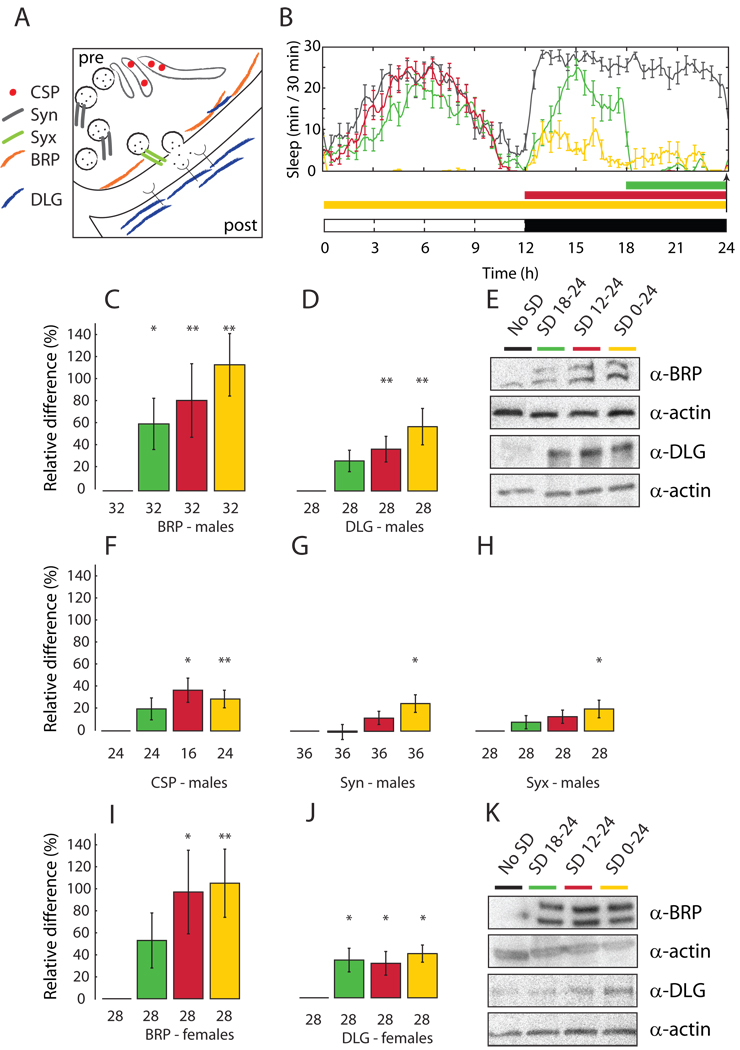
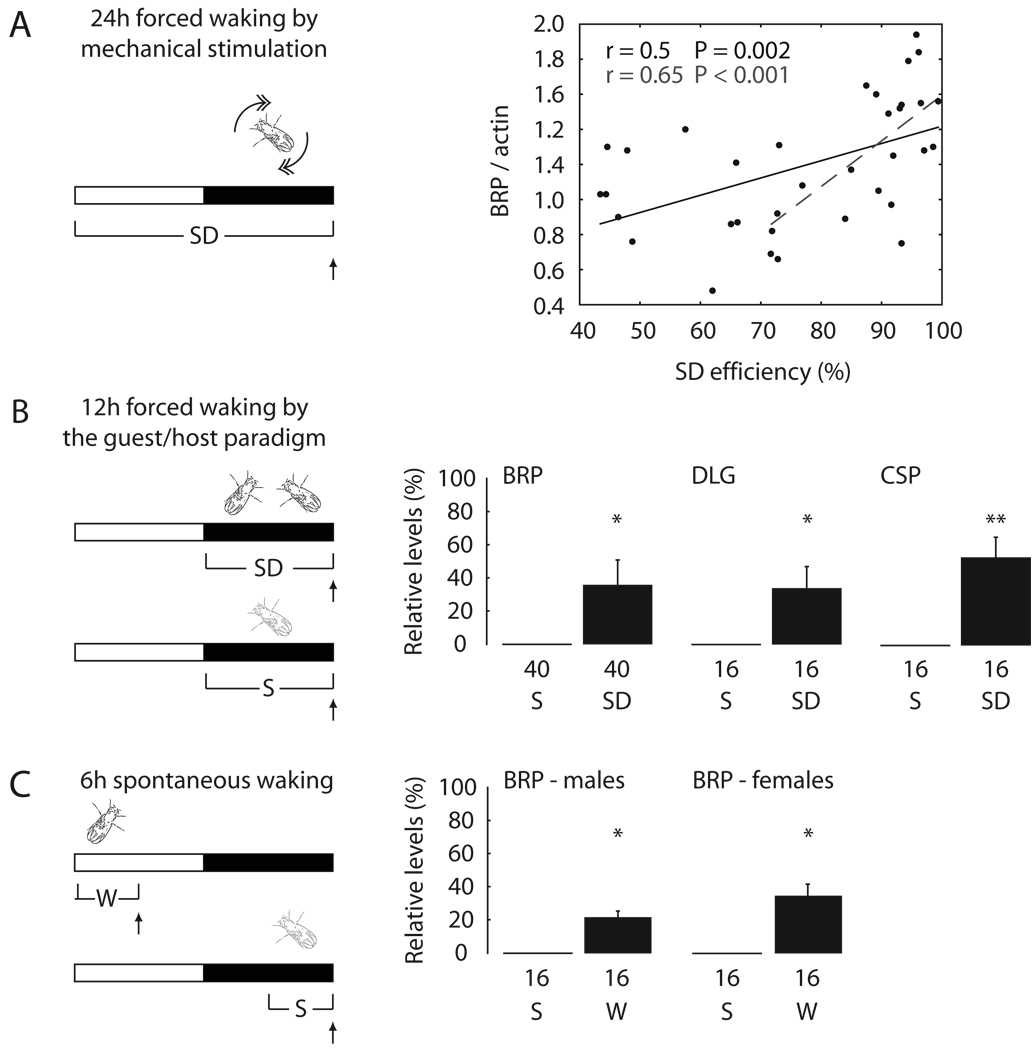
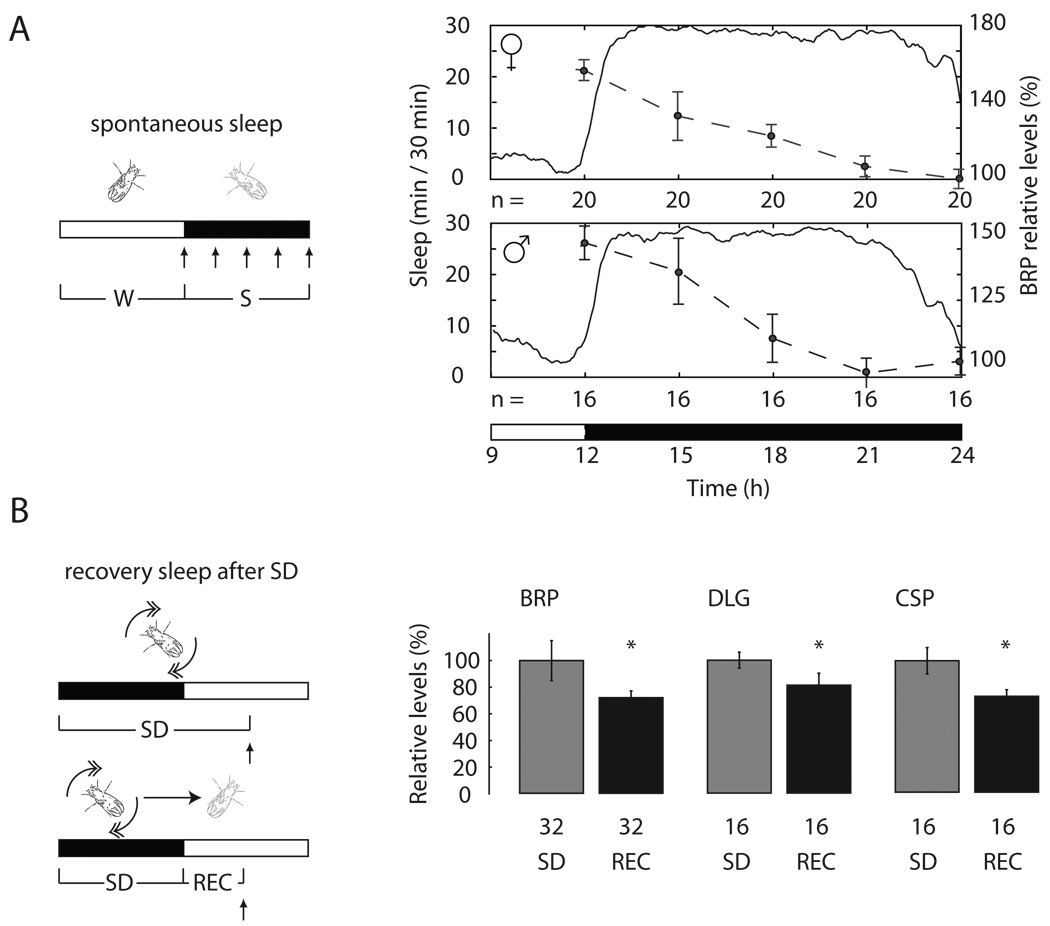
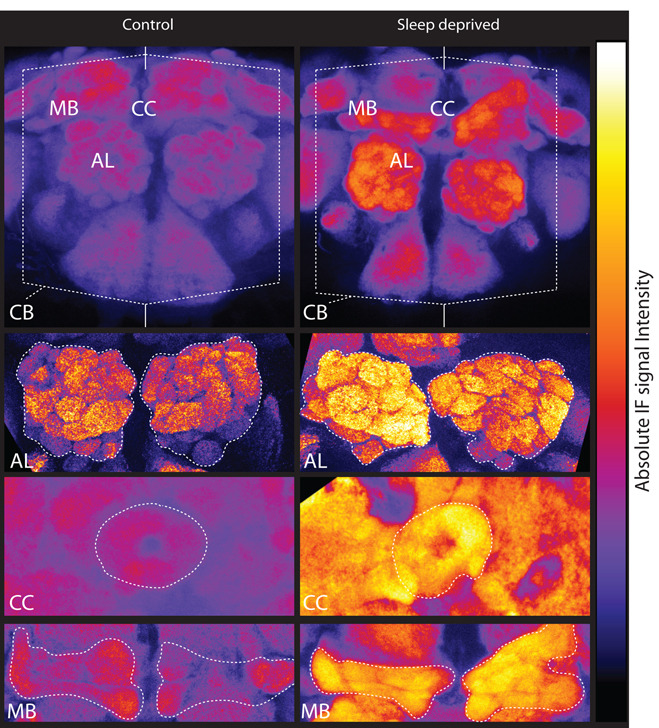
Sleep is universal, strictly regulated, and necessary for cognition. Why this is so remains a mystery, although recent work suggests that sleep, memory, and plasticity are linked. However, little is known about how wakefulness and sleep affect synapses. Using Western blots and confocal microscopy in Drosophila, we found that protein levels of key components of central synapses were high after waking and low after sleep. These changes were related to behavioral state rather than time of day and occurred in all major areas of the Drosophila brain. The decrease of synaptic markers during sleep was progressive, and sleep was necessary for their decline. Thus, sleep may be involved in maintaining synaptic homeostasis altered by waking activities.
Figures
Comment in
-
Neuroscience. Sleeping to reset overstimulated synapses.Science. 2009 Apr 3;324(5923):22. doi: 10.1126/science.324.5923.22. Science. 2009. PMID: 19342557 No abstract available.
References
-
- Vyazovskiy VV, Cirelli C, Pfister-Genskow M, Faraguna U, Tononi G. Nat Neurosci. 2008 Feb;11:200. - PubMed
-
- Tononi G, Cirelli C. Sleep Med Rev. 2006 Feb;10:49. - PubMed
-
- Hendricks JC, et al. Neuron. 2000 Jan;25:129. - PubMed
-
- Shaw PJ, Cirelli C, Greenspan RJ, Tononi G. Science. 2000 Mar 10;287:1834. - PubMed
Publication types
MeSH terms
Substances
Grants and funding
LinkOut - more resources
Full Text Sources
Molecular Biology Databases
