Review
. 2009 Apr 21;7(8):1508-24.
doi: 10.1039/b817980h. Epub 2009 Feb 11.

Structure-function relationships in peptoids: recent advances toward deciphering the structural requirements for biological function

Affiliations
Review

Structure-function relationships in peptoids: recent advances toward deciphering the structural requirements for biological function

Sarah A Fowler et al. Org Biomol Chem. .

Abstract

Oligomers of N-substituted glycine, or peptoids, are versatile tools to probe biological processes and hold promise as therapeutic agents. An underlying theme in the majority of recent peptoid research is the connection between peptoid function and peptoid structure. For certain applications, well-folded peptoids are essential for activity, while unstructured peptoids appear to suffice, or even are superior, for other applications. Currently, these structure-function connections are largely made after the design, synthesis, and characterization process. However, as guidelines for peptoid folding are elucidated and the known biological activities are expanded, we anticipate these connections will provide a pathway toward the de novo design of functional peptoids. In this perspective, we review several of the peptoid structure-function relationships that have been delineated over the past five years.


Figures
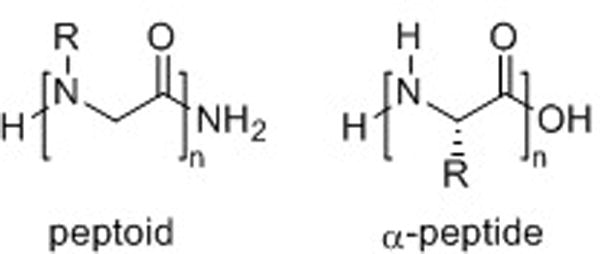
Fig. 1
Fig. 1
Generic structures of a peptoid and an α-peptide.
Fig. 2
Fig. 2
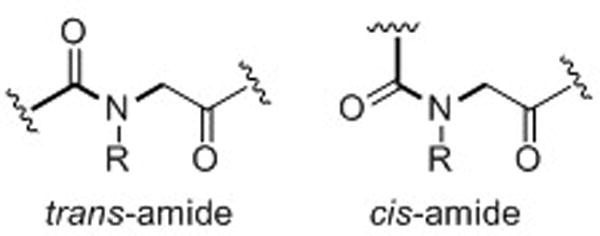
Amides in the peptoid backbone can readily access both trans and cis conformations.
Fig. 3
Fig. 3
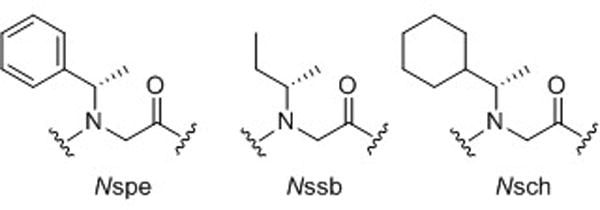
Common α-chiral monomers used to enforce structural stability in peptoids.
Fig. 4
Fig. 4
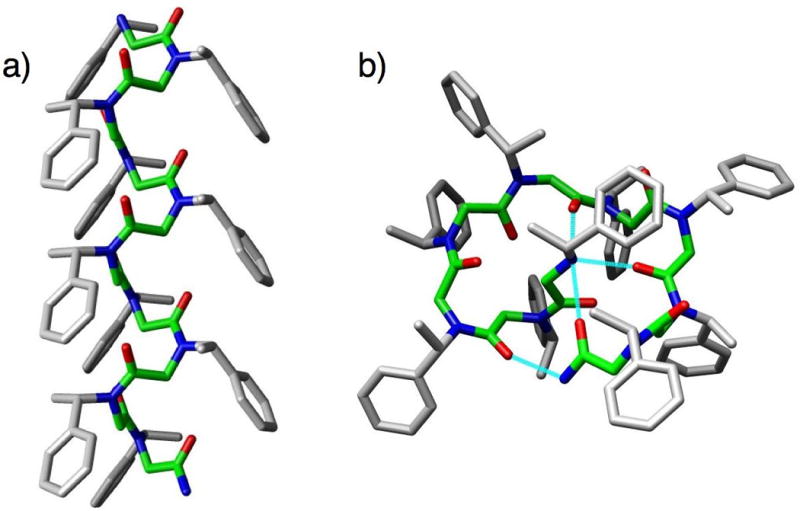
(a) The peptoid helix, shown here as the structure of (Nspe)10. Structure generated by molecular mechanics from the calculated structure of (Nspe)8; peptoid backbone highlighted in green. (b) The peptoid threaded loop, shown here as the structure of (Nspe)9. Structure generated by solution-phase 2D NMR analyses. Peptoid backbone highlighted in green and intramolecular hydrogen bonds shown in cyan. 3D-images for helix and loop generated using Chimera (v. 1.2199).
Fig. 5
Fig. 5
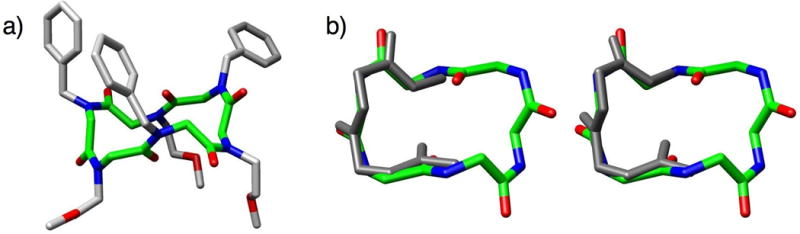
(a) X-ray crystal structure of Kirshenbaum and co-workers’ cyclic peptoid hexamer; peptoid backbone highlighted in green. (b) Overlay of the cyclic hexamer backbone with a type I (left) and a type III (right) β-turn. 3D-images for X-ray structure and overlays generated using Chimera (v. 1.2199).
Fig. 6
Fig. 6
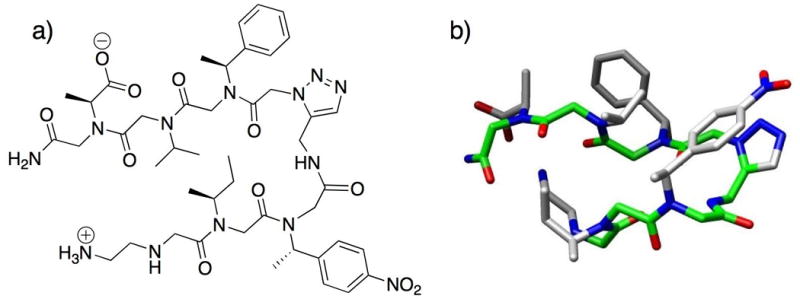
(a) Structure of Appella and co-workers’ peptoid β-hairpin mimic containing the triazole turn unit. (b) 3-D structure of the peptoid β-hairpin mimic determined by NMR analyses; backbone highlighted in green. 3D-image for turn structure generated using Chimera (v. 1.2199).
Fig. 7
Fig. 7
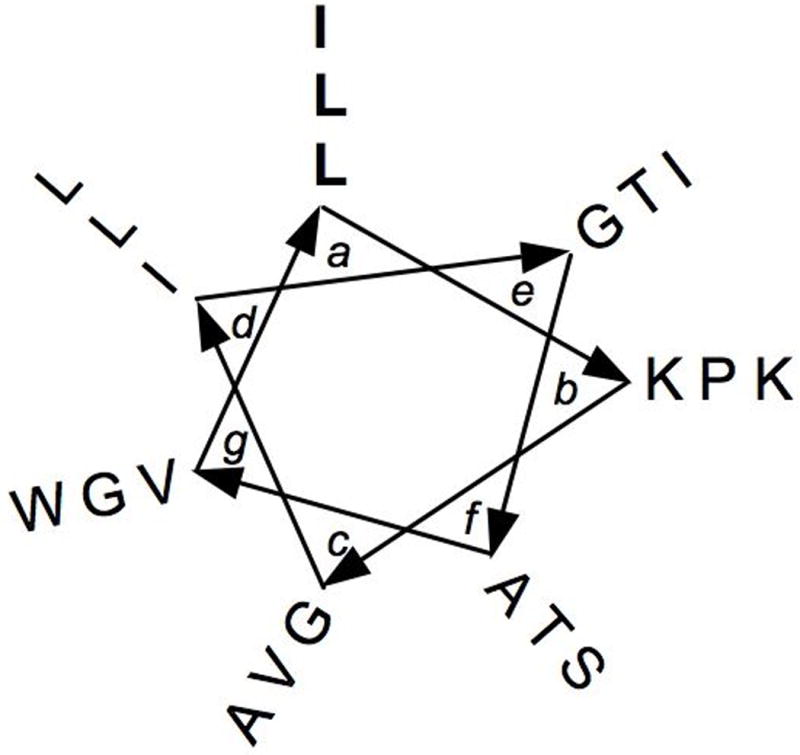
Helical wheel diagram of the peptide melittin. The residues in bold were replaced by peptoid monomers in the melittin mimics developed by Shin and co-workers.
Fig. 8
Fig. 8
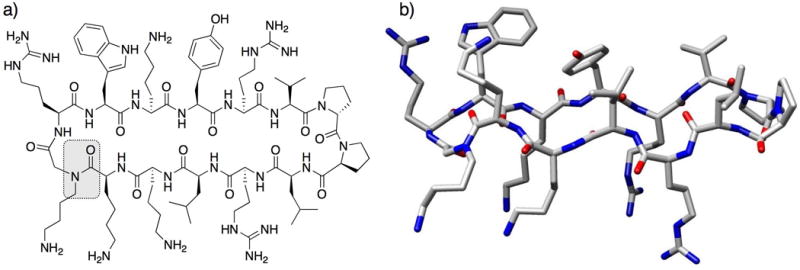
(a) Structure of Robinson and co-workers’ macrocyclic peptomer 9, a mimic of protegrin-I. The NLys replacement at Arg-6 is highlighted. (b) 3D-image of peptomer 9. The macrocycle adopts a stable β-hairpin conformation in aqueous solution, as determined by NMR analyses. Image generated using Chimera (v. 1.2199).
Fig. 9
Fig. 9
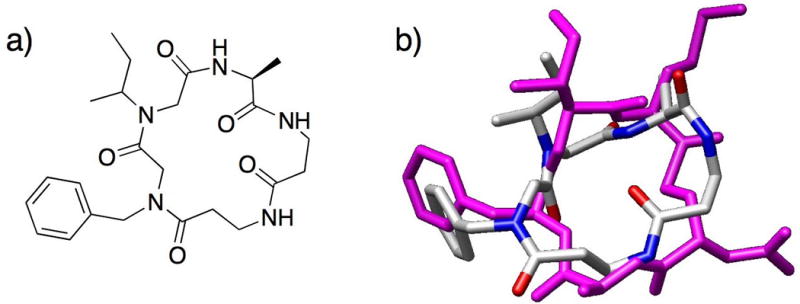
(a) Structure of macrocyclic peptomer 10, a mimic of AIP-I, reported by Fowler et al. (b) Overlaid computed models of the macrocyclic portion of AIP-I (magenta) and peptomer 10 (colored by atom type). Molecular mechanics performed in MOE (v. 2006.08).
Fig. 10
Fig. 10
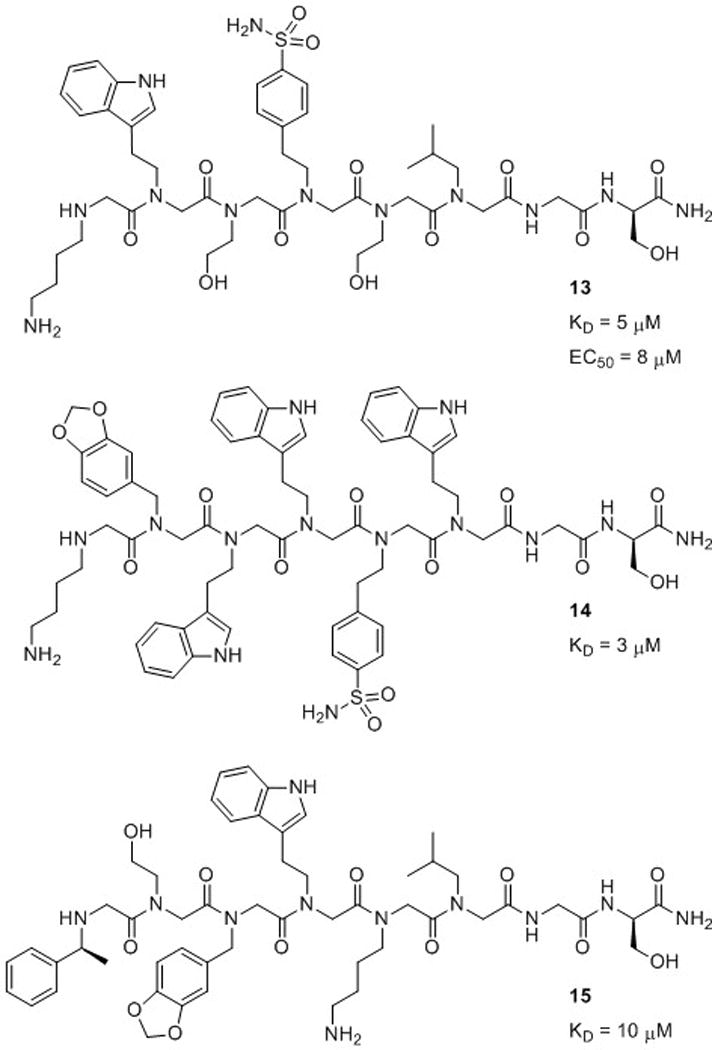
Peptoid hexamers 13, 14, and 15 reported by Kodadek and co-workers and their dissociation constants (KD) for coactivator CBP., Peptoid 13 was able to function as a transcriptional activation domain mimic (EC50 = 8 μM).
Fig. 11
Fig. 11
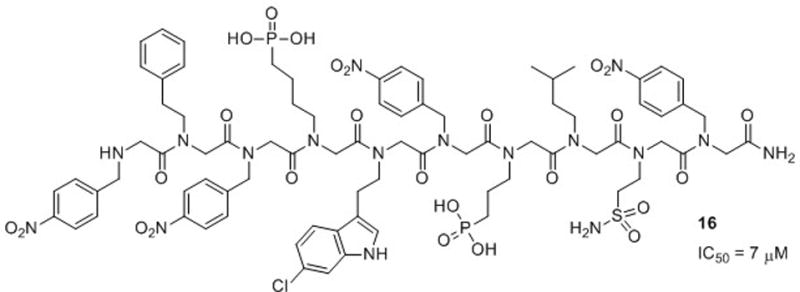
Structure of the achiral peptoid 16 reported by Appella and co-workers that inhibits the HDM2-p53 interaction.
Fig. 12
Fig. 12
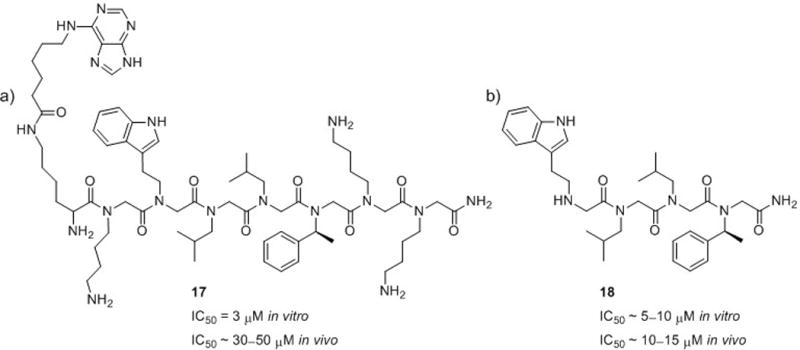
Peptoids reported by Kodadek and co-workers that inhibit the interaction of 19S RP with polyubiquitinated proteins, preventing their degradation. (a) Purine-capped peptoid heptamer 17. (b) Peptoid tetramer 18.
Fig. 13
Fig. 13
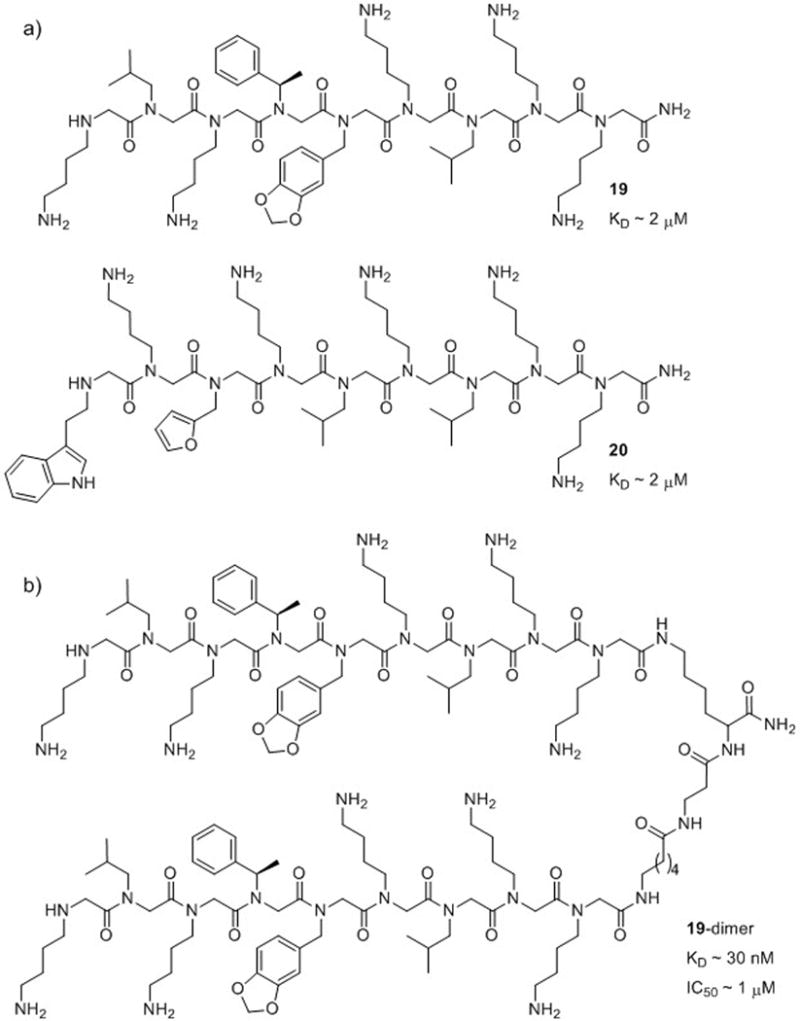
(a) Two of the peptoids (19 and 20) found to bind to VEGFR2 by Kodadek and co-workers. (b) Dimerization of 19 via a flexible linker (to yield 19-dimer) resulted in an inhibitor of VEGFR2 and suppressed tumor growth in a mouse model.,
Fig. 14
Fig. 14
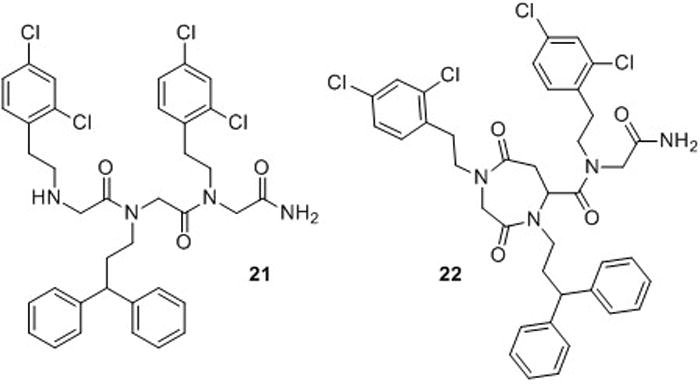
Peptoid inhibitors of Apaf-1 (21 and 22) developed by Pérez-Payá and co-workers.,
Fig. 15
Fig. 15
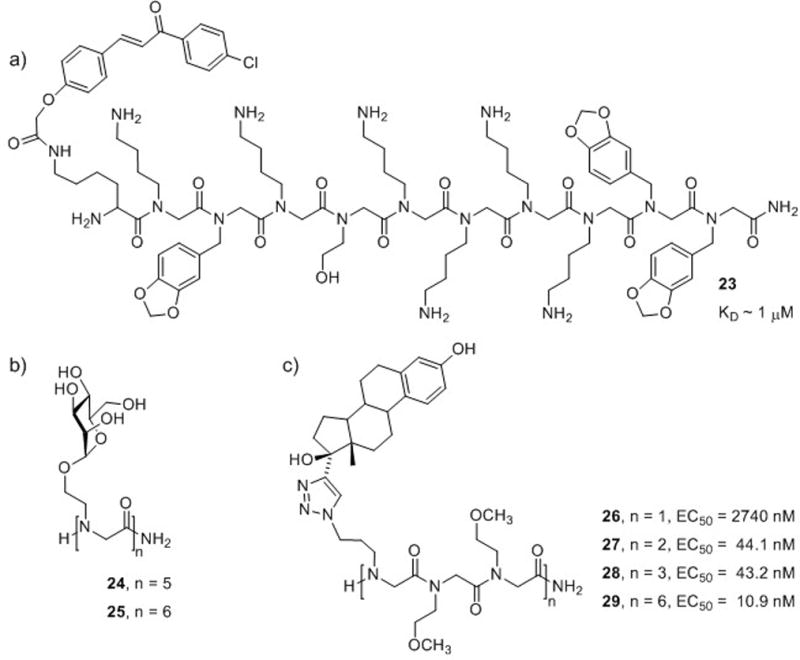
Multivalent peptoid ligands for various protein targets. (a) A chalcone-peptoid hybrid 23 that binds selectively to MDM2. (b) Pentamer (24) and hexamer (25) mannosylpeptoids that bind to ConA. (c) Four estradiol-containing peptoids (2629) that bind to the estrogen receptor.
Fig. 16
Fig. 16
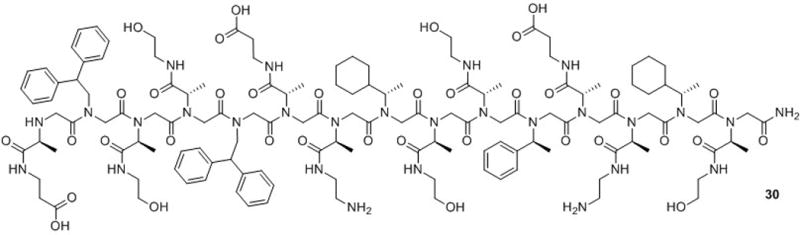
Structure of a peptoid 15-mer (30) that can self-assemble into a helical trimer in aqueous solution. Dill and co-workers constructed peptoid helix bundles by covalent linkage of two, three, or four such peptoid 15-mers.
Fig. 17
Fig. 17
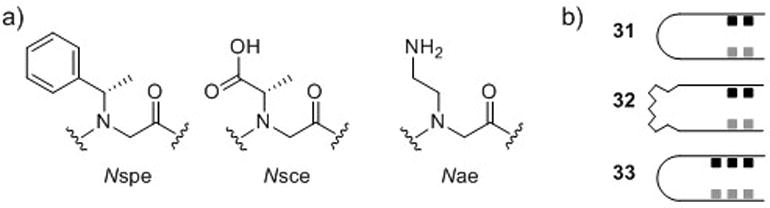
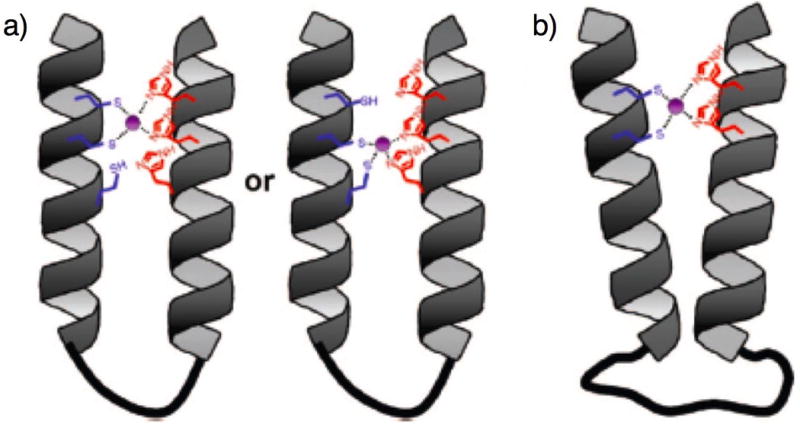
(a) Zuckermann and co-workers’ peptoid two-helix bundles were constructed from the monomers Nspe (see Fig. 3), Nsce, and Nae. (b) Schematic of two-helix bundles with two thiols, two imidazoles, and short linker (31), two thiols, two imidazoles, and long linker (32), and three thiols, three imidazoles, and short linker (33).
Fig. 18
Fig. 18
Schematic of proposed models for peptoid two-helix bundles with high-affinity zinc binding sites. (a) Trivalent peptoid 33. (b) Peptoid 32 with long flexible linker. Reprinted with permission from J. Am. Chem. Soc., 2008, 130, 8847-8855. Copyright 2008 American Chemical Society.
Scheme 1
Scheme 1
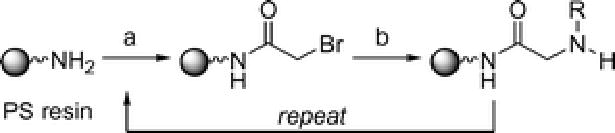
Peptoid submonomer synthesis method developed by Zuckermann and co-workers. Reagents and conditions: PS resin = Rink amide linker-derivatized polystyrene. (a) bromoacetic acid, N,N-diisopropylcarbodiimide (DIC), DMF. (b) amine building block NH2R, DMF. Oligomers are cleaved from the resin with 95% trifluoroacetic acid/H2O.

Similar articles

Cited by

References

    1. Simon RJ, Kania RS, Zuckermann RN, Huebner VD, Jewell DA, Banville S, Ng S, Wang L, Rosenberg S, Marlowe CK, Spellmeyer DC, Tan R, Frankel AD, Santi DV, Cohen FE, Bartlett PA. Proc Natl Acad Sci U S A. 1992;89:9367–9371. - PMC - PubMed
    1. Farmer PS, Ariëns EJ. Trends Pharmacol Sci. 1982;3:362–365.
    1. This concept was applied to the development of novel cholecystokinin (CCK) analogs by Horwell et al. Horwell DC, Beeby A, Clark CR, Hughes J, editors. J Med Chem. 1987;30:729. - PubMed
    1. Zuckermann RN, Kerr JM, Kent SBH, Moos WH. J Am Chem Soc. 1992;114:10646–10647.
    1. Zuckermann RN, Martin EJ, Spellmeyer DC, Stauber GB, Shoemaker KR, Kerr JM, Figliozzi GM, Goff DA, Siani MA, Simon R, Banville SC, Brown EG, Wang L, Richter LS, Moos WH. J Med Chem. 1994;37:2678–2685. - PubMed

Publication types