


Application of Raman spectroscopy for cervical dysplasia diagnosis
- PMID: 19343687
- PMCID: PMC3960286
- DOI: 10.1002/jbio.200910001
Application of Raman spectroscopy for cervical dysplasia diagnosis
Abstract
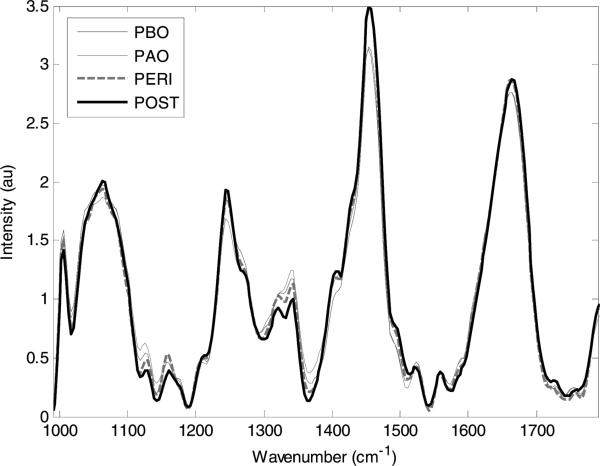
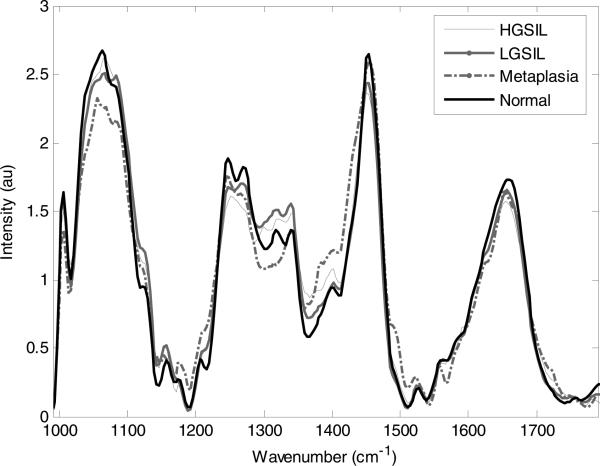
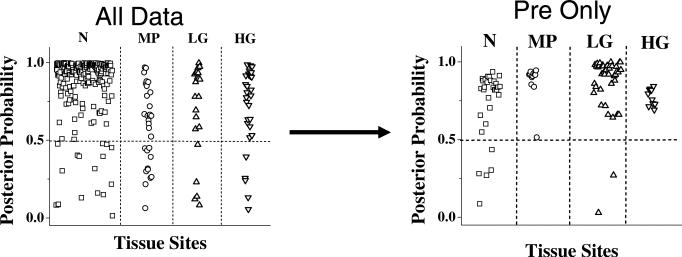
Cervical cancer is the second most common malignancy among women worldwide, with over 490 000 cases diagnosed and 274 000 deaths each year. Although current screening methods have dramatically reduced cervical cancer incidence and mortality in developed countries, a "See and Treat" method would be preferred, especially in developing countries. Results from our previous work have suggested that Raman spectroscopy can be used to detect cervical precancers; however, with a classification accuracy of 88%, it was not clinically applicable. In this paper, we describe how incorporating a woman's hormonal status, particularly the point in menstrual cycle and menopausal state, into our previously developed classification algorithm improves the accuracy of our method to 94%. The results of this paper bring Raman spectroscopy one step closer to being utilized in a clinical setting to diagnose cervical dysplasia.
((c) 2009 WILEY-VCH Verlag GmbH & Co. KGaA, Weinheim).
Figures
References
-
- Cervical Cancer Resource Center. 2007
-
- Krantz K. The Anatomy of the Human Cervix, Gross and Microscopic. University of Chicago Press; Chicago: 1973.
-
- Wright T, Kurman R, Ferenczy A. Cervical Intraepithelial Neoplasia. Springer-Verlag; New York: 1994.
Publication types
MeSH terms
Grants and funding
LinkOut - more resources
Full Text Sources
Other Literature Sources
