


Results from two randomized clinical trials evaluating the impact of quarterly recovery management checkups with adult chronic substance users
- PMID: 19344441
- PMCID: PMC2695999
- DOI: 10.1111/j.1360-0443.2009.02525.x
Results from two randomized clinical trials evaluating the impact of quarterly recovery management checkups with adult chronic substance users
Abstract
Aims: Post-discharge monitoring and early reintervention have become standard practice when managing numerous chronic conditions. These two experiments tested the effectiveness of recovery management checkup (RMC) protocols for adult chronic substance users.
Intervention: RMC included quarterly monitoring; motivational interviewing to provide personalized feedback and to resolve ambivalence about substance use; treatment linkage, engagement and retention protocols to increase the amount of treatment received.
Participants and setting: Recruited from sequential addiction treatment admissions, participants in the two experiments were, on average, 36 and 38 years of age, mainly female (59% versus 46%), African American (85% versus 80%) and met past-year criteria for dependence (87% versus 76%).
Design: Participants in both experiments were assigned randomly to the RMC or control condition and interviewed quarterly for 2 years.
Measurement: The Global Appraisal of Individual Needs (GAIN) was the main assessment instrument.
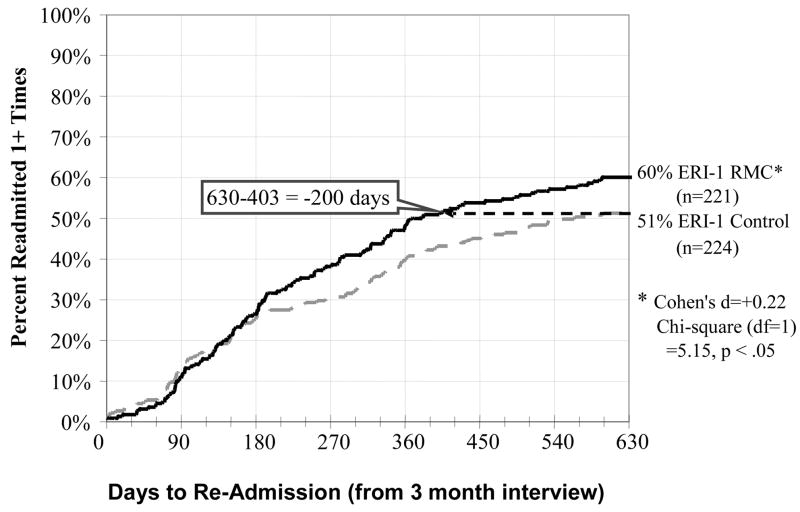
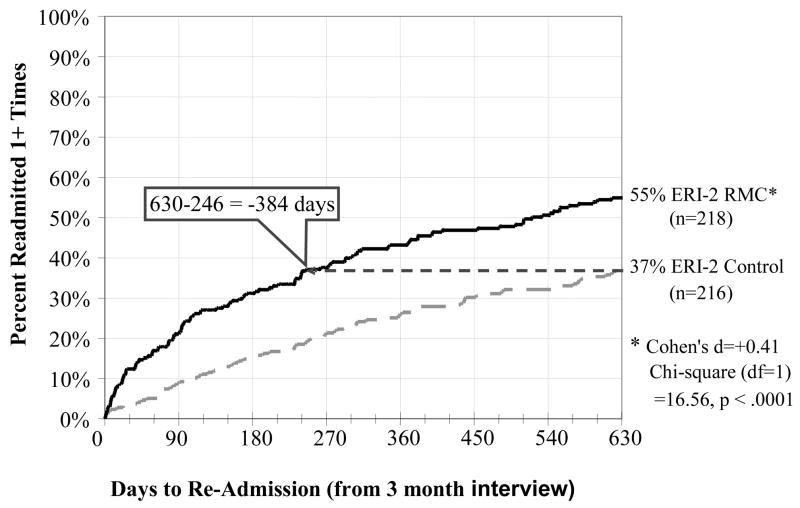
Findings: RMC participant outcomes were better than control participants in both experiments. Effect sizes were larger in the second experiment in terms of reducing days to readmission (Cohen's d = 0.41 versus d = 0.22), successive quarters in the community using substances (d = -0.32 versus -0.19), past-month symptoms of abuse/dependence (d = -0.23 versus -0.02) and increasing the days of abstinence over 2 years (d = +0.29 versus 0.04).
Conclusion: RMC, which provided ongoing monitoring and linkage, is feasible to conduct and is effective for adults with chronic substance dependence.
Conflict of interest statement
Conflict of Interests: None
Figures
Comment in
-
'Let's keep in touch: you know it makes sense'.Addiction. 2009 Jun;104(6):972-3. doi: 10.1111/j.1360-0443.2009.02613.x. Addiction. 2009. PMID: 19466921 No abstract available.
References
-
- Dennis ML, Scott CK, Funk R, Foss MA. The duration and correlates of addiction and treatment careers. Journal of Substance Abuse Treatment. 2005;28:S51–S62. - PubMed
-
- Office of Applied Studies. Abuse Treatment Services. Rockville, MD: Substance Abuse Mental Health Services Administration; 2005. Treatment Episode Data Set (TEDS): 2002. Discharges from Substance . (DASIS Series S-25; DHHS Publication No. (SMA) 04-3967)
-
- Hser YI, Grella CE, Chou C-P, Anglin MD. Relationships between drug treatment careers and outcomes: Findings from the National Drug Abuse Treatment Outcome Study. Eval Review. 1998;22:496–519.
Publication types
MeSH terms
Grants and funding
LinkOut - more resources
Full Text Sources
Medical
Miscellaneous
