


Protective effect of total and supplemental vitamin C intake on the risk of hip fracture--a 17-year follow-up from the Framingham Osteoporosis Study
- PMID: 19347239
- PMCID: PMC2766028
- DOI: 10.1007/s00198-009-0897-y
Protective effect of total and supplemental vitamin C intake on the risk of hip fracture--a 17-year follow-up from the Framingham Osteoporosis Study
Abstract
Vitamin C may play a role in bone health. In the Framingham Study, subjects with higher total or supplemental vitamin C intake had fewer hip fractures and non-vertebral fractures as compared to subjects with lower intakes. Therefore, vitamin C may have a protective effect on bone health in older adults.
Introduction: Dietary antioxidants such as vitamin C may play a role in bone health. We evaluated associations of vitamin C intake (total, dietary, and supplemental) with incident hip fracture and non-vertebral osteoporotic fracture, over a 15- to 17-year follow-up, in the Framingham Osteoporosis Study.
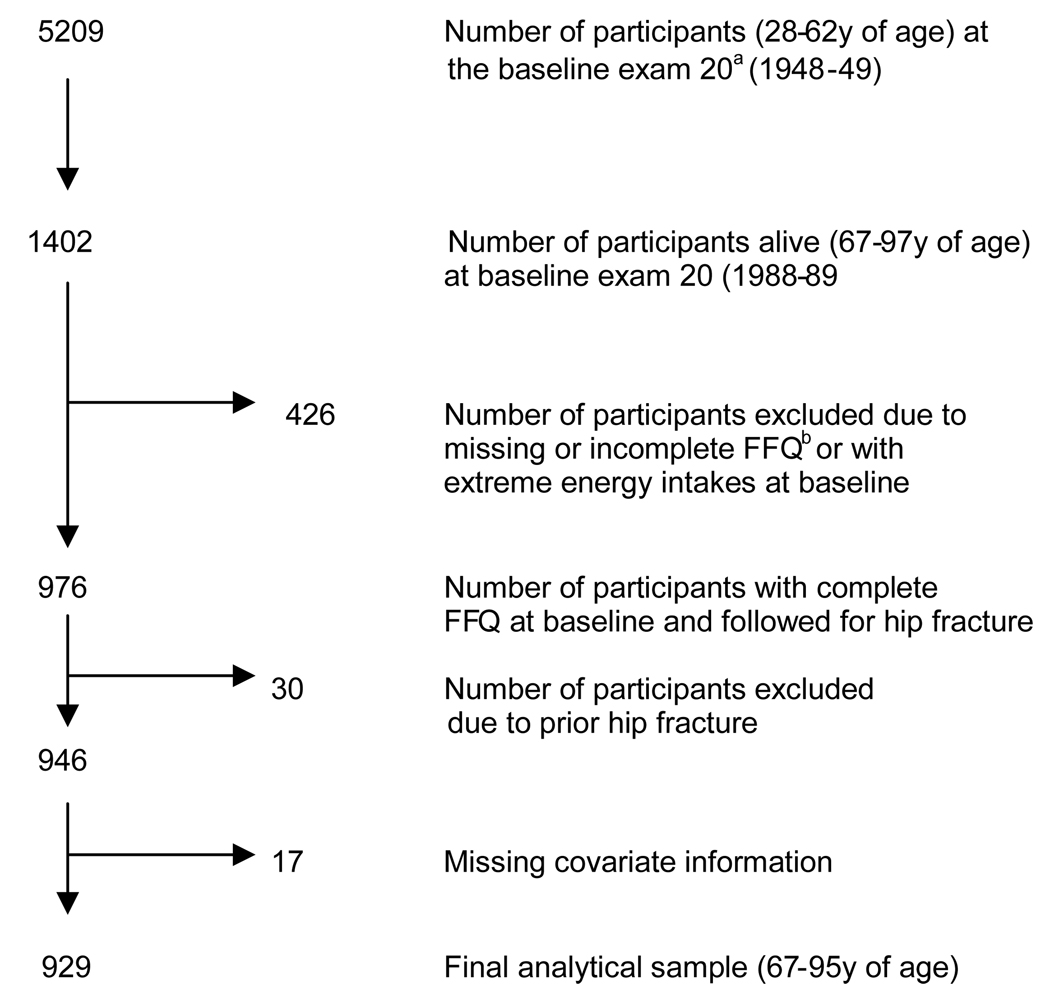
Methods: Three hundred and sixty-six men and 592 women (mean age 75 +/- 5 years) completed a food frequency questionnaire (FFQ) in 1988-1989 and were followed for non-vertebral fracture until 2003 and hip fracture until 2005. Tertiles of vitamin C intake were created from estimates obtained using the Willett FFQ, after adjusting for total energy (residual method). Hazard ratios were estimated using Cox-proportional hazards regression, adjusting for covariates.
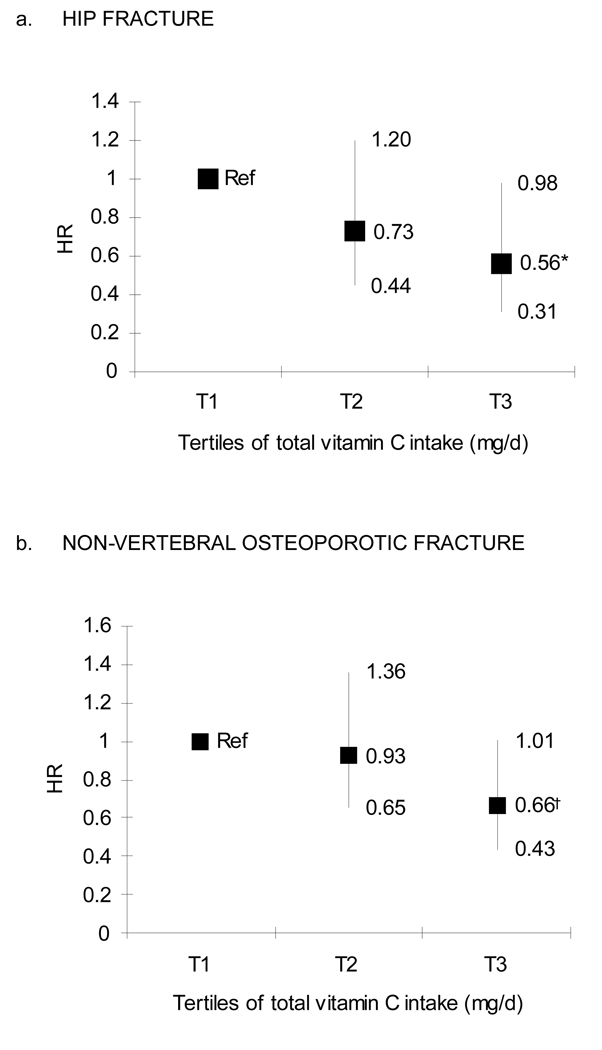
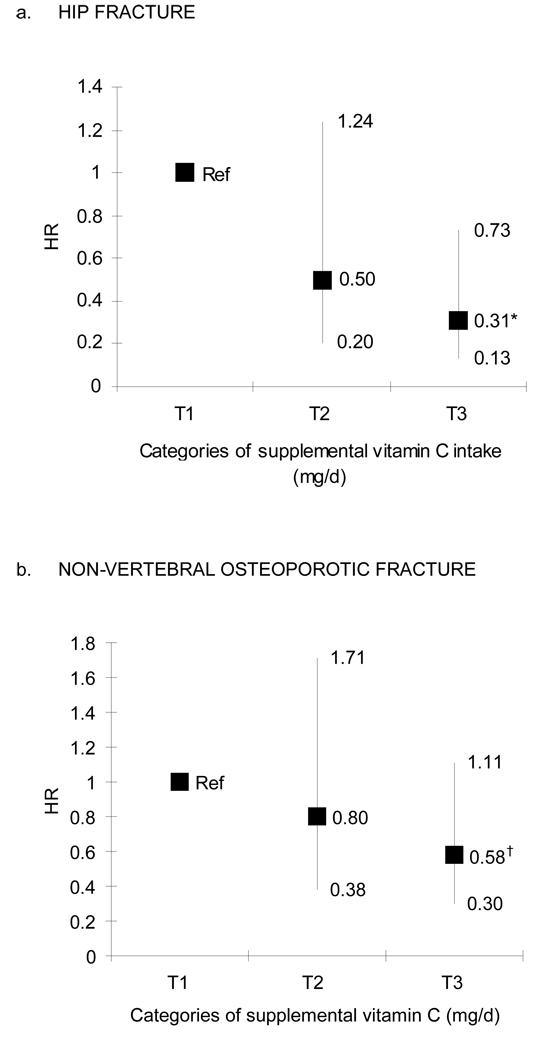
Results: Over follow-up 100 hip fractures occurred. Subjects in the highest tertile of total vitamin C intake had significantly fewer hip fractures (P trend = 0.04) and non-vertebral fractures (P trend = 0.05) compared to subjects in the lowest tertile of intake. Subjects in the highest category of supplemental vitamin C intake had significantly fewer hip fractures (P trend = 0.02) and non-vertebral fractures (P trend = 0.07) compared to non-supplement users. Dietary vitamin C intake was not associated with fracture risk (all P > 0.22).
Conclusion: These results suggest a possible protective effect of vitamin C on bone health in older adults.
Figures
References
-
- Riggs BL, Melton LJ., 3rd The worldwide problem of osteoporosis: insights afforded by epidemiology. Bone. 1995;17:505S–511S. - PubMed
-
- Ray NF, Chan JK, Thamer M, Melton LJ., 3rd Medical expenditures for the treatment of osteoporotic fractures in the United States in 1995: report from the National Osteoporosis Foundation. J Bone Miner Res. 1997;12:24–35. - PubMed
-
- Cummings SR, Melton LJ. Epidemiology and outcomes of osteoporotic fractures. Lancet. 2002;359:1761–1767. - PubMed
-
- Prevention and management of osteoporosis. World Health Organ Tech Rep Ser 921. 2003:1–164. back cover. - PubMed
-
- Macdonald HM, New SA, Golden MH, Campbell MK, Reid DM. Nutritional associations with bone loss during the menopausal transition: evidence of a beneficial effect of calcium, alcohol, and fruit and vegetable nutrients and of a detrimental effect of fatty acids. Am J Clin Nutr. 2004;79:155–165. - PubMed
Publication types
MeSH terms
Substances
Grants and funding
LinkOut - more resources
Full Text Sources
Other Literature Sources
Medical
