


Expression and localization of lactotransferrin messenger RNA in the cortex of Alzheimer's disease
- PMID: 19348738
- PMCID: PMC2667624
- DOI: 10.1016/j.neulet.2009.01.071
Expression and localization of lactotransferrin messenger RNA in the cortex of Alzheimer's disease
Abstract
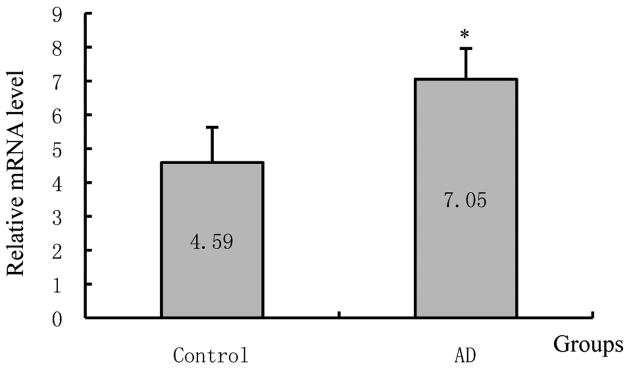
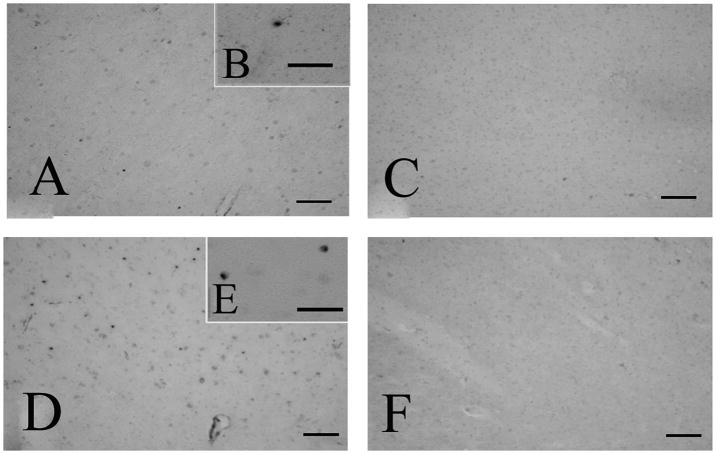
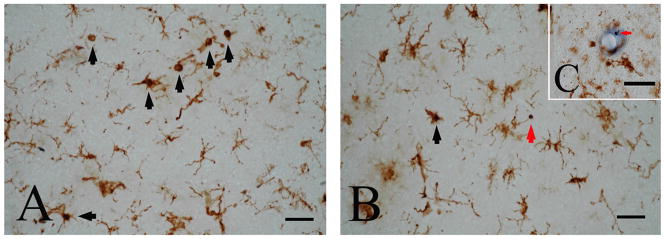
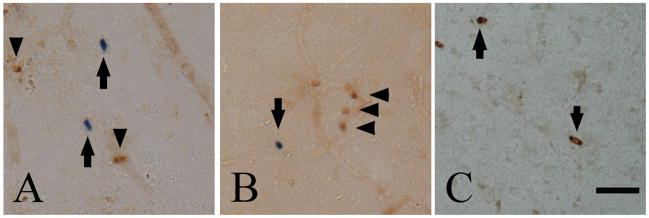
We and others have previously reported that lactotransferrin (LF), acting both as an iron-binding protein and inflammatory modulator, is greatly up-regulated in the brain of patients with Alzheimer's disease (AD). However, it remains unknown which type of cells express LF in the brain of AD. In this study, therefore, we investigated the expression and localization of LF messenger RNA (mRNA) in the cerebral cortex of AD and control cases using real-time polymerase chain reaction (PCR) and in situ hybridization histochemistry. Real-time PCR demonstrated that LF mRNA expression in the cortex of AD cases was significantly greater than that in control cases. LF mRNA-positive granules were observed in the cortex by in situ hybridization histochemistry, and the number of positive granules was increased in AD cases compared to controls. The double staining technique of LF mRNA in situ hybridisation and D-related human leukocyte antigen (HLA-DR) immunohistochemistry revealed that positive granules were localized in a subpopulation of HLA-DR-positive reactive microglia. In addition, LF mRNA-positive granules were observed in some cells that were negative for HLA-DR. These cells were also negative for CD4 and CD8 but positive for leukocyte common antigen (CD45RB), suggesting they were monocytes/macrophages. These results indicate that reactive microglia in the cerebral cortex and monocytes/macrophages infiltrating from the circulation might be responsible for synthesizing LF in AD brain.
Figures
References
-
- Aisen P, Leibman A. Lactoferrin and transferrin: a comparative study. Biochim Biophys Acta. 1972;257:314–323. - PubMed
-
- Baker EN, Anderson BF, Baker HM, Day CL, Haridas M, Norris GE, Rumball SV, Smith CA, Thomas DH. Three-dimensional structure of lactoferrin in various functional states. Adv Exp Med Biol. 1994;357:1–12. - PubMed
-
- Baveye S, Elass E, Mazurier J, Spik G, Legrand D. Lactoferrin: A multifunctional glycoprotein involved in the modulation of the inflammatory process. Clin Chem Lab Med. 1999;37:281–286. - PubMed
-
- Britigan BE, Hasset DJ, Rosen GM, Hamill DR, Cohen MS. Neutrophil degranulation inhibits potential hydroxy-radical formation. Relative impact of myeloperoxidase and lactoferrin release on hydroxy-radical production by iron-supplemented neutrophils assessed by spin-trapping techniques. Biochem J. 1989;264:447–455. - PMC - PubMed
Publication types
MeSH terms
Substances
Grants and funding
LinkOut - more resources
Full Text Sources
Medical
Research Materials
