


The Pavlovian power of palatable food: lessons for weight-loss adherence from a new rodent model of cue-induced overeating
- PMID: 19350040
- PMCID: PMC2697275
- DOI: 10.1038/ijo.2009.57
The Pavlovian power of palatable food: lessons for weight-loss adherence from a new rodent model of cue-induced overeating
Abstract
Objective: Relapsing to overeating is a stubborn problem in obesity treatment. We tested the hypothesis that context cues surrounding palatable food (PF) intake have the power to disrupt caloric regulation even of less PF. Context cues are non-food cues that are in the environment where PF is habitually eaten.
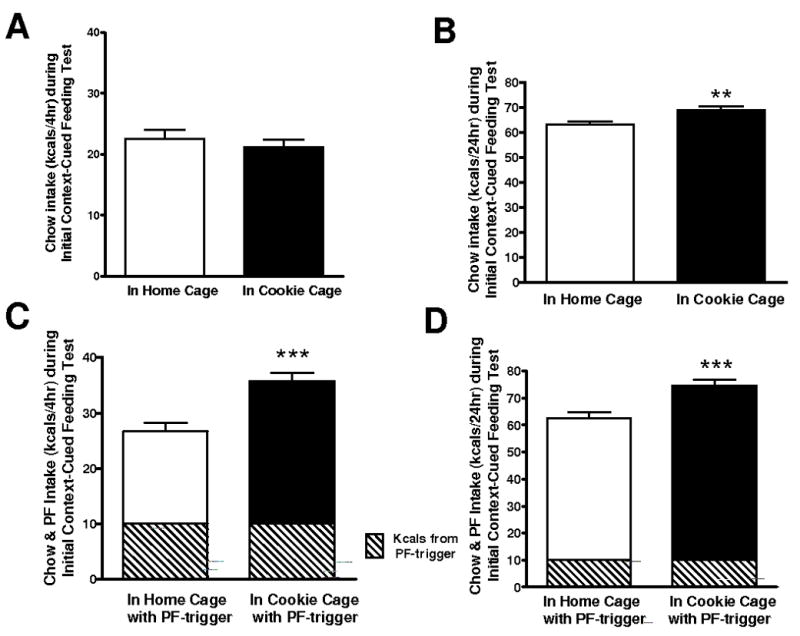
Design: Rats were conditioned to associate intake of Oreo cookies as the PF to cages with distinct context cues that differed from cues in cages where they were only given chow. PF naturally stimulated greater caloric intake. The rats were then tested in the PF cage with only chow available to determine whether the PF-paired cues, alone, could elicit overeating of plain chow.
Subjects: Non-food-deprived female Sprague-Dawley rats.
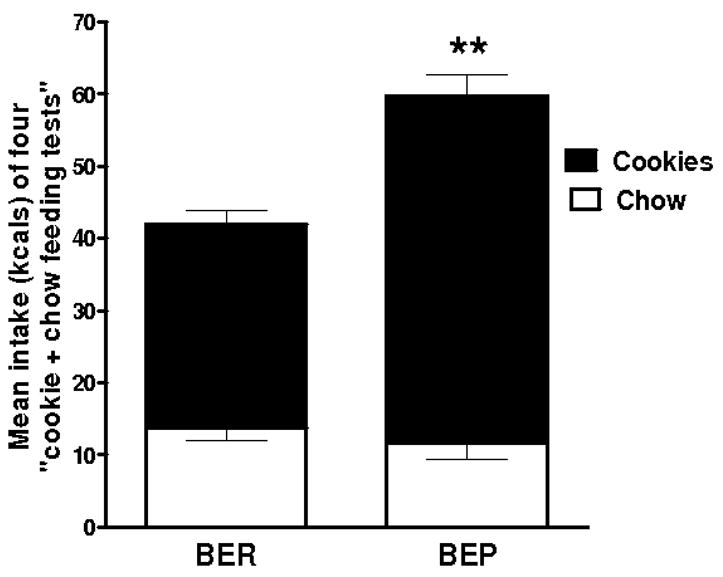
Measurements: Intake of plain chow under PF-paired cues vs chow-paired cues was compared. This was also measured in tests that included a morsel of PF as a priming stimulus. We also controlled for any effect of binge-prone vs binge-resistant status to predict cued-overeating.
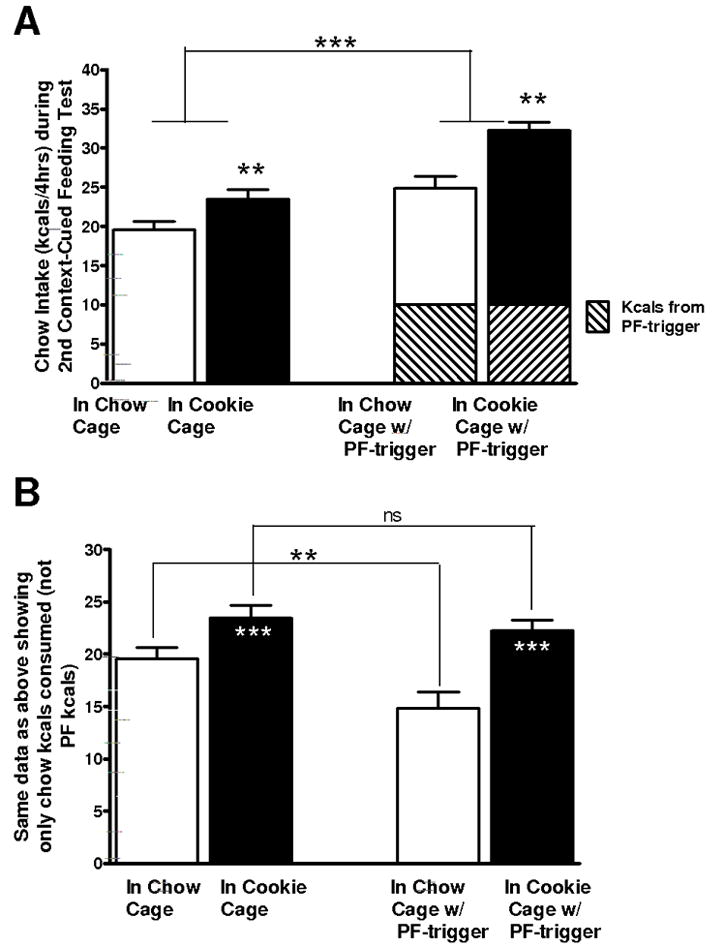
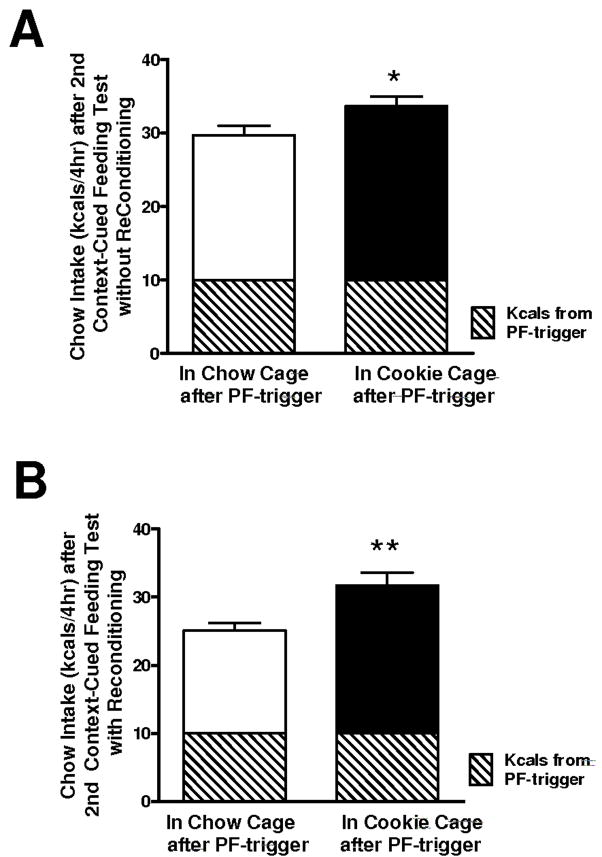
Results: Rats consumed significantly more chow when exposed to context cues paired earlier with PF than with chow (P<0.01). This effect occurred using various cues (for example, different types of bedding or wallpaper). The effect was strengthened by priming with a morsel of PF (P<0.001) and was unaffected by baseline differences in propensity to binge on PF.
Conclusion: Context-cues associated with PF intake can drive overeating even of a less PF and abolish the ability of rats to compensate for the calories of a PF primer. Just as drug-associated context cues can reinstate drug-addiction relapse, PF-paired cues may trigger overeating relapses linked to weight regain and obesity. This model should help identify the reflex-like biology that sabotages attempts to adhere to healthy reduced calorie regimens and call greater attention to the cue-factor in the treatment of binge eating and obesity.
Figures
References
-
- Heymsfield SB, Harp JB, Reitman ML, Beetsch JW, Schoeller DA, Erondu N, Pietrobelli A. Why do obese patients not lose more weight when treated with low-calorie diets? A mechanistic perspective. Am J Clin Nutr. 2007;85:346–354. - PubMed
-
- Wadden TA. Treatment of obesity by moderate and severe caloric restriction. Results of clinical research trials. Ann Intern Med. 1993;119:688–693. - PubMed
-
- Hill JO, Wyatt HR, Reed GW, Peters JC. Obesity and the environment: where do we go from here? Science. 2003;299:853–855. - PubMed
-
- Schlundt DG, Hill JO, Pope-Cordle J, Arnold D, Virts KL, Katahn M. Randomized evaluation of a low fat ad libitum carbohydrate diet for weight reduction. Int J Obes Relat Metab Disord. 1993;17:623–629. - PubMed
-
- de Castro JM, Brewer EM. The amount eaten in meals by humans is a power function of the number of people present. Physiol Behav. 1992;51:121–151. - PubMed
Publication types
MeSH terms
Grants and funding
LinkOut - more resources
Full Text Sources
Medical
Miscellaneous
