


Moving from ethnography to epidemiology: lessons learned in Appalachia
- PMID: 19353406
- PMCID: PMC2868371
- DOI: 10.1080/03014460902832942
Moving from ethnography to epidemiology: lessons learned in Appalachia
Abstract
Background: Anthropologists are beginning to translate insights from ethnography into tools for population studies that assess the role of culture in human behavior, biology, and health.
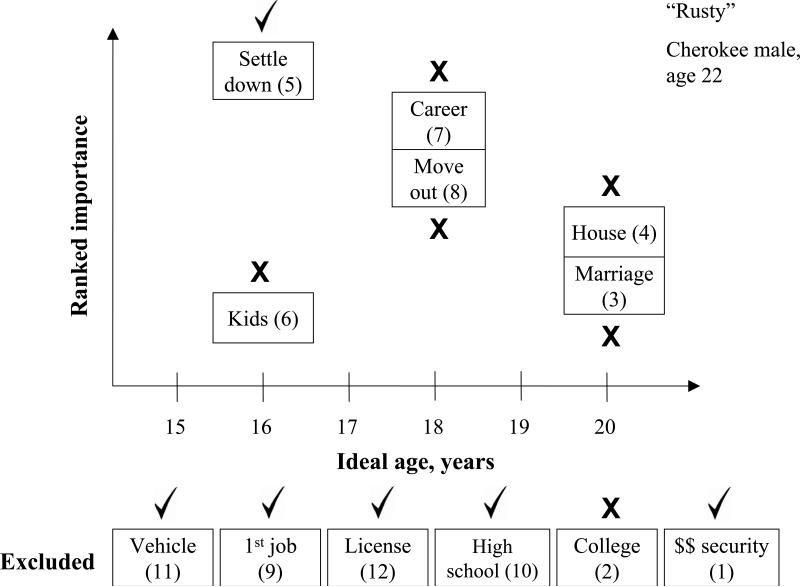
Aim: We describe several lessons learned in the creation and administration of an ethnographically-based instrument to assess the life course perspectives of Appalachian youth, the Life Trajectory Interview for Youth (LTI-Y). Then, we explore the utility of the LTI-Y in predicting depressive symptoms, controlling for prior depressive symptoms and severe negative life events throughout the life course.
Subjects and methods: In a sample of 319 youths (190 White, 129 Cherokee), we tested the association between depressive symptoms and two domains of the LTI-Y - life course barriers and milestones. Longitudinal data on prior depressive symptoms and negative life events were included in the model.
Results: The ethnographically-based scales of life course barriers and milestones were associated with unique variance in depressive symptoms, together accounting for 11% of the variance in this outcome.
Conclusion: When creating ethnographically-based instruments, it is important to strike a balance between detailed, participant-driven procedures and the analytic needs of hypothesis testing. Ethnographically-based instruments have utility for predicting health outcomes in longitudinal studies.
Figures
References
-
- Association AP. Diagnostic and statistical manual of mental disorders (Revised 4th edition) Washington, DC: 2000.
-
- Angold A, Costello E. The Child and Adolescent Psychiatric Assessment (CAPA). Journal of the American Academy of Child & Adolescent Psychiatry. 2000;39(1):39–48. - PubMed
-
- Angold A, Costello EJ, Messer SC, Pickles A, Winder F, Silver D. The development of a short questionnaire for use in epidemiological studies of depression in children and adolescents. International Journal of Methods in Psychiatric Research. 1995;5:237–249.
-
- Arnett JJ. Learning to stand alone: The contemporary American transition to adulthood in cultural and historical context. Human Development. 1998;41(5−6):295–315.
-
- Arnett JJ. Emerging adulthood: A theory of development from the late teens through the twenties. American Psychologist. 2000;55(5):469–480. - PubMed
Publication types
MeSH terms
Grants and funding
LinkOut - more resources
Full Text Sources
Medical
