


Optimization of physical factors affecting the production of thermo-stable organic solvent-tolerant protease from a newly isolated halo tolerant Bacillus subtilis strain Rand
- PMID: 19356254
- PMCID: PMC2671491
- DOI: 10.1186/1475-2859-8-20
Optimization of physical factors affecting the production of thermo-stable organic solvent-tolerant protease from a newly isolated halo tolerant Bacillus subtilis strain Rand
Abstract
Background: Many researchers have reported on the optimization of protease production; nevertheless, only a few have reported on the optimization of the production of organic solvent-tolerant proteases. Ironically, none has reported on thermostable organic solvent-tolerant protease to date. The aim of this study was to isolate the thermostable organic solvent-tolerant protease and identify the culture conditions which support its production. The bacteria of genus Bacillus are active producers of extra-cellular proteases, and the thermostability of enzyme production by Bacillus species has been well-studied by a number of researchers. In the present study, the Bacillus subtilis strain Rand was isolated from the contaminated soil found in Port Dickson, Malaysia.
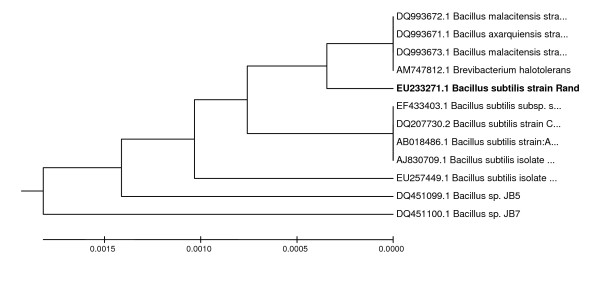
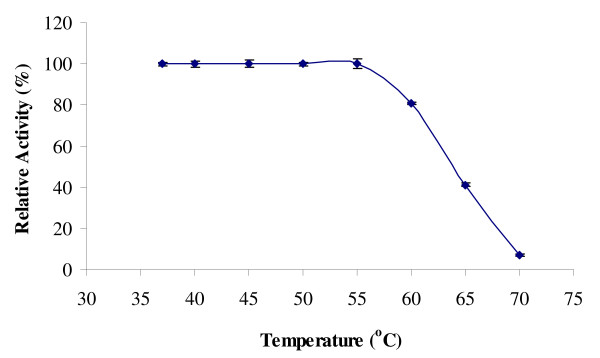
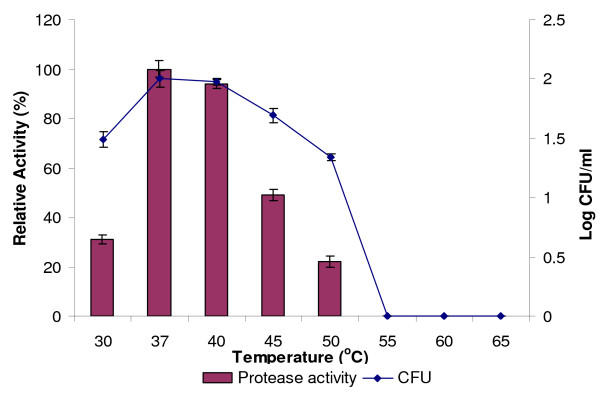
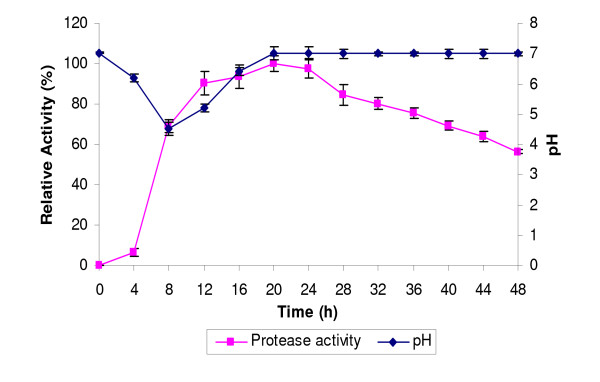
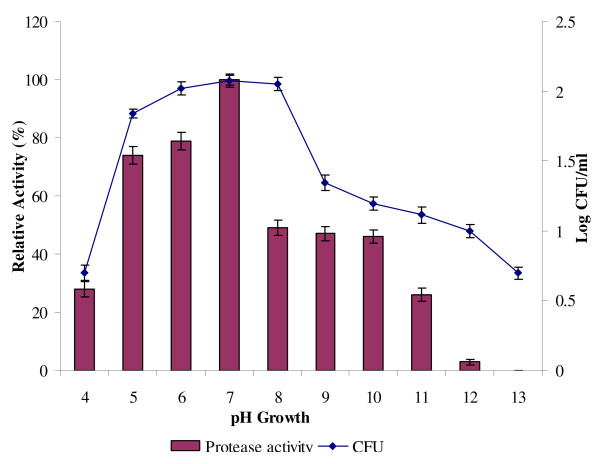
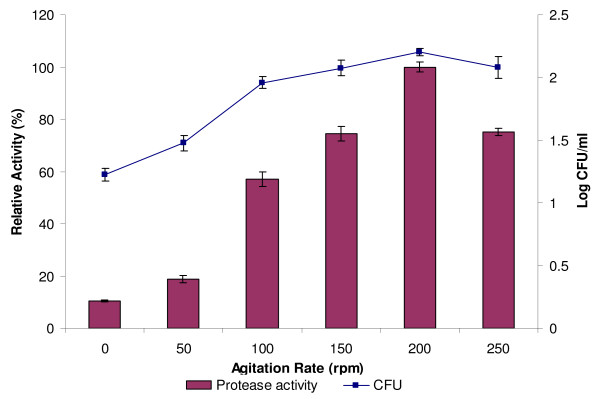
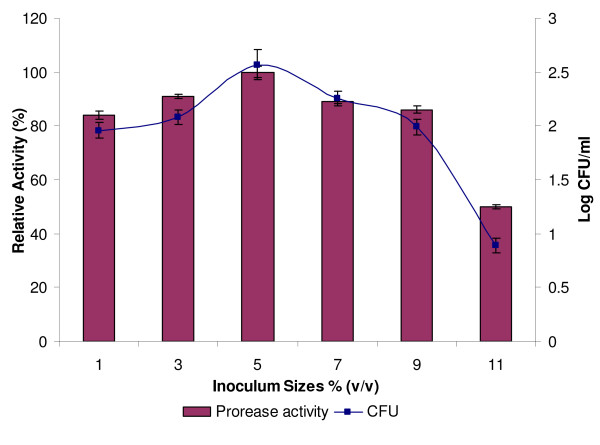
Results: A thermostable organic solvent-tolerant protease producer had been identified as Bacillus subtilis strain Rand, based on the 16S rRNA analysis conducted, as well as the morphological characteristics and biochemical properties. The production of the thermostable organic solvent-tolerant protease was optimized by varying various physical culture conditions. Inoculation with 5.0% (v/v) of (AB600 = 0.5) inoculum size, in a culture medium (pH 7.0) and incubated for 24 h at 37 degrees C with 200 rpm shaking, was the best culture condition which resulted in the maximum growth and production of protease (444.7 U/ml; 4042.4 U/mg). The Rand protease was not only stable in the presence of organic solvents, but it also exhibited a higher activity than in the absence of organic solvent, except for pyridine which inhibited the protease activity. The enzyme retained 100, 99 and 80% of its initial activity, after the heat treatment for 30 min at 50, 55, and 60 degrees C, respectively.
Conclusion: Strain Rand has been found to be able to secrete extra-cellular thermostable organic solvent-tolerant protease into the culture medium. The protease exhibited a remarkable stability towards temperature and organic solvent. This unique property makes it attractive and useful to be used in industrial applications.
Figures
References
-
- Malathu R, Chowdhury S, Mishra M, Das S, Moharana P, Mitra J, Mukhopadhyay UK, Thakur AR, Chaudhuri SR. Characterization and wash performance analysis of microbial extracellular enzymes from East Calcutta Wetland in India. Am J Appl Sci. 2008;5:1650–1661.
LinkOut - more resources
Full Text Sources
