. 2009 May 21;459(7245):460-3.
doi: 10.1038/nature07955. Epub 2009 Apr 8.

CtIP-BRCA1 modulates the choice of DNA double-strand-break repair pathway throughout the cell cycle

Affiliations

CtIP-BRCA1 modulates the choice of DNA double-strand-break repair pathway throughout the cell cycle

Maximina H Yun et al. Nature. .

Abstract

The repair of DNA double-strand breaks (DSBs) is tightly regulated during the cell cycle. In G1 phase, the absence of a sister chromatid means that repair of DSBs occurs through non-homologous end-joining or microhomology-mediated end-joining (MMEJ). These pathways often involve loss of DNA sequences at the break site and are therefore error-prone. In late S and G2 phases, even though DNA end-joining pathways remain functional, there is an increase in repair of DSBs by homologous recombination, which is mostly error-free. Consequently, the relative contribution of these different pathways to DSB repair in the cell cycle has a large influence on the maintenance of genetic integrity. It has remained unknown how DSBs are directed for repair by different, potentially competing, repair pathways. Here we identify a role for CtIP (also known as RBBP8) in this process in the avian B-cell line DT40. We establish that CtIP is required not only for repair of DSBs by homologous recombination in S/G2 phase but also for MMEJ in G1. The function of CtIP in homologous recombination, but not MMEJ, is dependent on the phosphorylation of serine residue 327 and recruitment of BRCA1. Cells expressing CtIP protein that cannot be phosphorylated at serine 327 are specifically defective in homologous recombination and have a decreased level of single-stranded DNA after DNA damage, whereas MMEJ remains unaffected. Our data support a model in which phosphorylation of serine 327 of CtIP as cells enter S phase and the recruitment of BRCA1 functions as a molecular switch to shift the balance of DSB repair from error-prone DNA end-joining to error-free homologous recombination.


Figures
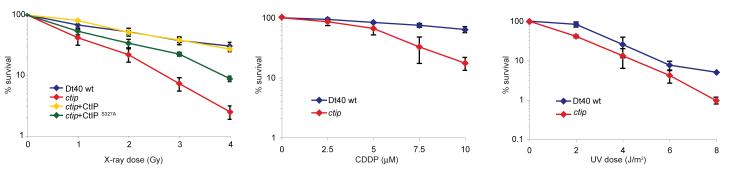
Figure 1
Figure 1. Sensitivity of ctip mutant cells to DNA damaging agents
Clonogenic survival assays with asynchronous cell populations after exposure to X-rays (upper panel), cisplatin (CDDP, middle panel) and ultraviolet light (UV, lower panel). In this and the following figures, the data presented with error bars are the mean of three independent experiments, and the error bar indicates one standard deviation.
Figure 2
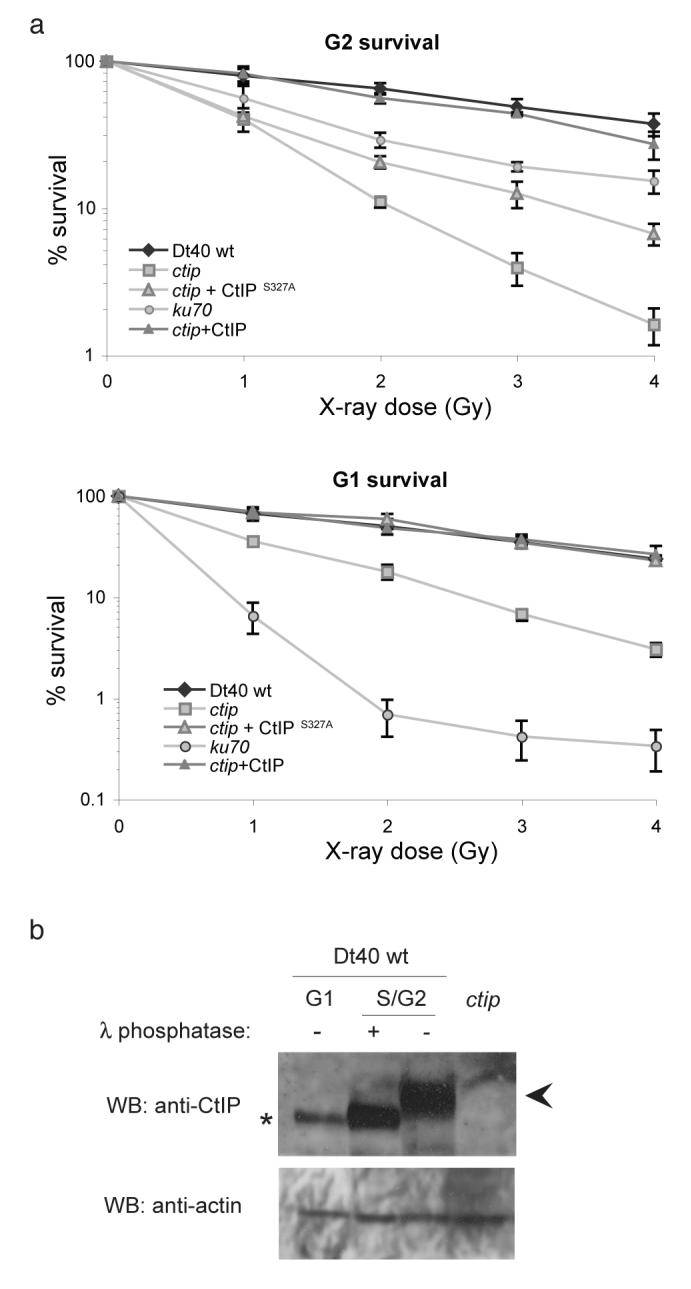
Figure 2. ctip mutant cells are sensitive to X-rays in both G1 and S/G2 phases of the cell cycle
(a) Clonogenic colony survival assay after exposure of cell lines to X-rays, synchronised by elutriation in either S/G2 (upper panel) or G1 (lower panel) stages of the cell cycle. Data represent three independent experiments. (b) Western-blot showing the presence of CtIP in G1 and S/G2. Phosphorylated CtIP is indicated with an arrow. Only unphosphorylated CtIP (*) is seen in G1. Whole cell extracts were prepared from elutriated cell poulations. Where indicated, S/G2 cell extract were treated with λ phosphatase for 2 h at 30°C. Western blot with antibody against actin was used as protein loading control.
Figure 3
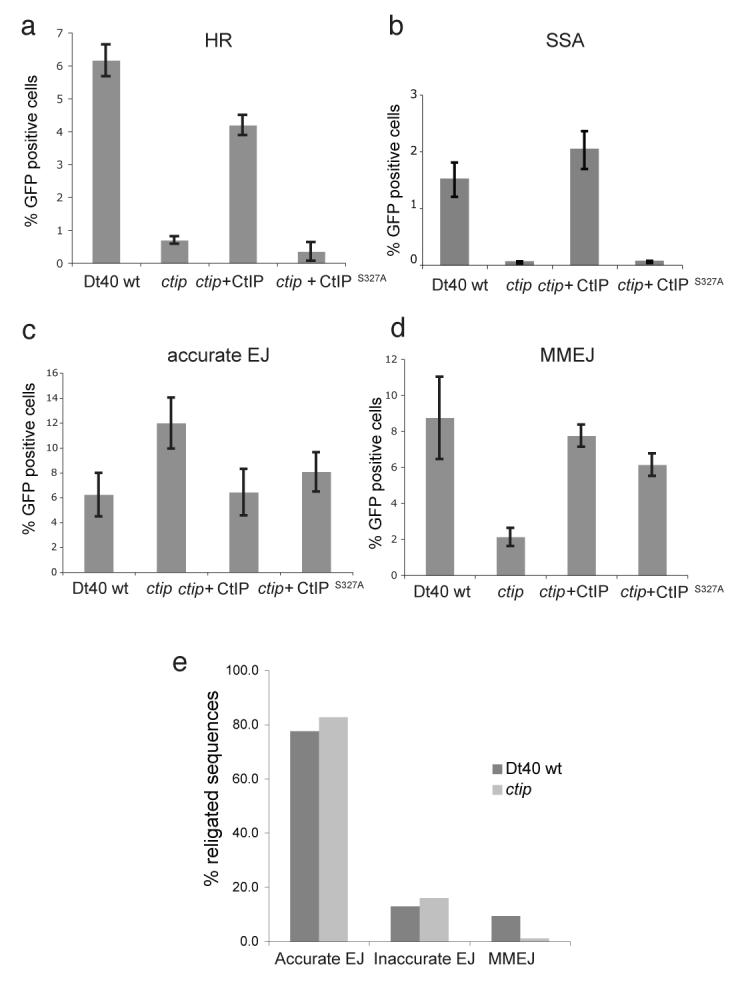
Figure 3. ctip mutant cells are defective for homologous recombination and microhomology-mediated end joining (MMEJ)
Repair is indicated by percentage of cells expressing GFP as described in Supplementary Fig. 5. Repair by (a) homologous recombination (HR); (b) single-strand annealing (SSA); (c) accurate non-homologous end-joining (accurate EJ); (d) microhomology-mediated end joining (MMEJ); (e) analysis of DNA sequences at repaired break sites in wild-type and ctip mutant cells. Individual sequences (shown in Supplementary Fig. 4) were classified according to the nature of their joints into “accurate EJ”, “inaccurate EJ” and ”MMEJ”.
Figure 4
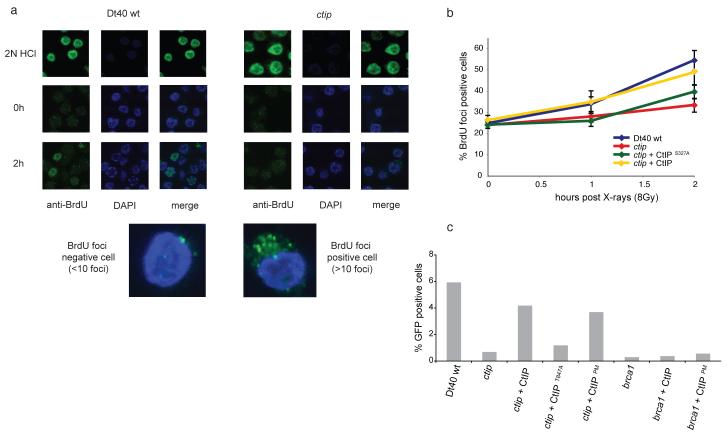
Figure 4. Phosphorylation of S327 is required for generation of ssDNA in DT40 cells
(a) Cells were labelled with 20 μM BrdU and treated with 8 Gy X-rays (where indicated). ssDNA was detected over time by staining with antibody against BrdU and analysed using confocal microscopy. Staining was performed under DNA denaturing (2N HCl) or native conditions as indicated. (b) Kinetics of ssDNA generation from (a). Cells containing 10 or more foci were scored as positive. (c) HR assay, performed as in Fig. 3 with indicated cell lines. Shows that expression of “constitutively activated” CtIPPM restores HR in ctip mutant cells but not in brca1 cells.

References

    1. Ma JL, Kim EM, Haber JE, Lee SE. Yeast Mre11 and Rad1 proteins define a Ku-independent mechanism to repair double-strand breaks lacking overlapping end sequences. Mol. Cell. Biol. 2003;23:8820–8. - PMC - PubMed
    1. Kim JS, et al. Independent and sequential recruitment of NHEJ and HR factors to DNA damage sites in mammalian cells. J. Cell Biol. 2005;170:341–7. - PMC - PubMed
    1. Takata M, et al. Homologous recombination and non-homologous end-joining pathways of DNA double-strand break repair have overlapping roles in the maintenance of chromosomal integrity in vertebrate cells. EMBO J. 1998;17:5497–508. - PMC - PubMed
    1. Pâques F, Haber JE. Multiple pathways of recombination induced by double-strand breaks in Saccharomyces cerevisiae. Microbiol. Mol. Biol. Rev. 1999;63:349–404. - PMC - PubMed
    1. Sartori AA, et al. Human CtIP promotes DNA end resection. Nature. 2007;450:509–14. - PMC - PubMed

MeSH terms