. 2009;4(4):e5171.
doi: 10.1371/journal.pone.0005171. Epub 2009 Apr 9.

Establishment of a bluetongue virus infection model in mice that are deficient in the alpha/beta interferon receptor

Affiliations

Establishment of a bluetongue virus infection model in mice that are deficient in the alpha/beta interferon receptor

Eva Calvo-Pinilla et al. PLoS One. 2009.

Abstract

Bluetongue (BT) is a noncontagious, insect-transmitted disease of ruminants caused by the bluetongue virus (BTV). A laboratory animal model would greatly facilitate the studies of pathogenesis, immune response and vaccination against BTV. Herein, we show that adult mice deficient in type I IFN receptor (IFNAR((-/-))) are highly susceptible to BTV-4 and BTV-8 infection when the virus is administered intravenously. Disease was characterized by ocular discharges and apathy, starting at 48 hours post-infection and quickly leading to animal death within 60 hours of inoculation. Infectious virus was recovered from the spleen, lung, thymus, and lymph nodes indicating a systemic infection. In addition, a lymphoid depletion in spleen, and severe pneumonia were observed in the infected mice. Furthermore, IFNAR((-/-)) adult mice immunized with a BTV-4 inactivated vaccine showed the induction of neutralizing antibodies against BTV-4 and complete protection against challenge with a lethal dose of this virus. The data indicate that this mouse model may facilitate the study of BTV pathogenesis, and the development of new effective vaccines for BTV.


Conflict of interest statement

Competing Interests: The authors have declared that no competing interests exist.

Figures

Figure 1
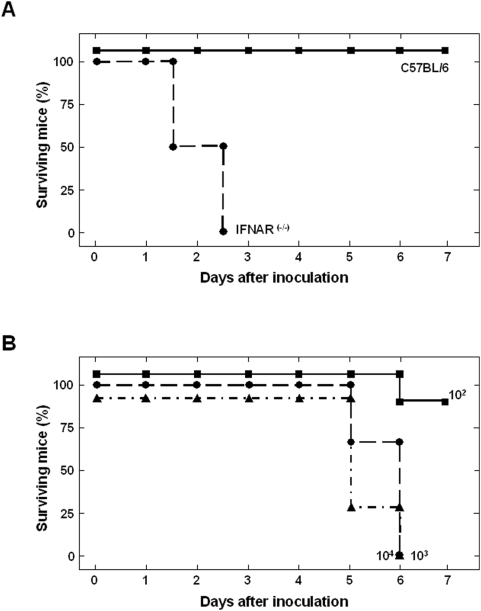
Figure 1. Susceptibility of adult mice to BTV-4 infection.
(A) C57BL/6 and IFNAR(−/−) mice (8 weeks old, 6 mice per group) were intravenously inoculated with 106 PFUs of BTV-4. The mice were observed every 12 h for the first 3 days and every 24 h for 7 days. (B) Survival rates of IFNAR(−/−) mice after inoculation with BTV-4. Mice (8 weeks old, 6 mice per group) were intravenously inoculated with 10-fold dilutions of BTV-4. The number of PFUs inoculated is indicated on each survival group. The mice were observed every 24 h for 7 days.
Figure 2
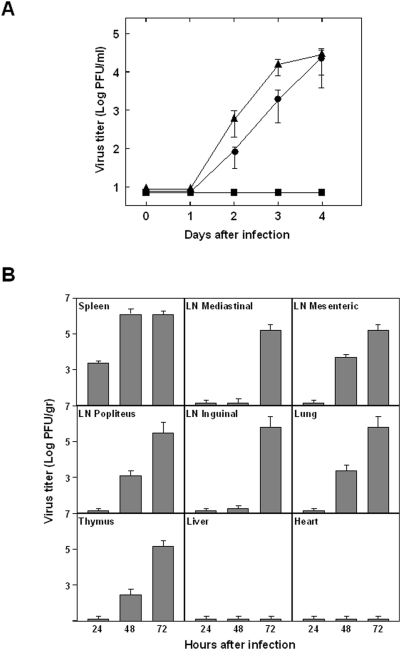
Figure 2. BTV-4 titers in blood and several organs of infected IFNAR(−/−) mice.
(A) Titers of BTV-4 recovered in blood after intravenous infection with 102 (▪), 103(•), or 104 (▴) PFUs of BTV-4. Virus was extracted from blood and determined as described in Materials and Methods. Each point represents the mean values of the viral titer of six animals, and standard deviations are shown as error bars. (B) Mice (8 weeks old, 6 mice per group) were inoculated intravenously with 104 PFUs of BTV-4. Virus was extracted from the indicated tissues at 24, 48 and 72 hours after infection for virus titration. Standard deviations are given. Procedures are detailed in Materials and methods.
Figure 3
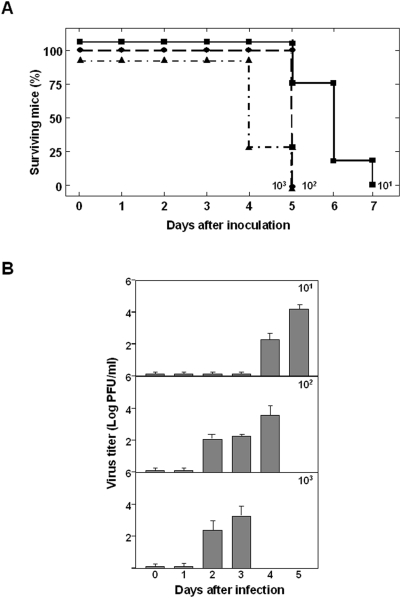
Figure 3. Survival rates of IFNAR(−/−) mice and virus titers in blood after inoculation with BTV-8.
(A) Mice (8 weeks old, 6 mice per group) were intravenously inoculated with 10-fold dilutions of BTV-8. The number of PFUs inoculated is indicated on each survival group. The mice were observed every 24 h for 7 days. (B) Titers of BTV-8 recovered in blood after intravenously infection with 10-fold dilutions of BTV-4. The number of PFUs inoculated is indicated on each survival group. Virus was extracted from blood and determined as described in Materials and Methods. Each point represents the mean values of the viral titer of six animals, and standard deviations are shown as error bars.
Figure 4
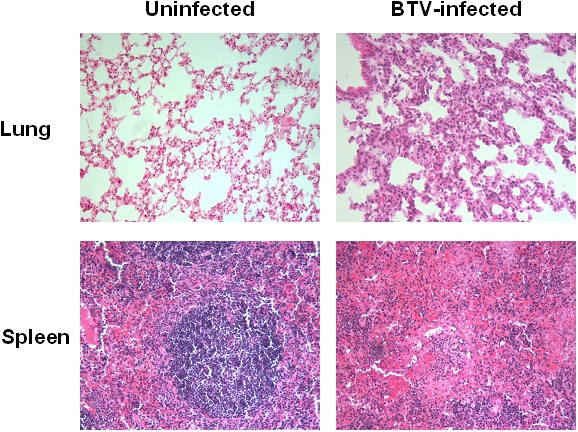
Figure 4. Tissue sections of lung and spleen from BTV-4 infected adult IFNAR(−/−) mice.
Mice were infected with 103 PFUs of BTV-4 intravenously. Tissues were harvested at 48 h.p.i.. Hematoxylin and eosin staining are shown. Lungs of BTV-infected mice show hyperemia and increased size of the interalveolar septa (100×). The spleen sections of BTV-infected mice show loss of architectural structure and marked lymphoid depletion (100×).
Figure 5
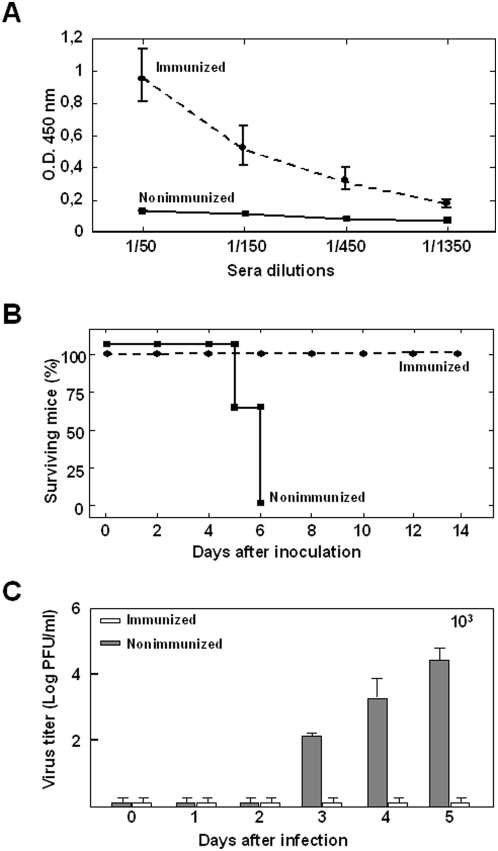
Figure 5. Protection of vaccinated IFNAR(−/−) mice against a lethal BTV-4 challenge.
Mice (8 weeks old, 8 per group) were immunized twice by subcutaneous administration of an inactivated BTV-4 vaccine and inoculated with 103 PFUs of BTV-4,. (A) ELISA detection of antibodies to BTV-4 VP2 in serum of immunized and nonimmunized IFNAR(−/−) mice. Serum was collected two days before the challenge with BTV-4, and dilutions (1∶50 to 1∶1350) were analyzed by ELISA as described in Materials and Methods. (B) Survival rates of immunized and nonimmunized IFNAR(−/−) mice after inoculation with BTV-4. The mice were observed every 24 h for 14 days. (C) Titers of BTV-4 recovered in blood of immunized and nonimmunized IFNAR(−/−) mice after challenge with BTV-4. Virus was extracted from blood and determined as described in Materials and Methods. Each point represents the mean values of the viral titer of eight animals, and standard deviations are shown as error bars.

References

    1. Mellor PS, Boorman J, Baylis M. Culicoides biting midges: their role as arbovirus vectors. Annu Rev Entomol. 2000;45:307–340. - PubMed
    1. Barros SC, Ramos F, Luis TM, Vaz A, Duarte M, et al. Molecular epidemiology of bluetongue virus in Portugal during 2004–2006 outbreak. Vet Microbiol. 2007;124:25–34. - PubMed
    1. Breard E, Sailleau C, Nomikou K, Hamblin C, Mertens PP, et al. Molecular epidemiology of bluetongue virus serotype 4 isolated in the Mediterranean Basin between 1979 and 2004. Virus Res. 2007;125:191–197. - PubMed
    1. Mellor PS, Wittmann EJ. Bluetongue virus in the Mediterranean Basin 1998–2001. Vet J. 2002;164:20–37. - PubMed
    1. Saegerman C, Berkvens D, Mellor PS. Bluetongue epidemiology in the European union. Emerg Infect Dis. 2008;14:539–544. - PMC - PubMed

Publication types

MeSH terms

Substances

LinkOut - more resources