


Microsaccade rate varies with subjective visibility during motion-induced blindness
- PMID: 19357789
- PMCID: PMC2664481
- DOI: 10.1371/journal.pone.0005163
Microsaccade rate varies with subjective visibility during motion-induced blindness
Abstract
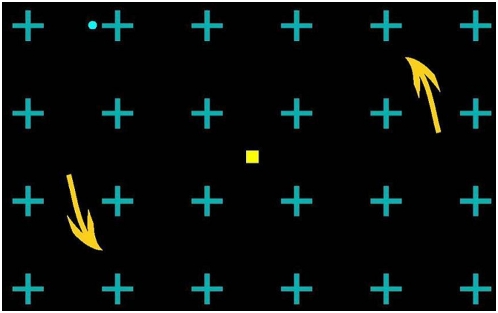
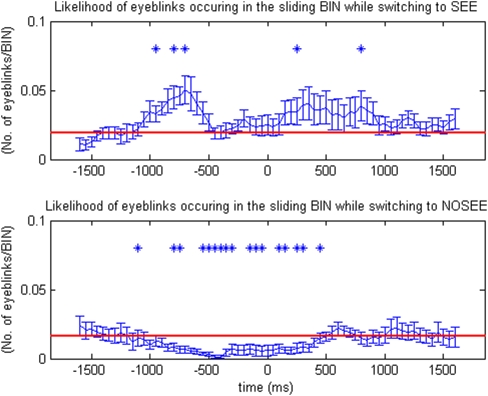
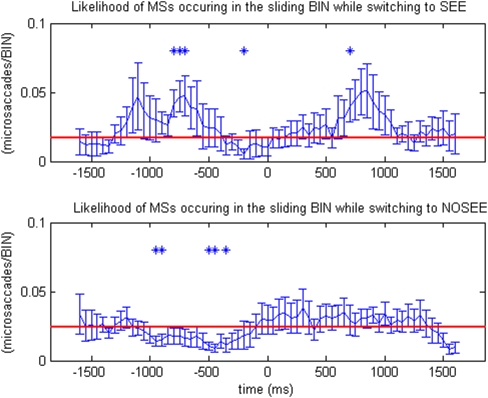
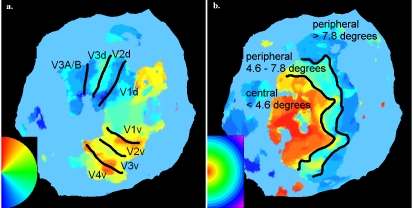
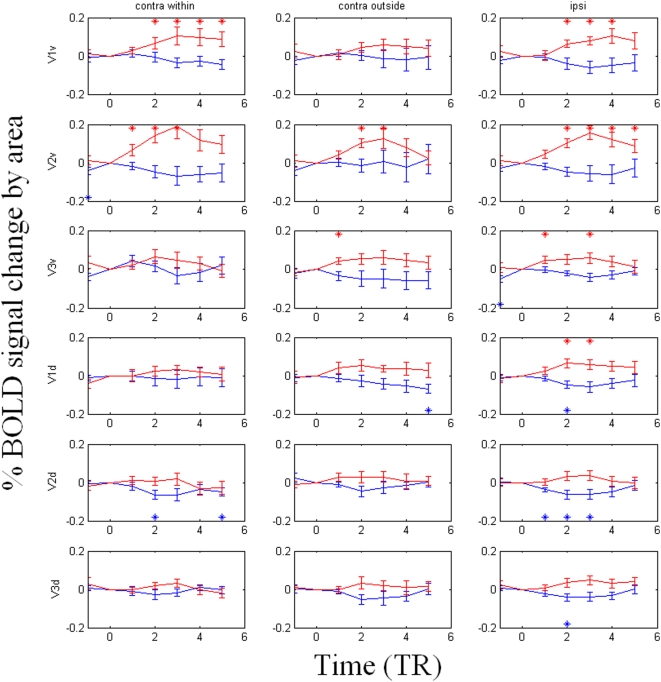
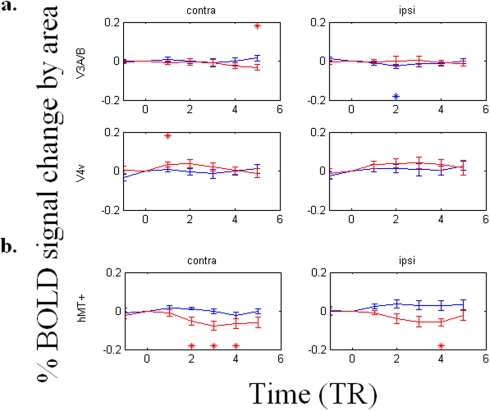
Motion-induced blindness (MIB) occurs when a dot embedded in a motion field subjectively vanishes. Here we report the first psychophysical data concerning effects of microsaccade/eyeblink rate upon perceptual switches during MIB. We find that the rate of microsaccades/eyeblink rises before and after perceptual transitions from not seeing to seeing the dot, and decreases before perceptual transitions from seeing it to not seeing it. In addition, event-related fMRI data reveal that, when a dot subjectively reappears during MIB, the blood oxygen-level dependent (BOLD) signal increases in V1v and V2v and decreases in contralateral hMT+. These BOLD signal changes observed upon perceptual state changes in MIB could be driven by the change of perceptual states and/or a confounding factor, such as the microsaccade/eyeblink rate.
Conflict of interest statement
Figures
References
-
- Bonneh YS, Cooperman A, Sagi D. Motion-induced blindness in normal observers. Nature. 2001;14:798–801. - PubMed
-
- Graf EW, Adams WJ, Lages M. Modulating motion-induced blindness with depth ordering and surface completion. Vision Res. 2002;42:2731–2735. - PubMed
-
- Hsu LC, Yeh SL, Kramer P. Linking motion-induced blindness to perceptual filling-in. Vision Res. 2004;44:2857–2866. - PubMed
-
- Troxler D. Über das Verschwinden gegebener Gegenstände innerhalb unsers Gesichtskreises, In: Himly K, Schmidt JA, editors. Ophthalmologisches Bibliothek. Jena: Fromman; 1804. pp. 51–53.
-
- Ramachanndran V. Blindspot. Sci Am. 1992;266:4–49.
Publication types
MeSH terms
Grants and funding
LinkOut - more resources
Full Text Sources
