. 2009 May 8;104(9):1123-30.
doi: 10.1161/CIRCRESAHA.108.192930. Epub 2009 Apr 9.

TRPV4 channels mediate cyclic strain-induced endothelial cell reorientation through integrin-to-integrin signaling

Affiliations

TRPV4 channels mediate cyclic strain-induced endothelial cell reorientation through integrin-to-integrin signaling

Charles K Thodeti et al. Circ Res. .

Abstract

Cyclic mechanical strain produced by pulsatile blood flow regulates the orientation of endothelial cells lining blood vessels and influences critical processes such as angiogenesis. Mechanical stimulation of stretch-activated calcium channels is known to mediate this reorientation response; however, the molecular basis remains unknown. Here, we show that cyclically stretching capillary endothelial cells adherent to flexible extracellular matrix substrates activates mechanosensitive TRPV4 (transient receptor potential vanilloid 4) ion channels that, in turn, stimulate phosphatidylinositol 3-kinase-dependent activation and binding of additional beta1 integrin receptors, which promotes cytoskeletal remodeling and cell reorientation. Inhibition of integrin activation using blocking antibodies and knock down of TRPV4 channels using specific small interfering RNA suppress strain-induced capillary cell reorientation. Thus, mechanical forces that physically deform extracellular matrix may guide capillary cell reorientation through a strain-dependent "integrin-to-integrin" signaling mechanism mediated by force-induced activation of mechanically gated TRPV4 ion channels on the cell surface.


Figures
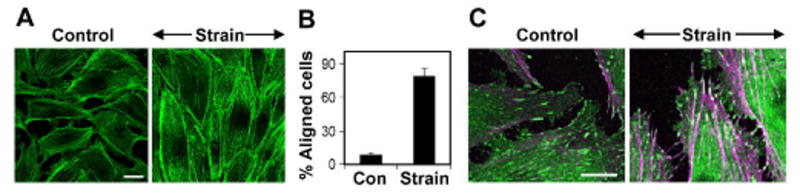
Fig. 1
Fig. 1. Capillary endothelial (CE) cells reorient in response to uniaxial cyclic strain
A) Fluorescence micrographs of CE cells cultured on fibronectin-coated flexible silicone membranes subjected to 0 or 10% uniaxial cyclic strain (2 h, 1 Hz) and stained with Alexa488-phalloidin to visualize actin stress fibers; arrow indicates the direction of applied strain. Scale bar: 25 ·m. B) Percentage of cells oriented 90 ± 30 ° degrees (aligned) relative to the direction of applied strain in control and strain exposed cells (p < 0.0006); error bars indicated S.E.M. C) Immunofluorescence micrographs of CE cells subjected to 0 or 10% uniaxial cyclic strain and stained for vinculin (green) and actin stress fibers (magenta) showing that application of strain causes enhanced recruitment of vinculin to large focal adhesions that colocalize with the ends of reinforced stress fibers (shown in white). Scale bar: 25 ·m.
Fig. 2
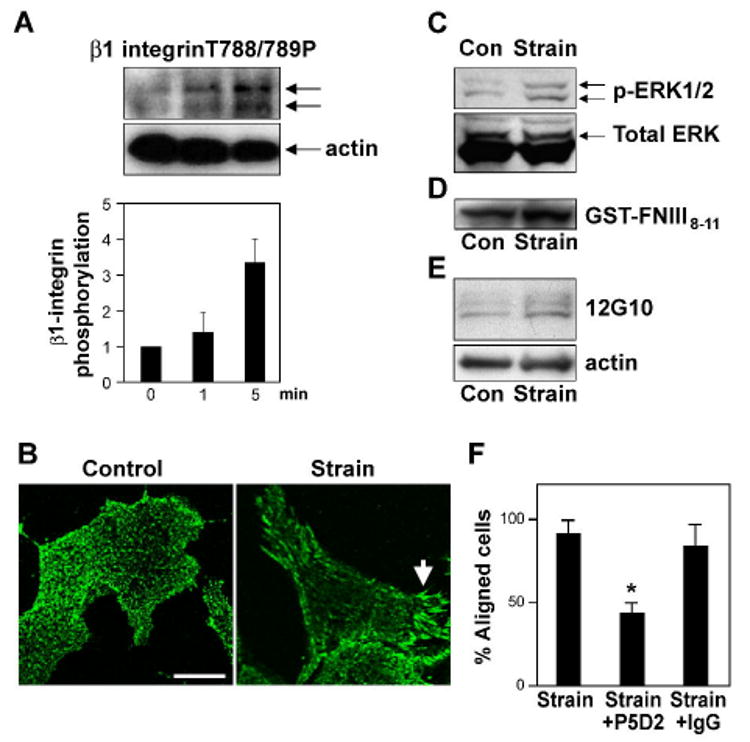
Fig. 2. ·1 integrin activation is required for cyclic strain-induced reorientation of CE cells
A) Western blot analysis of CE cell lysates showing time-dependent phosphorylation of ·1 integrin cytoplasmic tail at threonine T788/789 in response to static stretch. Histogram shows the corresponding densitometric quantification of ·1 integrin phosphorylation. B) Immunofluorescence micrographs of control and strain-exposed CE cells stained for activated β1 integrin using 12G10 antibody. Arrow indicates increased clustering of activated ·1 integrins within large streak-like focal adhesions at the cell periphery. Scale bar: 25 ·m. c-e) Western blots showing MAP kinase (ERK1/2) phosphorylation (C) and binding of GST-FNIII8-11 (D) and 12G10 (E) in CE cells in the absence and presence of static (C) or cyclic strain (D, E). F) Percentage of cells oriented 90 ± 30 ° degrees (aligned) relative to the direction of applied cyclic strain in the absence or presence of the ·1 integrin blocking antibody P5D2 (p < 0.001) or isotype-matched IgG.
Fig. 3
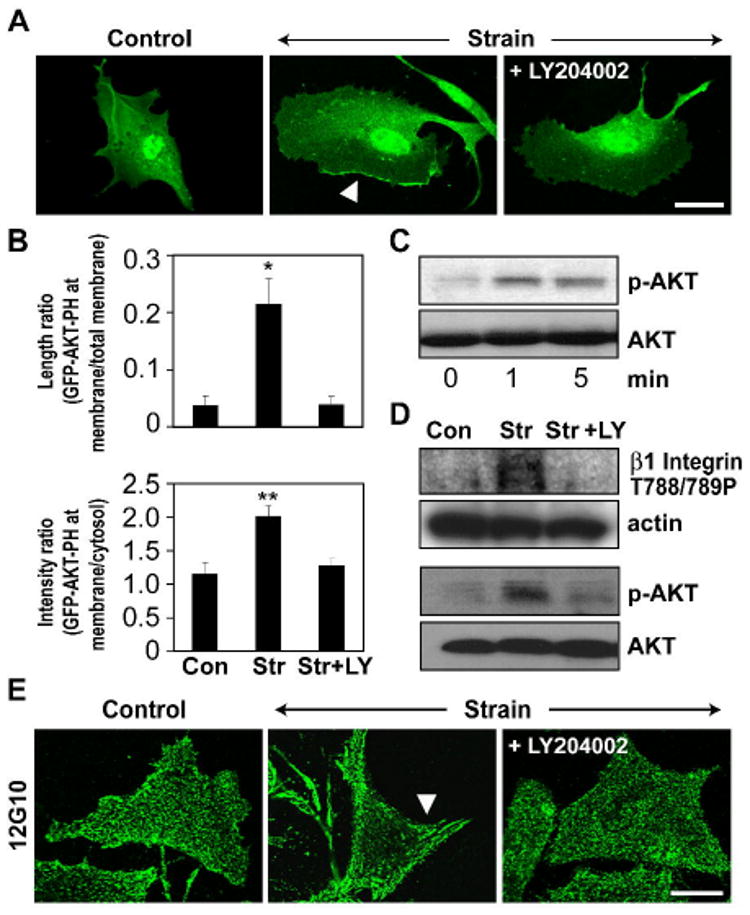
Fig. 3. Mechanical strain-induced ·1 integrin activation requires the PI3K/AKT pathway
A) Fluorescence micrographs of CE cells transfected with GFP-AKT-PH and subjected to 0 or 15% static stretch in the absence or presence of the PI3-Kinase inhibitor, LY 294002 (LY, 40 ·M). Note that LY 294002 inhibits strain induced translocation of GFP-AKT-PH domain to the plasma membrane (arrow). Scale bar: 25 ·m. B) Quantification of mechanical strain-induced GFP-AKT-PH domain translocation to the membrane in the absence or presence of the PI3K inhibitor LY294002, measured as a fraction of total cell membrane perimeter that is enhanced with GFP-AKT-PH in randomly selected cells and the ratio of GFP fluorescence intensity in the membrane versus cytosol (*, p < 0.05). C-D) Representative Western blots showing time dependent activation of AKT (C) and phosphorylation of ·1 integrin cytoplasmic tail at T788/789 and AKT at ser-473 in response to static stretch in the presence and absence of the PI3K inhibitor, LY294002 (D). E) Fluorescence micrographs of CE cells subjected to 0 or 15% mechanical strain in the absence or presence of the PI3-Kinase inhibitor, LY 294002 and stained for activated ·1 integrin using the12G10 antibody. Arrow indicates increased clustering of activated ·1 integrins within large streak-like focal adhesions at the cell periphery. Scale bar: 25 ·m.
Fig. 4
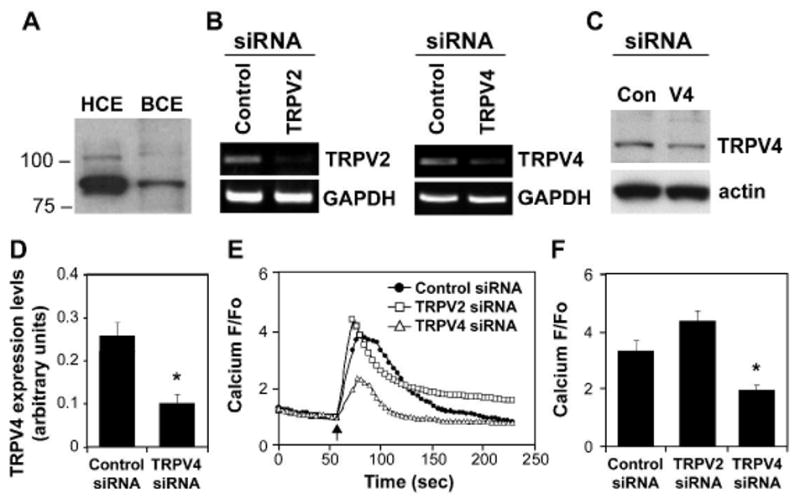
Fig. 4. TRPV4 channels mediate mechanical strain induced calcium signaling in CE cells
A) Western blotting analysis showing the expression of TRPV4 in human and bovine CE cells B) Representative RT-PCR results confirming knockdown of TRPV2 and TRPV4 mRNA levels in bovine CE cells using specific siRNAs and that the same TRPV4 siRNA produced comparable suppression of protein expression (C,D; (*, p < 0.05). E) Relative change in cytosolic calcium in response to static stretch (15%, 4 sec, arrow) in Fluo-4 loaded CE cells treated with indicated siRNA. F) Average relative increases in cytosolic calcium induced by mechanical strain in CE cells treated with the indicated siRNAs (*, p < 0.02).
Fig. 5
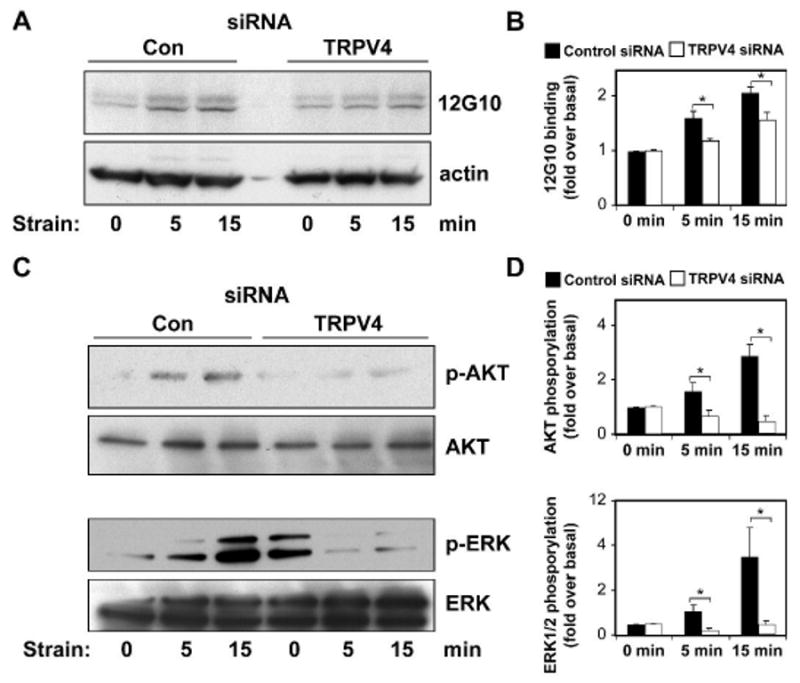
Fig. 5. TRPV4 channel knockdown inhibits cyclic strain-induced activation of · 1 integrins, AKT and ERK in CE cells
Representative Western blots showing activation of ·1 integrins as measured by binding to 12G10 antibody (A,B) and phosphorylation of AKT at ser-473 and ERK1/2 (C,D) in response to cyclic strain in the control and TRPV4 siRNA transfected CE cells at indicated times. Phosphorylation/activation of signaling protein levels were measured as a percentage of total protein/actin levels and normalized to basal levels (*, p < 0.05 for comparison between control siRNA versus TRPV4 siRNA treated cells).
Fig. 6
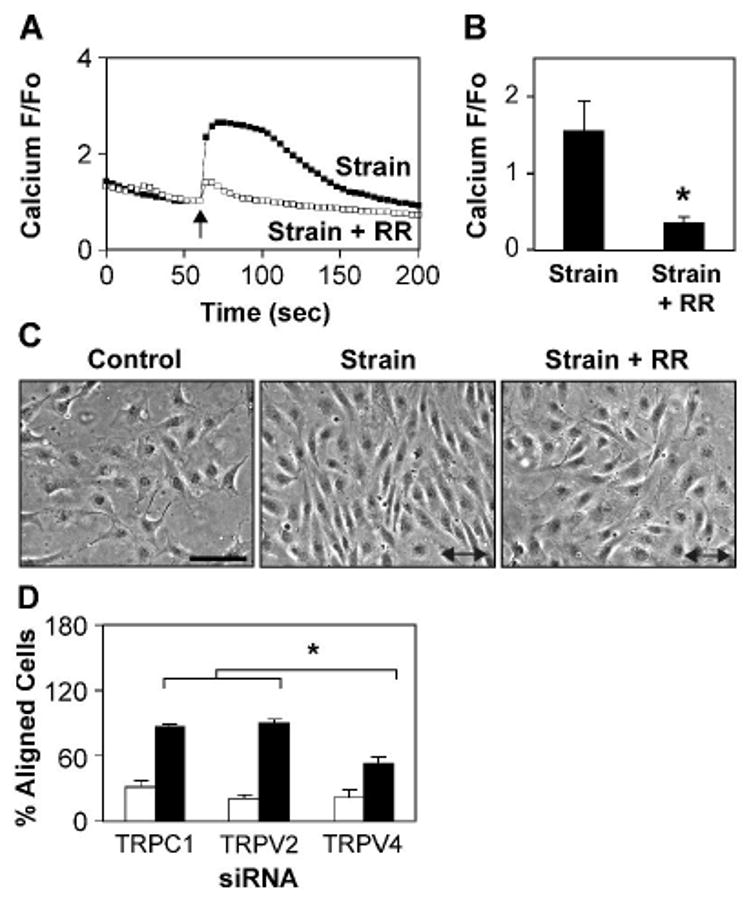
Fig. 6. TRPV4 channel mediates cyclic strain-induced CE cell reorientation
A-B) Relative changes in cytosolic calcium in Fluo-4 loaded CE cells in response to static stretch (15%, 4 sec, arrow) in the absence (■) and presence (□) of the TRPV inhibitor ruthenium red (RR) (*, p < 0.02). C) Phase contrast photomicrographs of CE cells showing the effects of cyclic strain on cell reorientation in the absence and presence of ruthenium red. Arrow indicates the direction of applied strain. Note that ruthenium red inhibits cyclic strain-induced cell reorientation. Scale bar: 50 ·m. D) Percentage of cells oriented 90 ± 30 ° degrees (aligned) relative to the direction of applied strain in control (white bars) and strain exposed (black bars) human CE cells treated with the indicated siRNA. Note that TRPV4 siRNA treated cells failed to reorient fully compared to TRPV2 or TRPC1 treated cells (*, p < 0.0025).

References

    1. Chien S, Li S, Shyy YJ. Effects of mechanical forces on signal transduction and gene expression in endothelial cells. Hypertension. 1998;31(1 Pt 2):162–169. - PubMed
    1. Ingber DE. Mechanical signaling and the cellular response to extracellular matrix in angiogenesis and cardiovascular physiology. Circ Res. 2002;91(10):877–887. - PubMed
    1. Ingber DE, Folkman J. Mechanochemical switching between growth and differentiation during fibroblast growth factor-stimulated angiogenesis in vitro: role of extracellular matrix. J Cell Biol. 1989;109(1):317–330. - PMC - PubMed
    1. Davies PF, Mundel T, Barbee KA. A mechanism for heterogeneous endothelial responses to flow in vivo and in vitro. J Biomech. 1995;28(12):1553–1560. - PubMed
    1. Chen CS, Mrksich M, Huang S, Whitesides GM, Ingber DE. Geometric control of cell life and death. Science. 1997;276(5317):1425–1428. - PubMed

Publication types

MeSH terms