


Complete blockage of the mevalonate pathway results in male gametophyte lethality
- PMID: 19363204
- PMCID: PMC2682496
- DOI: 10.1093/jxb/erp073
Complete blockage of the mevalonate pathway results in male gametophyte lethality
Abstract
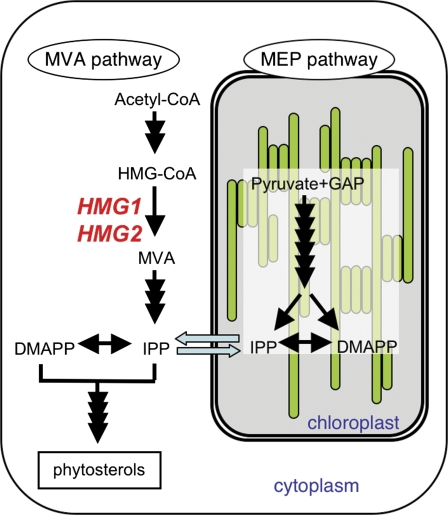
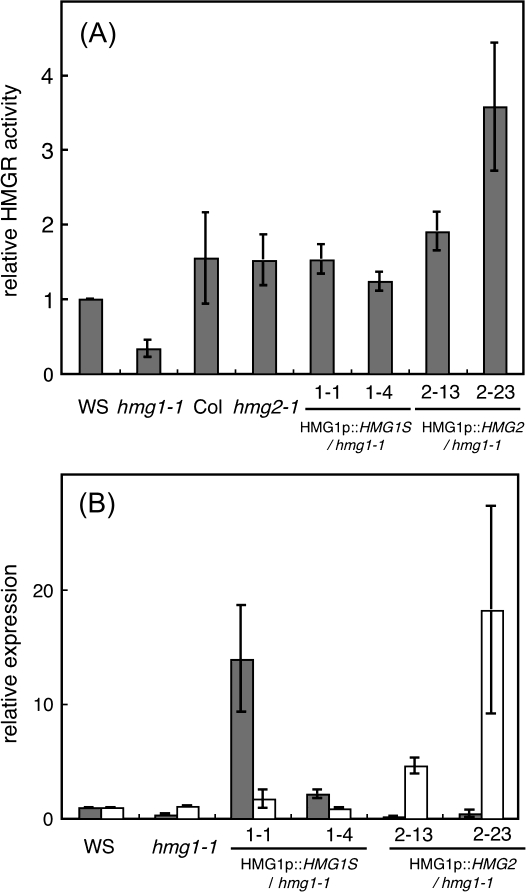
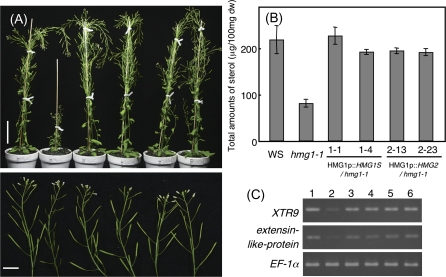
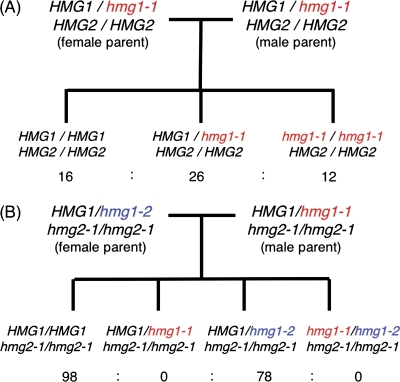
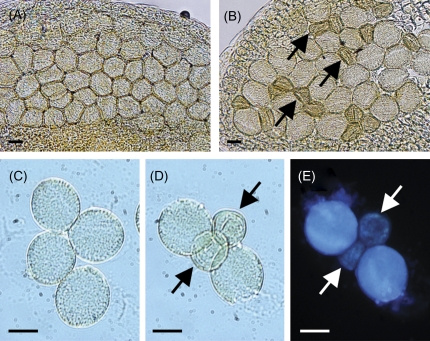
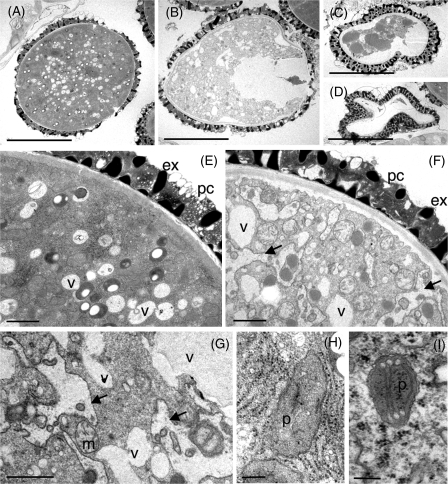
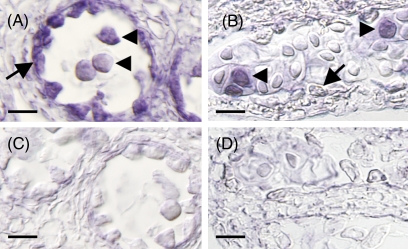
Plants have two isoprenoid biosynthetic pathways: the cytosolic mevalonate (MVA) pathway and the plastidic 2-C-methyl-D-erythritol 4-phosphate (MEP) pathway. Since the discovery of the MEP pathway, possible metabolic cross-talk between these pathways has prompted intense research. Although many studies have shown the existence of such cross-talk using feeding experiments, it remains to be determined if native cross-talk, rather than exogenously applied metabolites, can compensate for complete blockage of the MVA pathway. Previously, Arabidopsis mutants for HMG1 and HMG2 encoding HMG-CoA reductase (HMGR) were isolated. Although it was shown that HMGR1 is a functional HMGR, the enzyme activity of HMGR2 has not been confirmed. It is demonstrated here that HMG2 encodes a functional reductase with similar activity to HMGR1, using enzyme assays and complementation experiments. To estimate the contribution of native cross-talk, an attempt was made to block the MVA pathway by making double mutants lacking both HMG1 and HMG2, but no double homozygotes were detected in the progeny of self-pollinated HMG1/hmg1 hmg2/hmg2 plants. hmg1 hmg2 male gametophytes appeared to be lethal based on crossing experiments, and microscopy indicated that approximately 50% of the microspores from the HMG1/hmg1 hmg2/hmg2 plant appeared shrunken and exhibited poorly defined endoplasmic reticulum membranes. In situ hybridization showed that HMG1 transcripts were expressed in both the tapetum and microspores, while HMG2 mRNA appeared only in microspores. It is concluded that native cross-talk from the plastid cannot compensate for complete blockage of the MVA pathway, at least during male gametophyte development, because either HMG1 or HMG2 is required for male gametophyte development.
Figures
References
-
- Araki N, Kusumi K, Masamoto K, Niwa Y, Iba K. Temperature-sensitive Arabidopsis mutant defective in 1-deoxy-D-xylulose 5-phosphate synthase within the plastid non-mevalonate pathway of isoprenoid biosynthesis. Physiologia Plantarum. 2000;108:19–24.
-
- Babiychuk E, Bouvier-Navé P, Compagnon V, Suzuki M, Muranaka T, Montagu MV, Kushnir S, Schaller H. Alleric mutant series reveal distinct functions for Arabidopsis cycloartenol synthase 1 in cell viability and plastid biogenesis. Proceedings of the National Academy Sciences, USA. 2008;105:3163–3168. - PMC - PubMed
-
- Bach TJ, Lichtenthaler HK. Plant growth regulation by mevinolin and other sterol biosynthesis inhibitors. In: Fuller G, Nes WD, editors. Ecology and metabolism of plant lipids. American Chemical Society Symposium Ser. 325. Washington: American Chemical Society; 1987. pp. 109–139.
-
- Bach TJ, Weber T, Motel A. Some properties of enzymes involved in the biosynthesis and metabolism of 3-hydroxy-3-methylglutaryl-CoA in plants. Recent Advances in Phytochemistry. 1990;24:1–82.
Publication types
MeSH terms
Substances
LinkOut - more resources
Full Text Sources
Molecular Biology Databases
Miscellaneous
