


The effects of extracellular calcium on motility, pseudopod and uropod formation, chemotaxis, and the cortical localization of myosin II in Dictyostelium discoideum
- PMID: 19363786
- PMCID: PMC2747089
- DOI: 10.1002/cm.20367
The effects of extracellular calcium on motility, pseudopod and uropod formation, chemotaxis, and the cortical localization of myosin II in Dictyostelium discoideum
Abstract
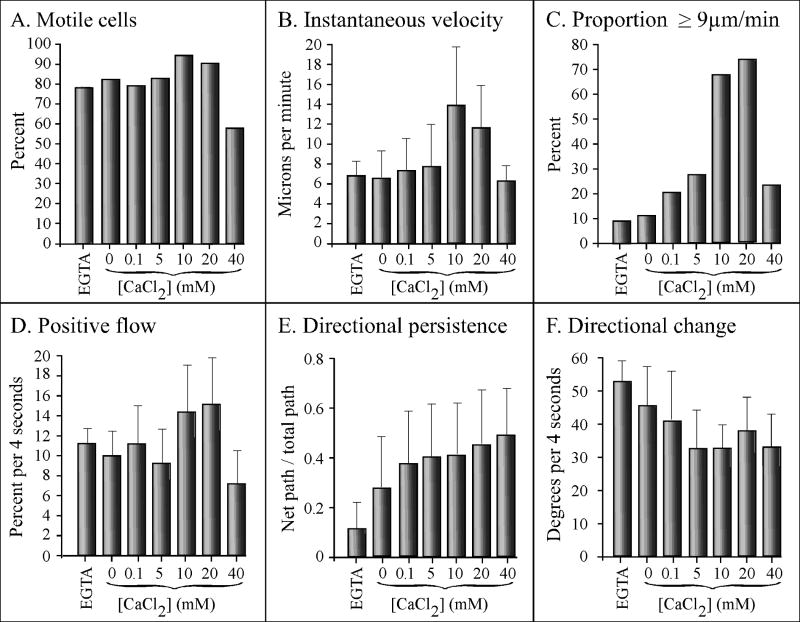
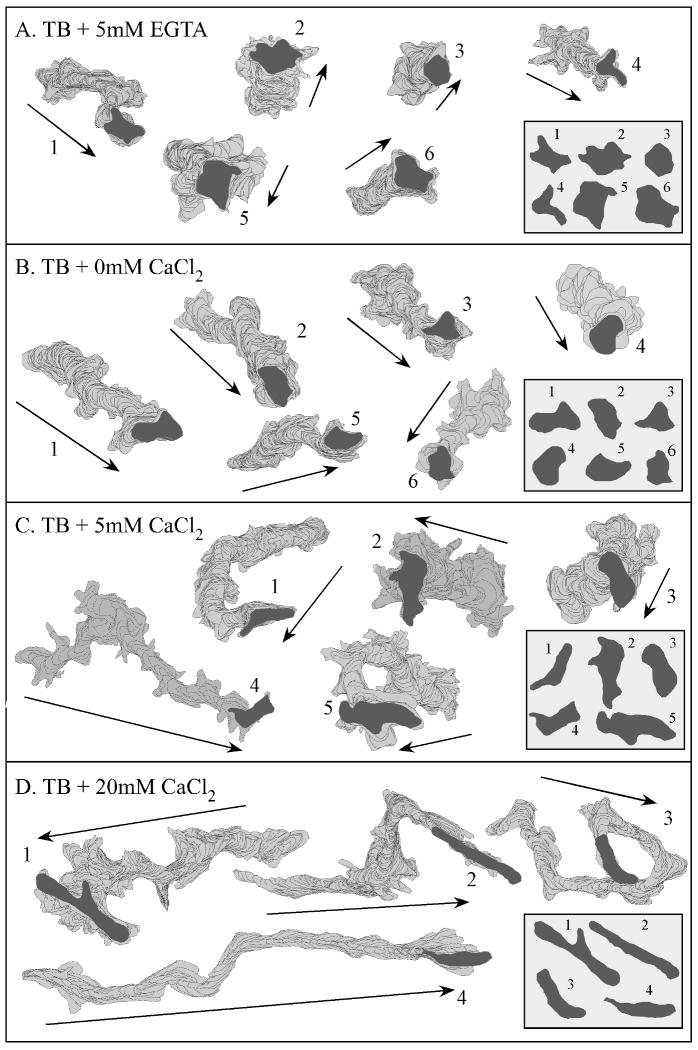
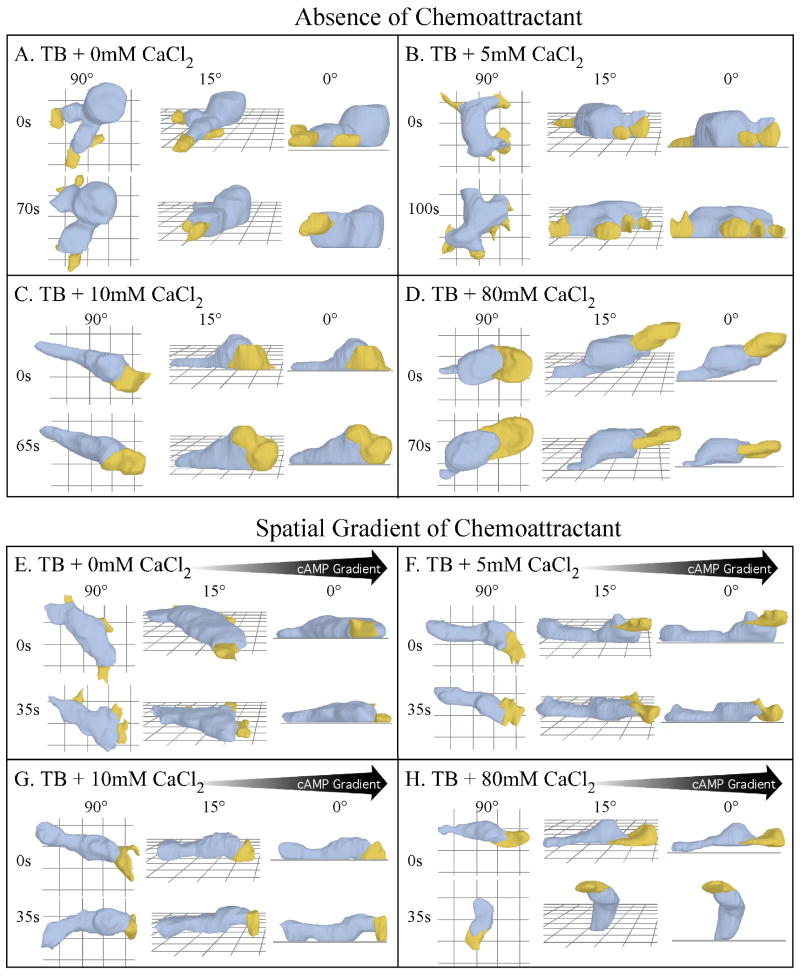
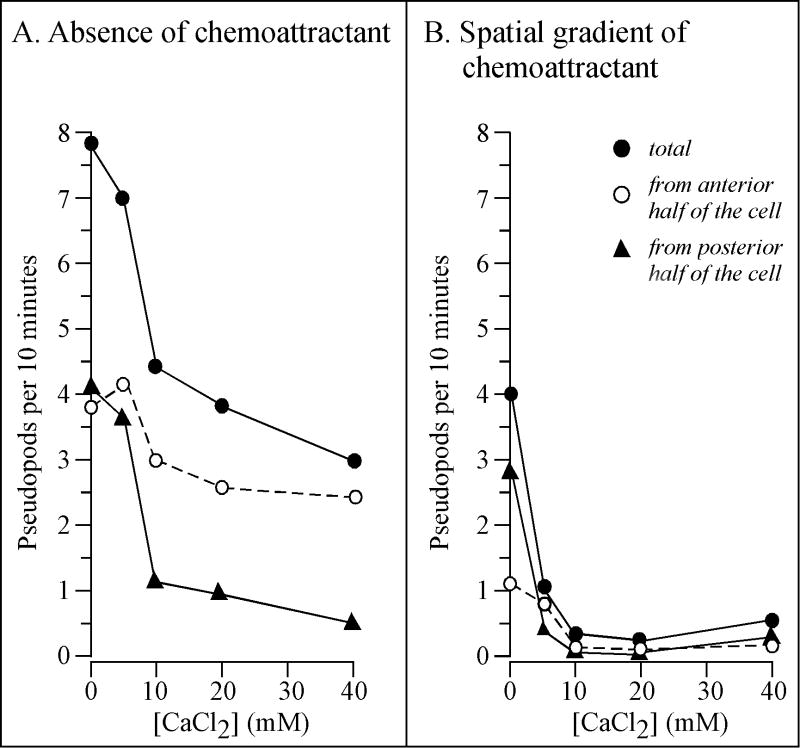
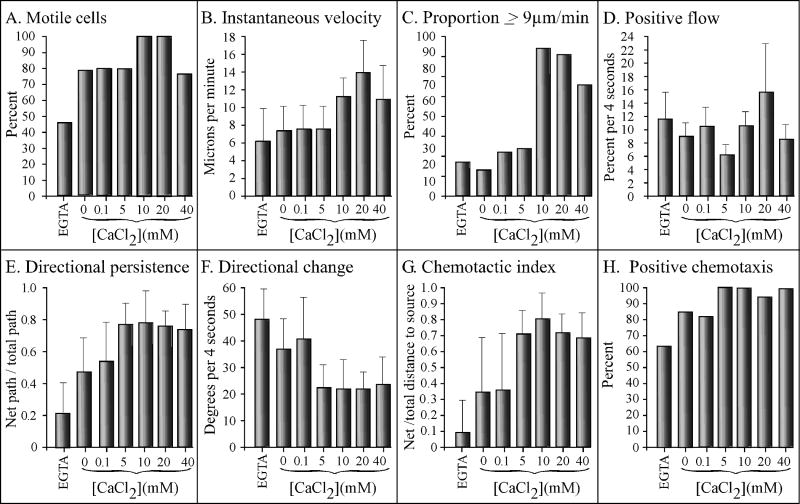
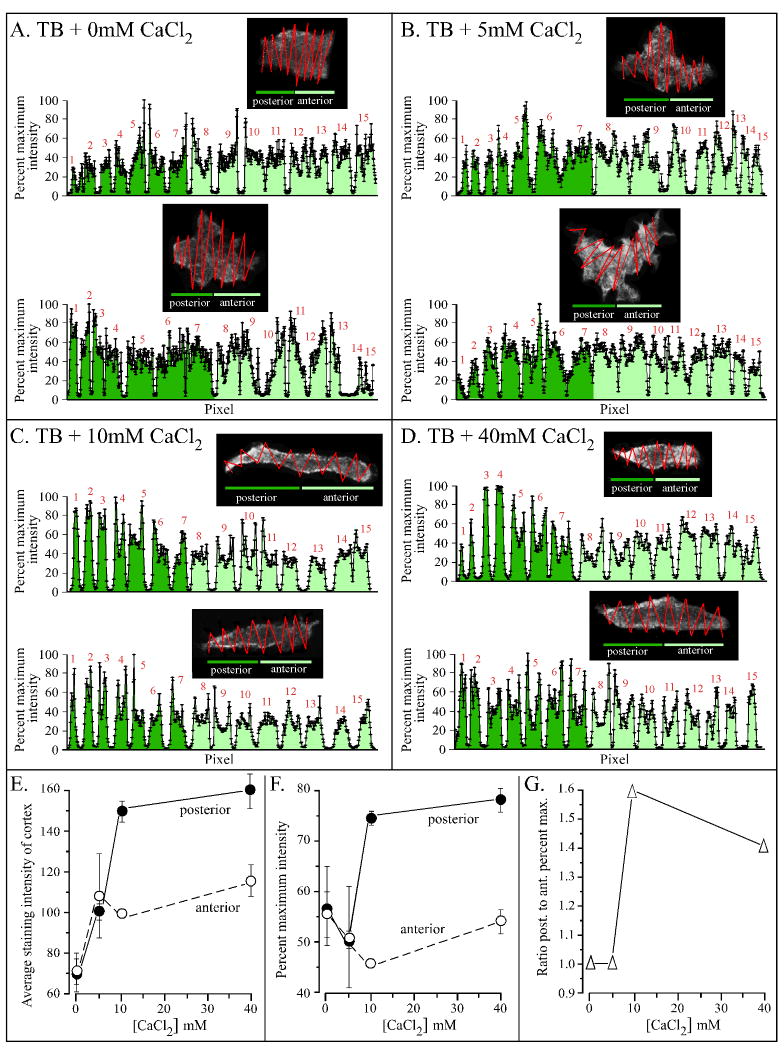
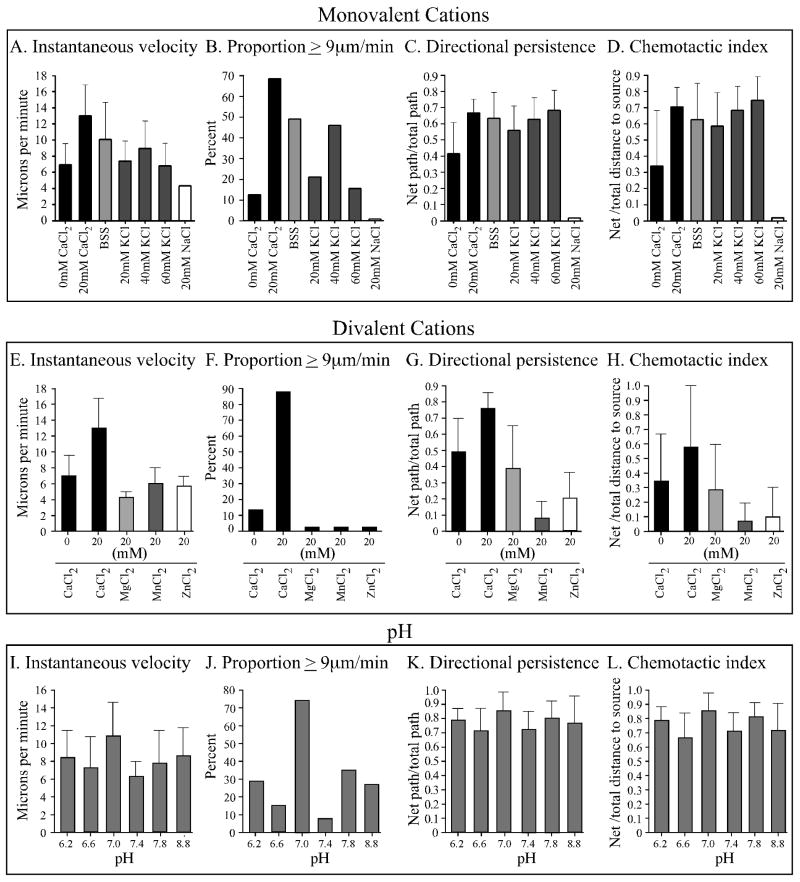
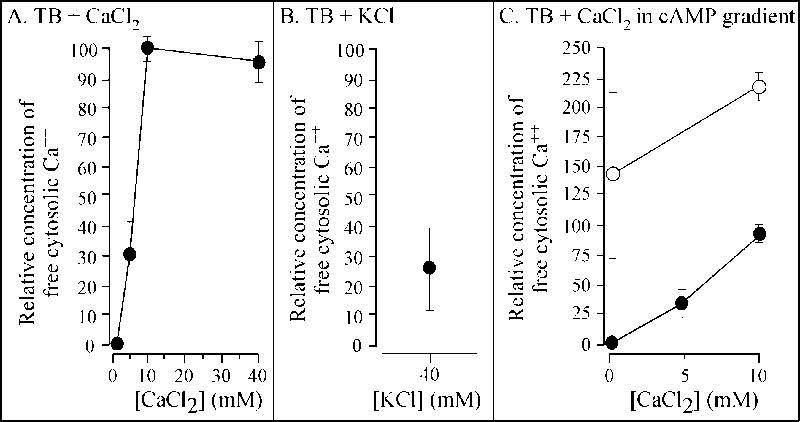
Extracellular Ca(++), a ubiquitous cation in the soluble environment of cells both free living and within the human body, regulates most aspects of amoeboid cell motility, including shape, uropod formation, pseudopod formation, velocity, and turning in Dictyostelium discoideum. Hence it affects the efficiency of both basic motile behavior and chemotaxis. Extracellular Ca(++) is optimal at 10 mM. A gradient of the chemoattractant cAMP generated in the absence of added Ca(++) only affects turning, but in combination with extracellular Ca(++), enhances the effects of extracellular Ca(++). Potassium, at 40 mM, can partially substitute for Ca(++). Mg(++), Mn(++), Zn(++), and Na(+) cannot. Extracellular Ca(++), or K(+), also induce the cortical localization of myosin II in a polar fashion. The effects of Ca(++), K(+) or a cAMP gradient do not appear to be similarly mediated by an increase in the general pool of free cytosolic Ca(++). These results suggest a model, in which each agent functioning through different signaling systems, converge to affect the cortical localization of myosin II, which in turn effects the behavioral changes leading to efficient cell motility and chemotaxis. Cell Motil. Cytoskeleton 2009. (c) 2009 Wiley-Liss, Inc.
Figures
References
-
- Abe T, Maeda Y, Iijima T. Transient increase of the intracellular Ca++ concentration during chemotactic signal transduction in Dictyostelium discoideum cells. Differentiation. 1988;39(2):90–6. - PubMed
-
- Alcantara F, Monk M. Signal propagation during aggregation in the slime mould Dictyostelium discoideum. J Gen Microbiol. 1974;85(2):321–34. - PubMed
-
- Andrew N, Insall RH. Chemotaxis in shallow gradients is mediated independently of PtdIns 3-kinase by biased choices between random protrusions. Nat Cell Biol. 2007;9(2):193–200. - PubMed
-
- Bagorda A, Mihaylov VA, Parent CA. Chemotaxis: moving forward and holding on to the past. Thromb Haemost. 2006;95(1):12–21. - PubMed
-
- Bangerth F. Calcium-Related Physiological Disorders of Plants. Annual Review of Phytopathology. 1979;17(1):97–122.
Publication types
MeSH terms
Substances
Grants and funding
LinkOut - more resources
Full Text Sources
