


Antibody-based detection and inhibition of vaginolysin, the Gardnerella vaginalis cytolysin
- PMID: 19370149
- PMCID: PMC2666159
- DOI: 10.1371/journal.pone.0005207
Antibody-based detection and inhibition of vaginolysin, the Gardnerella vaginalis cytolysin
Abstract
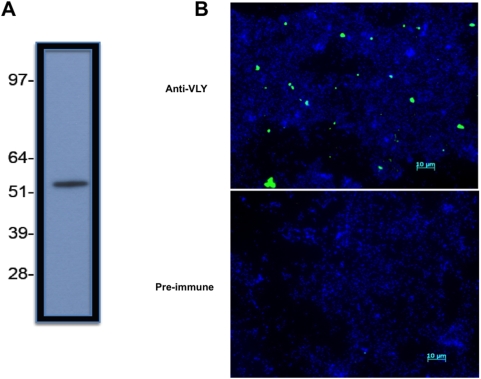
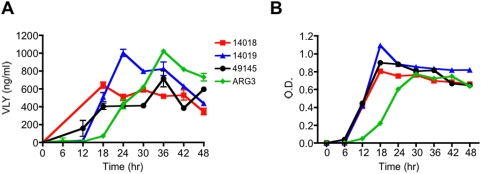
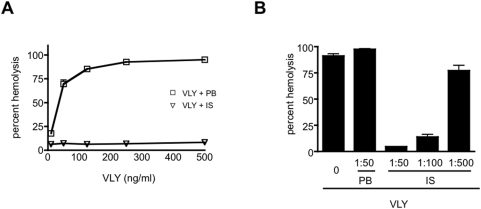
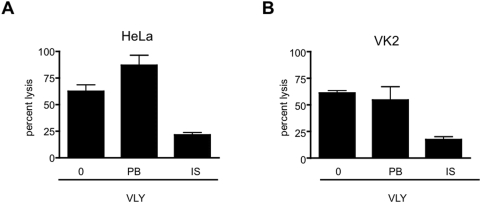
Bacterial vaginosis (BV) is the most common vaginal infection worldwide and is associated with significant adverse sequelae. We have recently characterized vaginolysin (VLY), the human-specific cytotoxin produced by Gardnerella vaginalis and believed to play a critical role in the pathogenesis of BV and its associated morbidities. We hypothesize that novel antibody-based strategies may be useful for detection of VLY and for inhibition of its toxic effects on human cells. Using purified toxin as an immunogen, we generated polyclonal rabbit immune serum (IS) against VLY. A western blot of G. vaginalis lysate was probed with IS and a single band (57 kD) identified. Immunofluorescence techniques using IS detected VLY production by G. vaginalis. In addition, we have developed a sandwich ELISA assay capable of VLY quantification at ng/ml concentrations in the supernatant of growing G. vaginalis. To investigate the potential inhibitory role of IS on VLY-mediated cell lysis, we exposed human erythrocytes to VLY or VLY pretreated with IS and determined the percent hemolysis. Pretreatment with IS resulted in a significant reduction in VLY-mediated lysis. Similarly, both human cervical carcinoma cells and vaginal epithelial cells exhibited reduced cytolysis following exposure to VLY with IS compared to VLY alone. These results confirm that antibody-based techniques are an effective means of VLY detection. Furthermore, VLY antiserum functions as an inhibitor of VLY-CD59 interaction, mitigating cell lysis. These strategies may have a potential role in the diagnosis and treatment of BV.
Conflict of interest statement
Figures
References
-
- Eschenbach DA, Gravett MG, Chen KC, Hoyme UB, Holmes KK. Bacterial vaginosis during pregnancy. An association with prematurity and postpartum complications. Scand J Urol Nephrol Suppl. 1984;86:213–222. - PubMed
-
- Hillier SL, Nugent RP, Eschenbach DA, Krohn MA, Gibbs RS, et al. Association between bacterial vaginosis and preterm delivery of a low-birth-weight infant. The Vaginal Infections and Prematurity Study Group. N Engl J Med. 1995;333:1737–1742. - PubMed
-
- Watts DH, Eschenbach DA, Kenny GE. Early postpartum endometritis: the role of bacteria, genital mycoplasmas, and Chlamydia trachomatis. Obstet Gynecol. 1989;73:52–60. - PubMed
-
- Cohen CR, Duerr A, Pruithithada N, Rugpao S, Hillier S, et al. Bacterial vaginosis and HIV seroprevalence among female commercial sex workers in Chiang Mai, Thailand. Aids. 1995;9:1093–1097. - PubMed
-
- Taha TE, Hoover DR, Dallabetta GA, Kumwenda NI, Mtimavalye LA, et al. Bacterial vaginosis and disturbances of vaginal flora: association with increased acquisition of HIV. Aids. 1998;12:1699–1706. - PubMed
Publication types
MeSH terms
Substances
Grants and funding
LinkOut - more resources
Full Text Sources
Other Literature Sources
Miscellaneous
