


Effects of changes in the pre-licensure education of health workers on health-worker supply
- PMID: 19370668
- PMCID: PMC7386825
- DOI: 10.1002/14651858.CD007018.pub2
Effects of changes in the pre-licensure education of health workers on health-worker supply
Abstract
Background: The current and projected crisis because of a shortage of health workers in low and middle-income countries (LMICs) requires that effective strategies for expanding the numbers of health workers are quickly identified in order to inform action by policymakers, educators, and health managers.
Objectives: To assess the effect of changes in the pre-licensure education of health professionals on health-worker supply.
Search strategy: We searched the Cochrane Central Register of Controlled Trials (CENTRAL) (The Cochrane Library 2007, Issue 3), EMBASE, Ovid (1980 to week 3, October 2007), MEDLINE, Ovid (1950 to week 3, October 2007), CINAHL (October 2007), LILACS (week 4, November 2007), ERIC (1966 to week 3, February 2008), and Sociological Abstracts (October 2007). We searched WHO (WHOLIS) (February 2008), World Bank, Google Scholar, and human resources on health-related websites to obtain grey literature. Key experts in human resources for health were contacted to identify unpublished studies. The reference lists of included studies were searched for additional articles.
Selection criteria: Randomised controlled trials, non-randomised controlled trials, controlled before and after studies, and interrupted time-series studies that measured increased numbers of health workers ultimately available for recruitment into the health workforce or improved patient to health professional ratios as their primary outcomes were considered. Although the focus of the review was on LMIC, we included studies regardless of where they were done.
Data collection and analysis: Heterogeneity between the two included studies precluded meta-analysis; therefore, data were presented separately for each study.
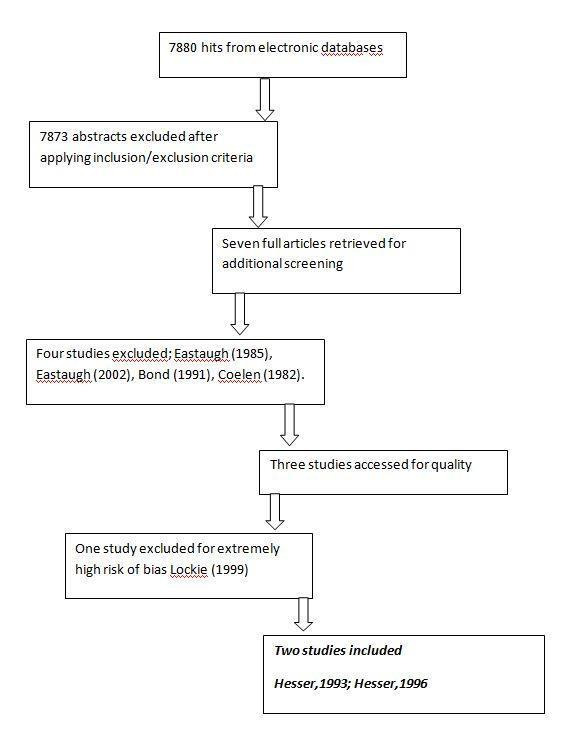
Main results: Two studies of the 7880 identified from searching the electronic databases met the inclusion criteria. Both studies were controlled before and after studies, of moderate to high risk of bias, that explored the effects of interventions to improve retention of minority groups in health professional training institutions. These studies reported that an intervention comprising of a package of student support activities including social, academic, and career guidance and mentorship resulted in an increase in the number of minority students who enrolled and graduated from health training institutions.
Authors' conclusions: The evidence to estimate the likely effects of interventions in pre-licensure education to increase health-worker supply is generally insufficient or unavailable, particularly in LMICs. Promising innovations from a high-income country include providing financial support to health professional students or introducing mechanisms to identify and encourage potential students and offering support to 'at risk' students. These and other promising interventions should be evaluated in LMIC.
Conflict of interest statement
None known
Update of
References
References to studies included in this review
Hesser 1993 {published data only}
-
- Hesser A. Evaluation of a supplementary retention program for black allied health sciences students. Journal of Allied Health 1993;22:175‐82. - PubMed
Hesser 1996 {published data only}
-
- Hesser A. Evaluation of a supplementary retention program for African‐American baccalaureate nursing students. The Journal of Nursing Education 1996;35:304‐9. - PubMed
References to studies excluded from this review
Bond 1991 {published data only}
-
- Bond CA, Swandby ME, Palmer PA, Pitterle ME. The effects of a pharmacy student recruitment program. American Journal of Pharmaceutical Education 1991;55:258‐63.
Coelen 1982 {published data only}
-
- Coelen CG, Gaumer G. Effects of federal support for nursing education on admissions, graduations and retention rates at schools of nursing. Report AAI 1982:82‐5.
Eastaugh 1985 {published data only}
-
- Eastaugh SR. The impact of the Nurse Training Act on the supply of nurses, 1974‐1983. Inquiry 1985;22:404‐17. - PubMed
Eastaugh 2004 {published data only}
-
- Eastaugh SR. The impact of Nurse Training Funds on the supply of nurses. Journal of Health Care Finance 2004;30(4):1‐13. - PubMed
Lockie 1999 {published data only}
-
- Lockie NM, Burke LJ. Partnership in Learning for Utmost Success (PLUS): evaluation of a retention program for at‐risk nursing students. The Journal of Nursing Education 1999;38:188‐92. - PubMed
Additional references
AAMC 2007
-
- Medical school expansion plans: results of the 2006 AAMC survey. http://www.aamc.org/workforce/2006medschoolexpansion.pdf 2007. Association of American Medical Colleges.
Akl 2007
AMWAC 2000a
-
- Australian Medical Workforce Advisory Committee. Innovations in medical education to meet workforce challenges. Australian Health Review 2000;23(4):43‐59. - PubMed
AMWAC 2000b
-
- Australian Medical Workforce Advisory Committee. Towards gender balance in the Australian medical workforce. Australian Health Review 2000;23(4):27‐42. - PubMed
Badgley 1971
-
- Badgley RF. Studies in planning health manpower: the Varna meeting. Journal of Health and Social Behaviour 1971;12(1):4‐10. - PubMed
Brewer 1979
-
- Brewer WR, Du Val MK, Davis GM. Increasing minority recruitment to the health professions by enlarging the applicant pool. New England Journal of Medicine 1979;301:74‐6. - PubMed
Broadhead 2002
Copeman 1979
Dusansky 1985
-
- Dusansky R, Ingber M, Leiken A, Walsh J. Government subsidy of critical need occupation: the case of nurses. Socio‐economic Planning Sciences 1985;19(2):117‐24. - PubMed
Dusansky 1986
-
- Dusansky R, Ingber M, Leiken A, Walsh J. On increasing the supply of nurses: an interstate analysis. Atlantic Economic Journal 1986;14:33‐44.
Feldbaum 1977
-
- Feldbaum EG. Recruitment strategies in the health professions. Program of health services delivery. University of Maryland, College Park Maryland Report 1977:1‐7.
Jeffreys 2001
-
- Jeffreys MR. Evaluating enrichment program study groups, academic outcomes, psychological outcomes and variables influencing retention. Nurse Educator 2001;26(3):142‐9. - PubMed
JLI 2004
-
- Joint Learning Initiative. Human resources for health: Overcoming the crisis. Harvard University Press 2004.
Kessel 1970
-
- Kessel RA. The A.M.A and the supply of physicians. Law and Contemporary Problems 1970;35:267‐83.
Lewis 2002
-
- Lewis M, Smith S. Selection of pre‐registration physiotherapy students: changing to a more objective process. Physiotherapy 2002;88:688‐98.
Moynihan 2008
-
- Moynihan R, Oxman AD, Lavis JN, Paulsen E. Evidence‐Informed Health Policy: Using research to make health systems healthier. www.epidemiologia.anm.edu.ar/pdf/Evidence‐InformedHealthPolicy.pdf 2008. - PubMed
Navin 1977
-
- Navin TR Nichols AW. Evaluation of the Arizona Medical Student Exchange Program. Journal of Medical Education 1977;52:817‐23. - PubMed
Pabst 1995
-
- Pabst R. Medical education and reform initiatives on Germany. Academic Medicine 1995;70(11):1006‐11. - PubMed
Rich 1993
-
- Rich EC, Wartmann SA, Kahn NB Jr, Clancey CM. The shortage of generalist and federal funding of graduate medical education. Archives of Family Medicine 1993;2(12):1232‐8. - PubMed
Salsberg 2002
-
- Salsberg ES, Forte GJ. Trends in the physician workforce 1980‐2000. Health Affairs (Millwood) 2002;21(5):165‐73. - PubMed
Salsberg 2006
-
- Salsberg ES, Grover A. Physician workforce shortages: implications and issues for academic health centres and policy makers. Academic Medicine 2006;81(9):782‐7. - PubMed
Tysinger 1987
-
- Tysinger JW, Whiteside MF. A review of recruitment and retention programs for minority and disadvantaged students in health professional education. Journal of Allied Health 1987;16:209‐217. - PubMed
WHO 2006a
-
- World Health Organization. The global shortage of health workers and its impact. http://www.who.int/mediacentre/factsheet/fs302 2006.
WHO 2006b
-
- World Health Organization. World Health Report. World Health Organization 2006.
Publication types
MeSH terms
LinkOut - more resources
Full Text Sources
Miscellaneous
